


Key Points:
- Spermidine supplementation rejuvenated the vaccination response in participants who hadn’t previously responded to the COVID-19 vaccination.
- Spermidine reduced senescent immune cells, which are dysfunctional immune cells that tend to accumulate with age.
- Autophagy, which helps keep immune cells healthy by cleaning up cellular debris, was elevated by spermidine.
Our immune system plays a critical role in how long we live. As it declines, inflammation often ensues, contributing to the breakdown of our skin, blood vessels, and neural connections. The immune system itself also loses its edge, making it difficult to defend against pathogens and kill cancer cells. As such, immune aging is associated with heart disease, dementia, fatal infections, cancer, and early mortality.
Now, researchers from Oxford University may have found a compound capable of alleviating immune aging. As published in Aging Cell, they show that spermidine increases the immune system’s protective capacity in response to SARS-CoV-2 vaccination. They also show that spermidine rejuvenates immune cells by targeting several processes that drive cellular aging. These findings suggest that replenishing spermidine levels within immune cells could potentially counteract immune system aging.
How Immune Cells Block COVID-19
The SARS-CoV-2 virus primarily causes COVID-19 by binding to ACE2 receptors on human cells. Healthy immune cells can block this process by producing antibodies that bind to the virus’s spike protein. By preventing the virus from attaching to ACE2 receptors, these antibodies make it harder for SARS-CoV-2 to enter cells and cause infection.
Spermidine Rejuvenates Vaccination Response
The Oxford researchers conducted the study at the height of the COVID-19 pandemic. In light of this, the study’s participants, who were generally healthy, overweight older adults, began taking spermidine or a placebo following their third mRNA vaccination. Blood samples were then collected from the participants at three different time points to isolate and examine their immune cells.
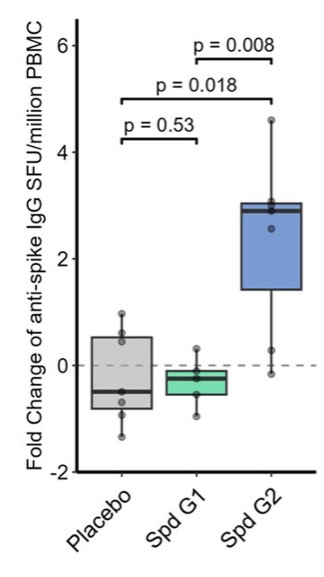
Unexpectedly, the researchers found that some of the participants did not produce antibodies in response to the mRNA vaccines. It was these non-responders who were more sensitive to spermidine. Specifically, spermidine elevated the immune cells that secrete antibodies against SARS-CoV-2, called B cells. It also increased the quantity of antibodies produced by the immune cells. Moreover, spermidine increased the capacity of these antibodies to block SARS-CoV-2.
Spermidine Targets Hallmarks of Aging
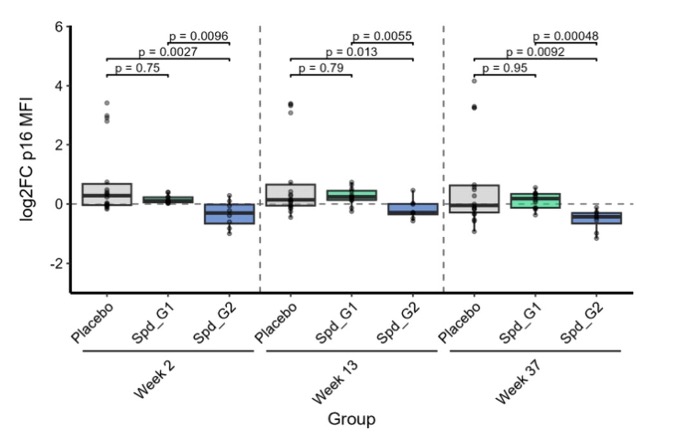
Scientists have previously identified several processes thought to drive the aging process, known as the hallmarks of aging. These hallmarks include senescence, a phenomenon that renders cells dysfunctional. In response to accumulated stressors, such as DNA damage, most cells in the body can enter senescence, including immune cells. The Oxford researchers found that the vaccine non-responders exhibited signs of senescence in their immune cells, which were reduced by spermidine. The reduction in senescent immune cells was apparent 24 weeks after supplementation ended, suggesting a lasting effect.
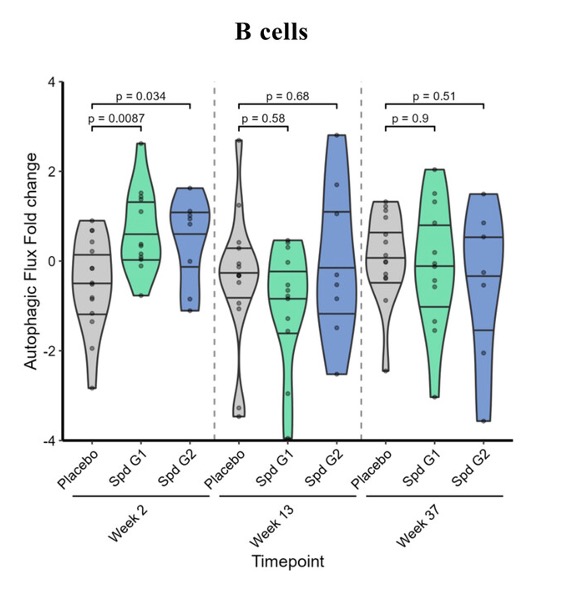
The Oxford researchers also investigated another hallmark of aging, autophagy. Autophagy is the process our cells use to dismantle and recycle broken cellular components. It declines with age, triggering cellular senescence and contributing to immune cell dysfunction. The researchers found that spermidine increased autophagy in both vaccine responders and non-responders after 2 weeks of treatment. The increase was not observed after 13 weeks of treatment or 24 weeks post-treatment. The researchers said,
“This finding suggests that autophagy may contribute to the enhanced capacity of B cells to produce neutralizing antibodies, although a larger sample size is needed to confirm this observation. Notably, this represents the first in vivo demonstration of Spermidine supplementation inducing autophagy in humans.”
How Spermidine May Rejuvenate Immune Cells
Not all proteins are equally easy for our cells to build. Certain amino acids can stall the protein-building process. If left unresolved, this stalling can lead to cellular stress and eventually trigger senescence. Still, our cells can resolve this stalling with eIF5A (eukaryotic translation initiation factor 5A), which facilitates the continued building of difficult proteins. Spermidine is the only natural molecule known to alter eIF5A in a process called hypusination, which is like an “on switch.” The Oxford researchers found that spermidine tended to increase e1F5A hypusination, but this did not reach statistical significance.
“Collectively, our findings support a model where spermidine supplementation can enhance vaccine responsiveness in immunosenescent older adults by promoting eIF5A hypusination, especially in those cells with a greater need for [spermidine] supply. Our data suggest that spermidine then enhances autophagy and reduces immune cell senescence. This highlights an exciting avenue for future clinical research at the border of vaccinology and the biology of aging,” said the researchers.
Consuming Spermidine to Live Longer
Boosting the ability of the immune system to respond to pathogens can potentially increase the chances of living longer by preventing fatal infections. This pilot study showed that spermidine appears to be safe and tolerable for human consumption. Studies with more participants will need to confirm its effectiveness, as this study was not designed to test spermidine’s effect on immune aging. Even so, the results are promising as few interventions have been shown to improve immune function in older adults.
A range of doses can be found in various spermidine supplement products, but the optimal amount is not established. The participants of the study took 6 mg of spermidine daily for 13 weeks. However, supplementation may not be necessary. A tablespoon of wheat germ, the incredibly nutrient-dense embryo of wheat, or a typical serving of shiitake mushrooms contains around 2.5 mg of spermidine. Additionally, a serving of soybeans contains 6 to 12 mg of spermidine. This means that sufficient levels of spermidine can potentially be achieved by consuming the right kinds of foods.
 Comments