


Key Points:
- A protein called CDON declines with age and in people with age-related muscle disease.
- Meloxicam activates CDON and counteracts the loss of muscle mass and strength associated with aging in mice.
- It activates two major muscle molecules usually associated with having opposite effects.
The networks of molecules that modulate muscle health are incompletely understood. Key players have been identified, but the multitude of their interactions has yet to be elucidated. Some interactions may promote muscle shrinkage while others promote muscle growth, but the duration and potency of these interactions may be critical in distinguishing between health and disease.
To illuminate this dilemma, researchers from South Korea investigated a molecule involved in muscle development called Cdon. In a new study published in Experimental & Molecular Medicine (EMM), they found that it declines with age in humans. Also, the anti-arthritis drug meloxicam was found to induce the activation of Cdon in mice. Moreover, meloxicam countered muscle mass loss with age and activated AMPK, a molecule usually associated with muscle breakdown.
Cdon Declines with Age in Muscle
To assess CDON’s relevance in humans, the researchers analyzed limb-muscle samples from young and older adults, as well as from people with sarcopenia—an age-related condition characterized by declining muscle mass and strength. CDON gene activity was lower in samples from people with sarcopenia and in those with muscle-related diseases, including amyotrophic lateral sclerosis (ALS).
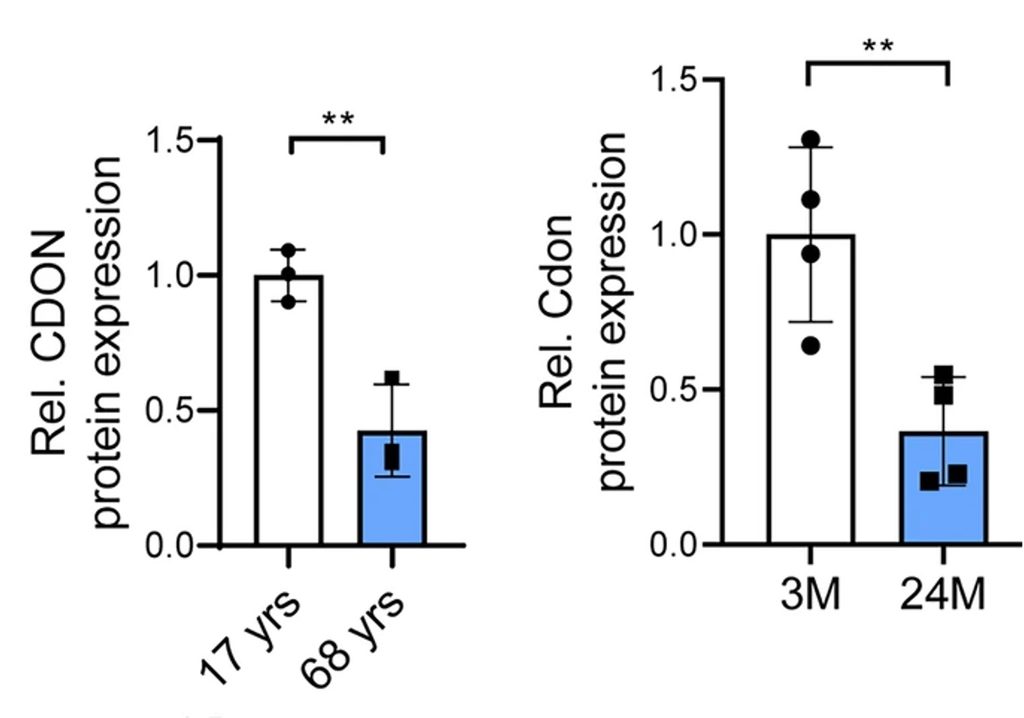
The researchers also found lower CDON protein levels in muscle fibers from a 68-year-old donor than in fibers from a 17-year-old donor. Similarly, Cdon protein levels were reduced in the muscles of aged 24-month-old mice (roughly equivalent in age to 70-year-old humans) compared with young 3-month-old mice (roughly equivalent in age to 22-year-old humans).
Meloxicam Counters Muscle Aging
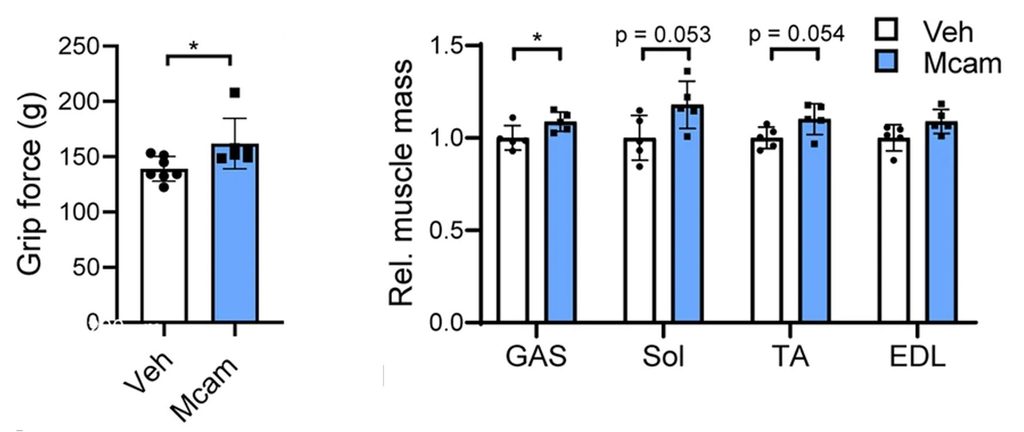
The researchers then screened compounds for their ability to activate Cdon and identified meloxicam. In a dish, meloxicam increased muscle cell proliferation and muscle fiber size. In young mice, oral meloxicam reduced body weight while increasing hindlimb muscle mass and treadmill endurance. In aged mice, the treatment improved grip strength, increased calf-muscle mass, reduced muscle tissue scarring (fibrosis), and lowered blood glucose levels.
The researchers also observed increased levels of proteins involved in mitochondrial biogenesis—the production of new mitochondria—in the muscle and liver of meloxicam-treated mice. In addition, treated mice had fewer fat droplets in the liver, which commonly accumulate with age. Together, these results suggest that meloxicam may counter features of muscle and liver aging by improving mitochondrial function.
Interestingly, cysteine levels were elevated in the blood of both aged mice and people with sarcopenia. Levels of this amino acid were also higher in the muscles of aged mice, but were restored following meloxicam treatment. In muscle cells, excess cysteine impaired mitochondrial function and increased oxidative stress, which can damage cells and tissues. Meloxicam appeared to correct this cysteine imbalance and reduce oxidative stress. This suggests that high cysteine levels disrupt mitochondrial function and contribute to muscle loss.
Meloxicam Activates AMPK and mTOR
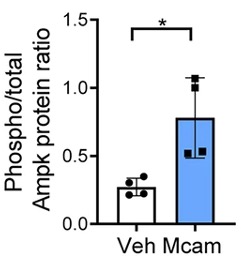
In the muscles of old mice, the researchers showed that meloxicam activates both AMPK (AMP-activated protein kinase) and mTOR (mechanistic target of rapamycin). These signaling molecules are often viewed as having opposing roles: AMPK is generally linked to catabolism, or the breakdown of cellular components, whereas mTOR promotes anabolism, including protein synthesis and tissue growth. However, AMPK activation can also trigger beneficial adaptations, such as improved mitochondrial function, while mTOR supports protein synthesis and muscle growth.
The effects of AMPK depend on the pattern of its activation. Chronic, low-level AMPK activity can contribute to muscle wasting, whereas short, robust activation may promote exercise-like metabolic adaptations that help preserve muscle mass. In this context, coordinated AMPK and mTOR signaling may support muscle growth—unlike persistent mTOR hyperactivation, which has been associated with aging muscle.
Taking Meloxicam for Health and Longevity
This study is among the first to suggest that meloxicam may improve several age-related changes, particularly in muscle. By preserving muscle mass and function, the drug could potentially support how long we may live in good health, but it has not been tested as a lifespan-extending intervention. Meloxicam is currently prescribed as an anti-inflammatory pain medication, not as an anti-aging treatment. Further studies will be needed to determine whether its effects on aging-related muscle decline translate into broader health benefits or longer lifespan.
 Comments