


Key Points:
- An enzyme that contributes to cellular aging, called ACSL4, is elevated in older adults.
- Blocking ACSL4 with gene therapy counteracts mental and physical decline in aged mice.
- Vitamin C, which was found to inhibit ACSL4, reduces biological age and counteracts multi-organ aging in aged monkeys.
Scientists are actively uncovering the underlying cellular processes that drive aging. Now, researchers from the Chinese Academy of Sciences have elucidated a process that can be targeted with a well-known vitamin, as published in their new Cell Metabolism study.
Ferro-Aging
In the 1990s, scientists believed that highly reactive molecules called free radicals caused aging. When free radicals accumulate, especially with age, they cause oxidative stress, which damages critical cellular components like DNA. Today, researchers still consider oxidative stress an underlying driver of aging, along with at least 11 other drivers, such as inflammation and cellular senescence. Even so, reducing oxidative stress can improve health while also alleviating other aging drivers.
In their new study, the Chinese Academy of Sciences researchers explored a cellular pathway that gives rise to oxidative stress. Uniquely, this pathway involves iron. When iron builds up in cells, free radicals are generated, and oxidative stress ensues. These free radicals then damage lipids—the fatty molecules that make up cell membranes. As lipid damage accumulates, cell membranes weaken and can rupture, ultimately causing iron-induced cell death known as ferroptosis.
Through a series of experiments, the researchers linked the ferroptosis pathway to aging. They observed that iron levels increased with age in multiple human tissues, including the heart and muscle. They also examined a key enzyme in the ferroptosis pathway, known as ACSL4, which facilitates the incorporation of lipids into cell membranes. In immune cells from older adults, they found increased lipid damage and higher levels of ACSL4.
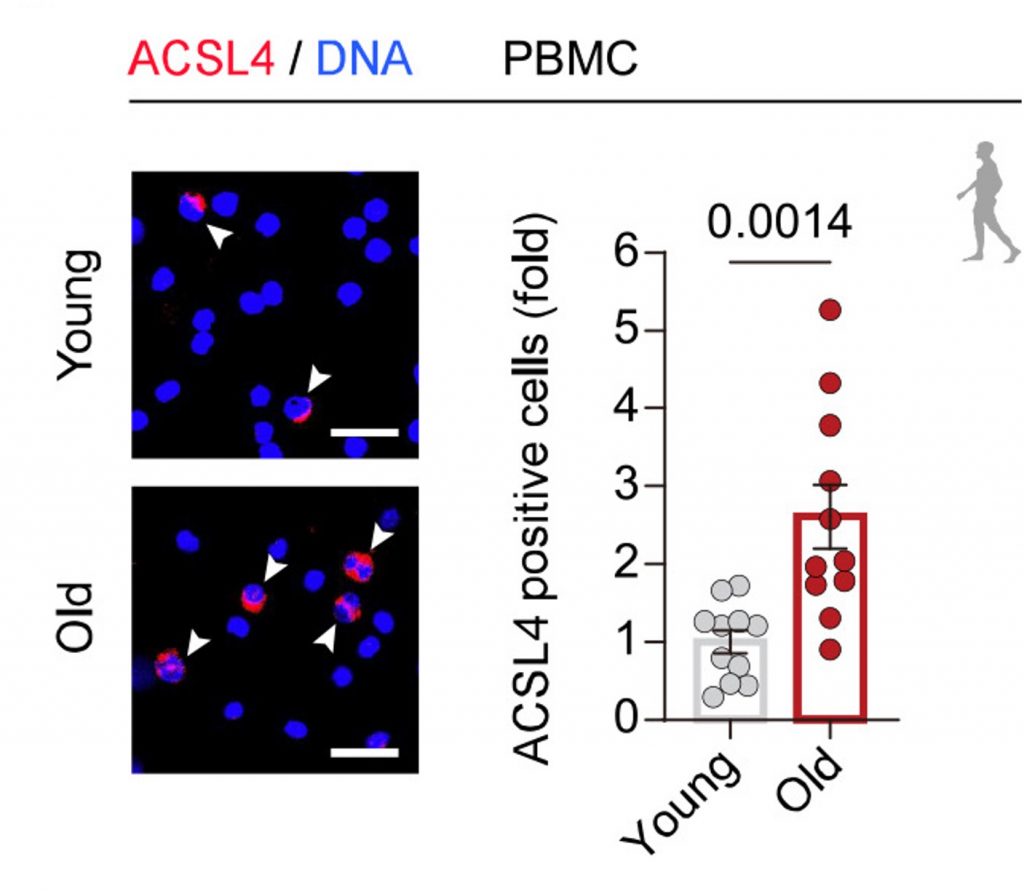
These findings suggest that age-related iron buildup is linked to damaged cell membranes. While this may not necessarily lead to iron-induced cell death, damaged cellular membranes may trigger cellular senescence, which is an underlying driver of aging. As such, the researchers have deemed this process ferro-aging.
Inhibiting ACSL4 Counteracts Aging in Mice
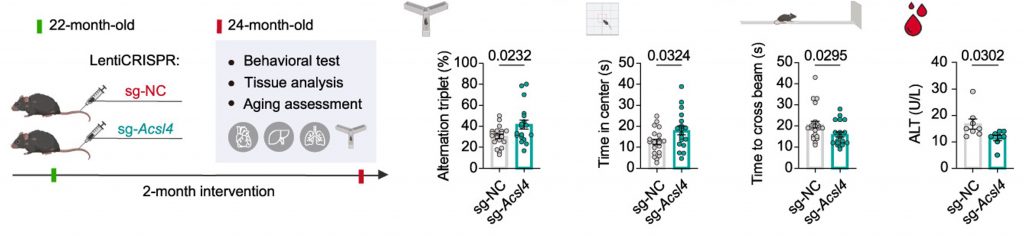
Since ACSL4 increases the likelihood of iron-induced lipid damage and cellular senescence, the researchers tested the effects of removing it. They developed a gene therapy that removes the ACSL4 gene from the liver, the organ that regulates body-wide iron homeostasis. They administered the gene therapy to 22-month-old mice— roughly equivalent in age to 65-year-old humans.
Remarkably, a single dose improved the memory, exploratory behavior, and motor coordination of the aged mice. It also lowered blood ALT (alanine aminotransferase), indicating improved liver function. Additionally, the gene therapy reduced oxidative stress and cellular senescence in the liver, lung, and heart. These findings suggest that removing ACSL4 from the liver counteracts multiple aspects of aging in mice.
Vitamin C Counteracts Aging in Monkeys
Although gene therapy can block ACSL4, the researchers searched for less invasive compounds that could have similar effects. They screened 100 ferroptosis-related molecules and found that vitamin C most effectively reduced lipid damage. The researchers even discovered that vitamin C directly binds and inhibits the enzymatic activity of ACSL4.
Having identified vitamin C as an ACSL4 inhibitor, the researchers tested it on monkeys, which—like humans and unlike mice—must obtain vitamin C through their diet. They fed old monkeys 30 mg/kg/day of vitamin C for 40 months, producing striking results. It reduced oxidative stress, inflammation, and cellular senescence in multiple organs, including the brain and heart. It also lowered the biological age of multiple organs, as measured with several aging clocks.
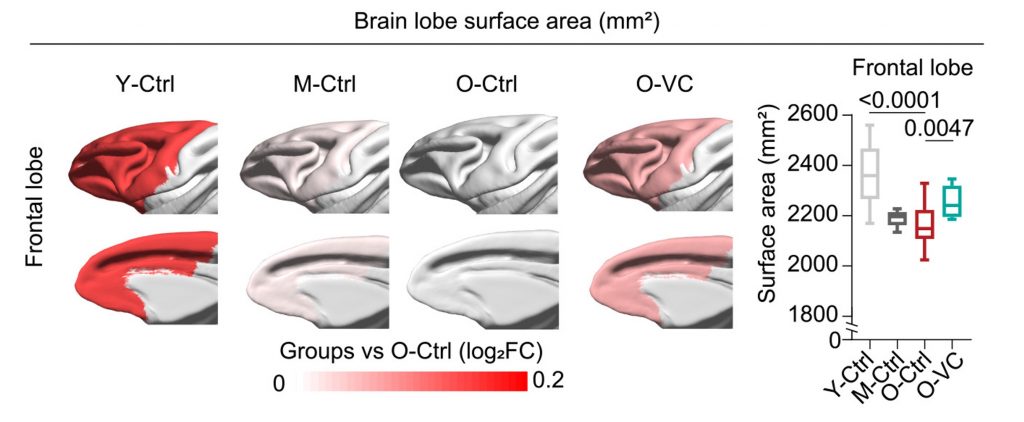
Brain imaging revealed more profound benefits. Using MRI, the researchers showed that treated monkeys had larger brain regions associated with adaptive behavior, along with improved connectivity in areas associated with spatial awareness and decision-making. These findings suggest that vitamin C may counteract brain aging, which encompasses brain volume loss and reduced connectivity.
Vitamin C also improved metabolic health. Treated monkeys showed reduced visceral fat, lower (“bad”) LDL cholesterol, and lower insulin levels, along with higher (“good”) HDL cholesterol and improved glucose control. Together, these findings reveal that vitamin C may be a health promoter by counteracting ferro-aging.
Vitamin C for Healthy Aging
Despite many scientists moving beyond the free radical theory of aging, oxidative stress plays a key role in age-related decline. This study shows that vitamin C not only serves as an antioxidant but also an ACSL4 inhibitor that mitigates ferro-aging. There are also previous studies showing that vitamin C counteracts aging, such as a 2015 study showing that 1250 mg/day of vitamin C reduces senescence, oxidative stress, and heart disease risk factors like high LDL cholesterol in young adults. However, other studies suggest that only 46% of a 1250 mg/day dose is absorbed, and much of the rest is excreted in urine.
Current recommendations suggest a daily intake of 90 mg/day for men and 75 mg/day for women, yet studies have shown that middle-aged and older adults have low vitamin C levels.
For this reason, maintaining consistent intake through diet may offer the most practical approach. Foods rich in vitamin C include:
- Bell peppers (especially red and yellow)
- Kiwis
- Strawberries
- Citrus fruits
- Cruciferous vegetables like broccoli
It isn’t difficult to consume the recommended dose, as, for example, a single guava contains over 100 mg of vitamin C, which meets the recommended daily intake. Although supplements provide vitamin C, fruits and vegetables deliver additional beneficial compounds, including fiber, polyphenols, and other vitamins and minerals that support healthy aging.
 Comments