


Key Points:
- A 1986 study in rats demonstrated age-related shrinking of an immune organ (the thymus) and its regeneration following transplantation of cells that secrete growth hormone (a hormone that also helps build bones and muscles).
- With that study in mind, in 1996, scientist Greg Fahy obtained growth hormone with the hopes of regenerating his thymus and living a longer, healthier life.
- Fahy’s unregulated self-experimentation has now burgeoned into a series of human trials testing how to regrow the thymus.
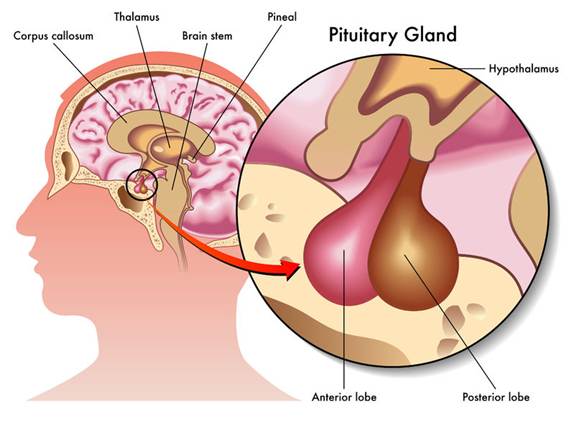
In 1996, aging researcher Greg Fahy visited his physician, and after his visit, went home with a month’s supply of growth hormone. Growth hormone is a hormone composed of a chain of protein building blocks (amino acids), produced in the brain’s pituitary gland, which helps children grow and helps regulate metabolism in adults.

With growth hormone injections, Fahy hoped to regrow his thymus, a small organ in the upper chest that helps establish and maintain immunity by making and training certain immune cells. In humans, the thymus starts shrinking very early in life and typically declines about 3% per year from early childhood through middle age, then more slowly after that. By old age, the thymus is often much smaller and largely replaced by fatty tissue.
Fahy’s hopes of regrowing his thymus were based on a 1986 study. In the study, scientists demonstrated that transplanting growth hormone-secreting tumor cells from the pituitary gland into aged rats successfully reversed age-related atrophy of the thymus. This study established a definitive link between growth hormone and thymus regeneration. Regenerating it, Fahy thought, would help restore his immunity and possibly promote longevity.
Fahy’s improvement was noteworthy: according to medical imaging tests, Fahy says his thymic mass nearly doubled. Whether the injections made him feel any younger was less clear.
“I was only 46 at the time, and more or less in peak health,” said Fahy in a Nature article.
Nonetheless, subsequent attempts to regrow the immune organ made him feel “energized and invincible.” These results from self-experimentation gave Fahy the impression that he was onto something and also piqued the interest of other researchers.
A Series of Small Human Trials Testing Thymic Regeneration
What started as unregulated self-experimentation has now turned into a series of small clinical trials conducted by a handful of biopharmaceutical companies. Accordingly, an eruption of thymus research has taken hold over the last three years. Reports in scientific literature have stimulated the eruption of research on the thymus, an organ once overlooked as being dispensable, suggesting it serves as an indicator of a person’s overall health. Moreover, two recently published studies reporting that dwindling thymic function correlates with an increased risk of death have added to the growing excitement.
In response, investors have begun funding thymus regeneration research at a larger scale. For example, in January 2026, a Swiss biotechnology company raised $12.4 million to develop thymus regeneration therapies aimed at slowing aging and preventing cancer. However, the company has not disclosed any specific drug candidates.
Also, in October 2025, a thymus-focused biotechnology company based in Massachusetts launched with $80 million in funding. Furthermore, other venture-capital and pharmaceutical companies have reached out to Fahy about starting their own thymus research programs.
“The interest now in this field is enormous,” says Marcel van den Brink, president of City of Hope, a cancer hospital and research center in California.
van den Brink has been studying the thymus since 1996. He says that there was a huge perception that he was wasting his time, but now, people are contacting him and taking his research seriously.
A Forgotten Organ
For decades, scientists have considered the thymus to be vestigial (a leftover organ from an earlier stage of evolution). In that regard, according to Georg Holländer, an immunologist at the University of Oxford in the UK, it was “forgotten” and “disrespected.”
Oddly enough, in the 1920s, some researchers thought the organ was involved in producing eggshells in birds. They also thought that the thymus served insignificant, limited roles in mammals. Then, decades later, Nobel Prize-winning scientist Peter Medawar referred to the organ as “an evolutionary accident of no great significance.”
These scientists were all wrong. They overlooked the thymus’s importance, in part, because mammals that have had their thymus surgically removed seem to continue living in a perfectly healthy state.
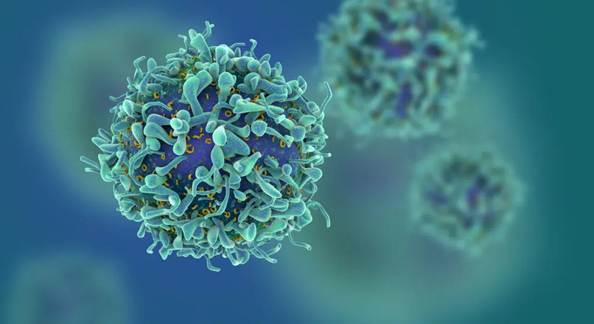
It was not until the 1960s that immunologist Jaques Miller performed thymus removal surgeries on very young mice to discover the immunological function of the organ. He found that infant mice lacking a thymus often succumbed to infection and died. Later, Miller also found that the thymus produces T cells, a type of immune cell, which are named after the organ. We have now come to understand that T cells serve as a crucial part of the immune system that attacks cancer cells and fights infections.
Research on the Thymus’s Function
Because the thymus shrinks as people get older, most scientists assumed that older individuals no longer need fresh T cells. This turned out to be another misconception.
“People are under the impression that it’s only important to make your T cells when you’re young,” says Jennifer Cowan, an immunologist at University College London. “And that’s just quite clearly not the case.”
Three discoveries changed that view. The first, a 2023 study, found that people who had their thymus removed were about three times more likely to die and about twice as likely to develop cancer at five years after thymus removal than people whose thymus was left intact.
“It was very striking,” says Cowan, “to the point where people aren’t going to want to have their thymus removed if they’ve read that paper.”
Then, in March 2026, two studies collectively analyzed data from 31,000 individuals. These studies built on the previous findings, but this time they applied to people with intact thymuses that had shrunk with age. One of the studies found that a smaller thymus correlates with a higher risk of death and a higher risk of developing cancer and cardiovascular diseases, like heart failure. The second study found that a shrunken thymus was associated with worse survival after receiving immunotherapy for cancer. Nonetheless, some scientists point to the studies only offering correlations.
“When you’re looking retrospectively, there’s a lot of pieces of the puzzle that are just not knowable,” says Daniel Boffa, a thoracic surgeon at Yale University.
Boffa and his colleagues performed a study in which they found little difference in the risk for recurring tumors in patients who had a part or all of their thymus removed to treat cancer of the thymus. Nevertheless, academic and commercial interest in the thymus has skyrocketed.
“Regrowth has become a big issue,” says Yousuke Takahama, a developmental biologist at the US National Cancer Institute in Maryland. “Just like rebooting your computer, it’s like rebooting our immune system.”
The Potential to Regenerate the Thymus
Some scientists think that the thymus has a lot of regenerative potential. For example, the thymus shrinks during pregnancy and then recovers after delivery, according to David Scadden, a haematologist at the Massachusetts General Hospital. This means that the thymus can grow back to some degree, which has led scientists to search for ways to regrow it. However, there are few proven therapies in existence for regenerating the organ.
Along these lines, a treatment for prostate cancer (called androgen deprivation therapy) can increase T cell output from the thymus. Calorie restriction, a sustained reduction in daily calorie intake while getting enough nutrients, does the same. Also, a treatment for children born without a thymus received regulatory approval in 2021; however, this procedure is costly and complex, involving transplantation of carefully processed tissue from donors into the child recipient’s thigh muscles.
Greg Fahy’s Cocktail Treatment for Thymus Regrowth
As for regrowth of the thymus in aged individuals, the approach furthest along in development is Greg Fahy’s cocktail of compounds. The cocktail consists of human growth hormone, DHEA (a hormone precursor to testosterone and estrogen), and metformin (a diabetes medication). The cocktail is injected four times a week.
Interestingly, a group of ten study participants showed signs of reversed aging after taking the cocktail for a year. To gauge reversed aging, Fahy looked at the participants’ readings on epigenetic clocks—age assessments based on chemical modifications on DNA that shift with age. More specifically, the cocktail treatment turned back people’s epigenetic age clocks by two and a half years, on average. Fahy says that he predicts that people will take injections of the cocktail for a year and then take a break for four years before repeating the cycle to purportedly reverse aging.
Future trials will test whether the cocktail can be modified to minimize side effects and improve physiological parameters like muscle strength, body fat composition, and the mass of brain tissue called white matter. According to Fahy, it will take a few more years before results of these trials become available.
Another biotechnology company, located in Pennsylvania, is doing research on an antibody that slows the shrinking of the thymus. Accordingly, the company has not disclosed what the antibody targets but plans clinical trials for it in 2027. The company’s chief executive says that the antibody could be a longevity drug, capable of preventing and treating diseases of aging.
Challenges for Thymus Regeneration
Several challenges remain for thymus regeneration. One of the biggest is targeting drugs to the thymus specifically, since the organ lacks unique receptors on the surface of its cells. Many drugs use unique receptors on cells to target specific tissues, so the lack of unique receptors on thymus cells makes targeting this organ a barrier. Also, many candidate drugs are delivered through intravenous injection, which can be inconvenient for long-term administration.
Furthermore, scientists say that most studies have not looked at how T cells produced by a regenerated thymus might improve health. It is also difficult to discern whether a regenerated thymus would exhibit restored thymic function. Finally, it is unclear when a thymus regeneration therapy would be widely available, and it could take years.
“We don’t fully understand how the interventions really regenerate the tissue, and we’re really scratching the surface,” says Ann Griffith, a microbiologist at the University of Texas Health Science Center at San Antonio.
 Comments