


Key Points:
- Rapamycin suppresses immune cell mTOR signaling, which is thought to promote health and longevity.
- Rapamycin alters various subtypes of immune cells called T cells, but whether these results are beneficial or detrimental is unclear.
- Rapamycin reduces immune signaling molecules associated with inflammation in the brain, and the majority of them are pro-inflammatory.
Rapamycin, a drug discovered on Easter Island (Rapa Nui), appears to have profound effects on the aging immune system. Originally used as a treatment against organ transplant rejection, scientists are now exploring its effects against chronic inflammation. In a recent study published in PLOS One, researchers found that rapamycin suppresses an immune signaling molecule called IL-17 and reduces brain inflammation in mice. These findings seem promising, but a recent study of older adults suggests that suppressing IL-17 may be detrimental.
Rapamycin Inhibits mTOR in Mice
Study Design
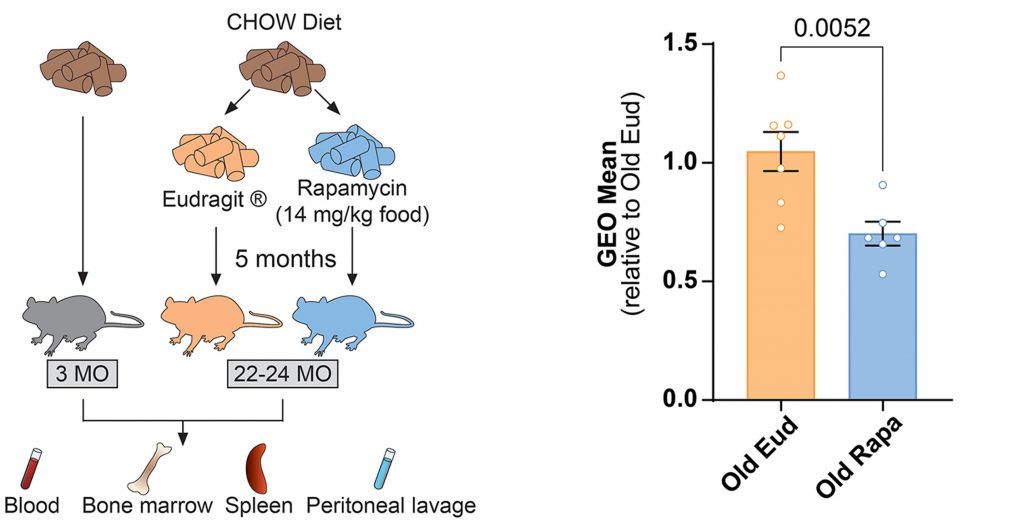
To understand how rapamycin might affect the aging immune system, researchers at the German Center for Neurodegenerative Diseases gave the drug to old mice. In human-age terms, the treatment started when the mice were about 55 years old and continued until they were about 65. The researchers compared them to young mice equivalent to about 22-year-old humans, as well as with old mice that received Eudragit, the plastic used to encapsulate drugs like rapamycin.
Rapamycin Reduces mTOR Signaling Within Immune Cells
The researchers examined immune cells from the mice’s blood, bone marrow, spleen, and peritoneal cavity, the space around the abdominal organs that also serves as a reservoir for immune cells. They found that rapamycin blocked mTORC1, a protein complex that helps cells sense nutrients and energy levels. The name mTOR—mechanistic target of rapamycin—reflects the fact that it was first identified as a target of rapamycin, which is why rapamycin is known as an mTOR inhibitor. Together, these findings suggest that rapamycin suppresses mTORC1 signaling in the immune cells of old mice.
Rapamycin Exacerbates T Cell Aging?
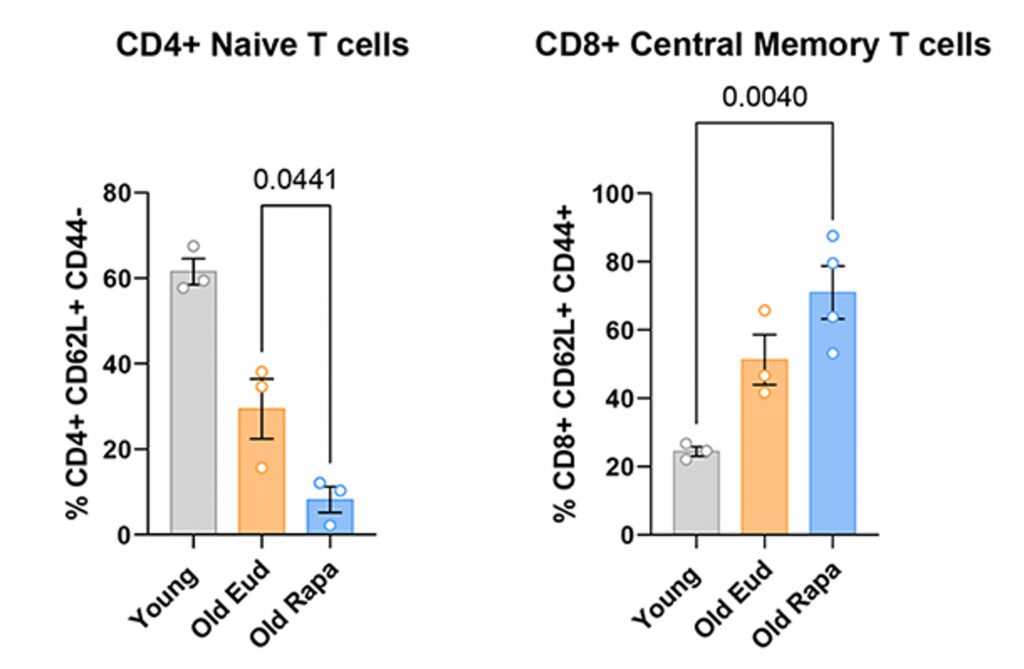
The researchers also examined whether rapamycin altered T cells and B cells, which are part of the adaptive immune response. The adaptive immune response involves immune cells “remembering” specific antigens, so that if that antigen is ever seen again, the adaptive immune system can mount a quicker response. While the researchers did not find any changes in B cells, they found changes in the various subtypes of T cells.
For example, they found that a subtype of T cells called memory T cells was elevated by rapamycin. Moreover, another subtype of T cells, called naïve T cells, was reduced by rapamycin. These findings are unclear, as aging is associated with an increase in memory T cells and a decrease in naïve T cells, suggesting that rapamycin exacerbates the changes that occur with aging.
Rapamycin Elevates γδ T Cells
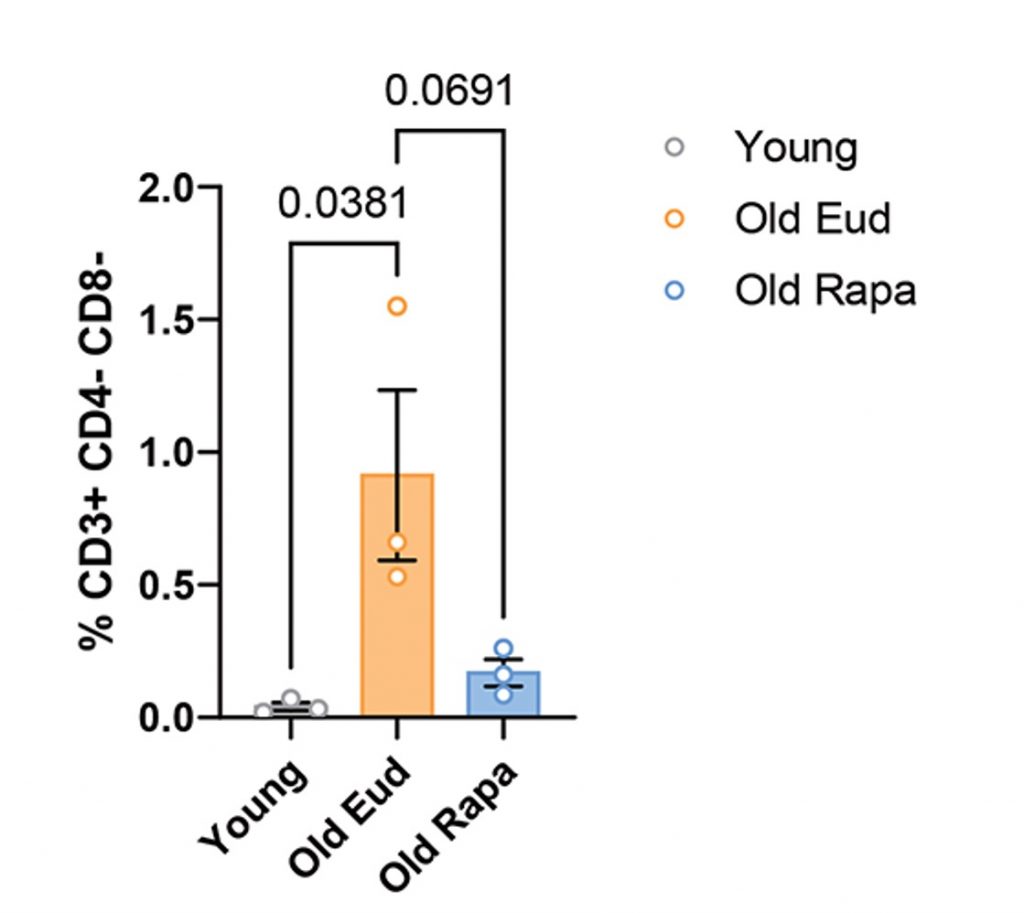
There are two major T cell lineages. The majority of T cells are αβ T cells, which can detect only foreign antigens. In contrast, the rare γδ T cells can detect both foreign and self-antigens. For this reason, they are implicated in killing cancer cells. Moreover, rapamycin has been shown to prolong the lifespan of mice in many studies. It has been proposed that this lifespan-extending effect is due to protecting against cancer. What’s more, the anti-cancer effects of rapamycin have been shown to be mediated by γδ T cells.
The immune system is highly complex and intricate, and γδ T cells are subdivided based on the signaling molecules they secrete. Some γδ T cells secrete IFN-γ- and others secrete IL-17. The researchers found that the γδ T cells that secrete IL-17 were elevated in old mice compared to young mice. Moreover, rapamycin reduced these IL-17 γδ T cells, although the results were not statistically significant. These findings suggest that rapamycin prevents the increase in IL-17 γδ T cells that occurs with aging.
Rapamycin Reduces Brain Inflammation
The IL-17 immune signaling molecule has been implicated in neurological disorders such as Alzheimer’s disease, Parkinson’s disease, and depression. Immune signaling molecules like IL-17, which are called cytokines, modulate inflammation. Cytokines can either be pro-inflammatory or anti-inflammatory. The researchers measured cytokine genes from brain immune cells—microglia—but found no significant changes with age or with rapamycin treatment. These findings are somewhat unexpected, considering that brain inflammation is thought to increase with age.
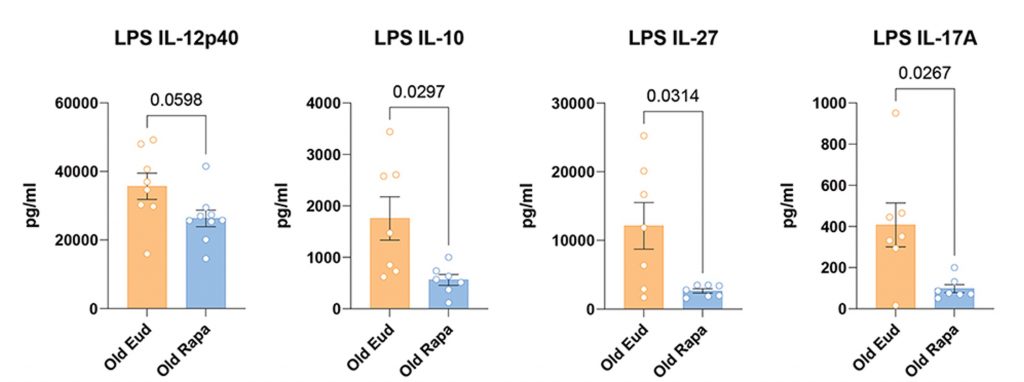
Perplexed, the researchers decided to stimulate an inflammatory response using a compound that triggers a strong immune response, LPS (lipopolysaccharide). This time they used younger mice that were treated with rapamycin from 30-years-old to 40-years-old, in human-age terms.
After rapamycin treatment, the mice were exposed to LPS, and blood samples were taken to measure their cytokines. They found that rapamycin reduced several pro-inflammatory cytokines, including IL-17A, which is the most studied IL-17, of which there are six. Rapamycin also reduced an anti-inflammatory cytokine named IL-10. Taken together, these findings suggest that rapamycin may reduce brain inflammation.
Taking Rapamycin to Improve Immune Signaling
A recent study showed that lower circulating IL-17 levels were associated with greater frailty—a condition of increased vulnerability to disability, disease, and mortality—in older adults. However, the authors of the study emphasize the complexity of immune signaling:
“The biological interpretation of IL-17 in aging remains complex. Although lower IL-17 levels were associated with greater frailty severity in the present study, IL-17 is a pleiotropic cytokine with both protective and potentially deleterious effects depending on the biological context.”
Due to this complexity, it is difficult to interpret the results of the present study. Future studies may further examine the immune-boosting effects of rapamycin against cancer and other age-related diseases in older adults.
 Comments