


Key Points:
- Folic acid supplementation counteracts the age-related decline in the “master antioxidant” glutathione.
- This B vitamin slows vascular aging by preventing blood vessel alterations that increase the risk of cardiovascular disease.
- Folic acid prevents cellular senescence, a fundamental driver of aging that contributes to cardiovascular disease.
Antioxidants are the molecular enemies of aging, fighting a lifelong war against reactive oxygen species (ROS). As signaling molecules, ROS are essential for crucial processes like immune defense and stress adaptation. However, excessive levels of ROS trigger a type of cellular damage called oxidative stress—a fundamental driver of aging that affects all tissues, including the inner wall of blood vessels.
In our early years, antioxidants triumphantly win most of the battles fought against the small armies of ROS generated within our cells. However, as we age, ROS levels rise to overcome our antioxidant defenses, causing damage to DNA, mitochondria, and other vital structures. These lost battles are in part due to diminishing antioxidant levels. Nevertheless, recruiting reinforcements and restoring antioxidant levels may increase the chances of winning the war against aging.
Along those lines, researchers from China and the University of Washington in the United States have published a new study in Nature Communications showing that folic acid (also known as vitamin B9 or folate) restores natural antioxidant levels. Moreover, folic acid was shown to ameliorate cell senescence and improve blood vessel health in aged mice, suggesting that this B vitamin slows vascular aging.
Folic Acid Elevates “Master Antioxidant”
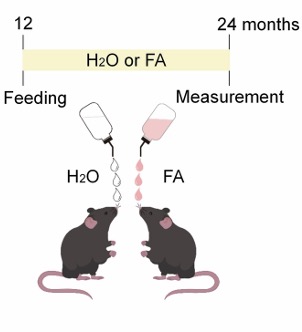
Based on estimates from our AGE/DOSE calculator (see top right corner of home page), the study roughly models a scenario whereby human subjects consumed 500 mg of folic acid (for someone who is 165 lbs) from the age of 45 to the age of 75. Specifically, mice received 0.1 mg/kg/day of FA in their drinking water at an age approximately equivalent to 45 human years until they were roughly equivalent to 70 human years.
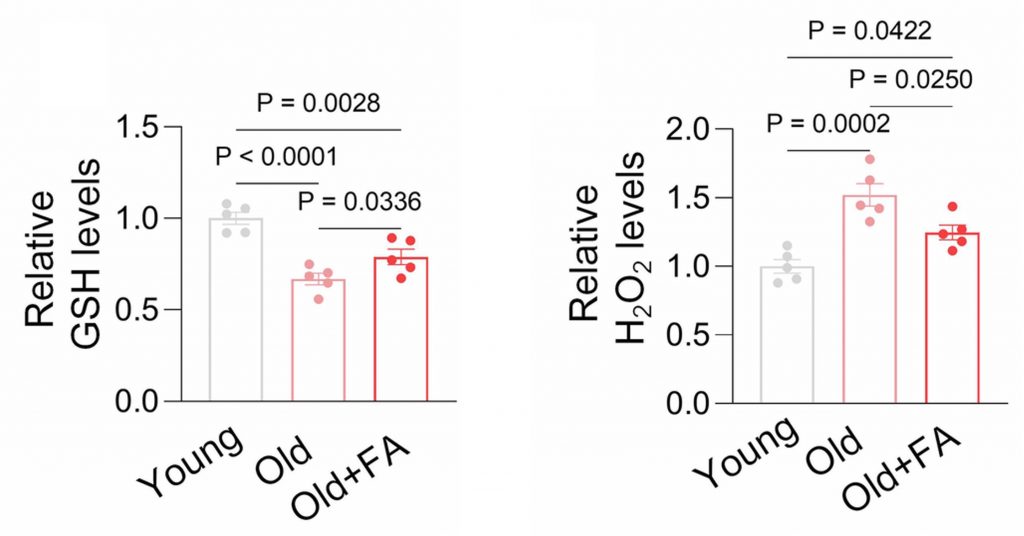
Remarkably, compared to old mice that drank ordinary water, the FA-treated old mice exhibited higher levels of the “master antioxidant” glutathione. Glutathione is the most abundant natural antioxidant in our body. It directly neutralizes ROS, such as hydrogen peroxide, one of the most pervasive of its kind. Indeed, FA-treated old mice exhibited a significant reduction in hydrogen peroxide, suggesting FA reduces ROS by increasing glutathione.
Folic Acid Slows Vascular Aging
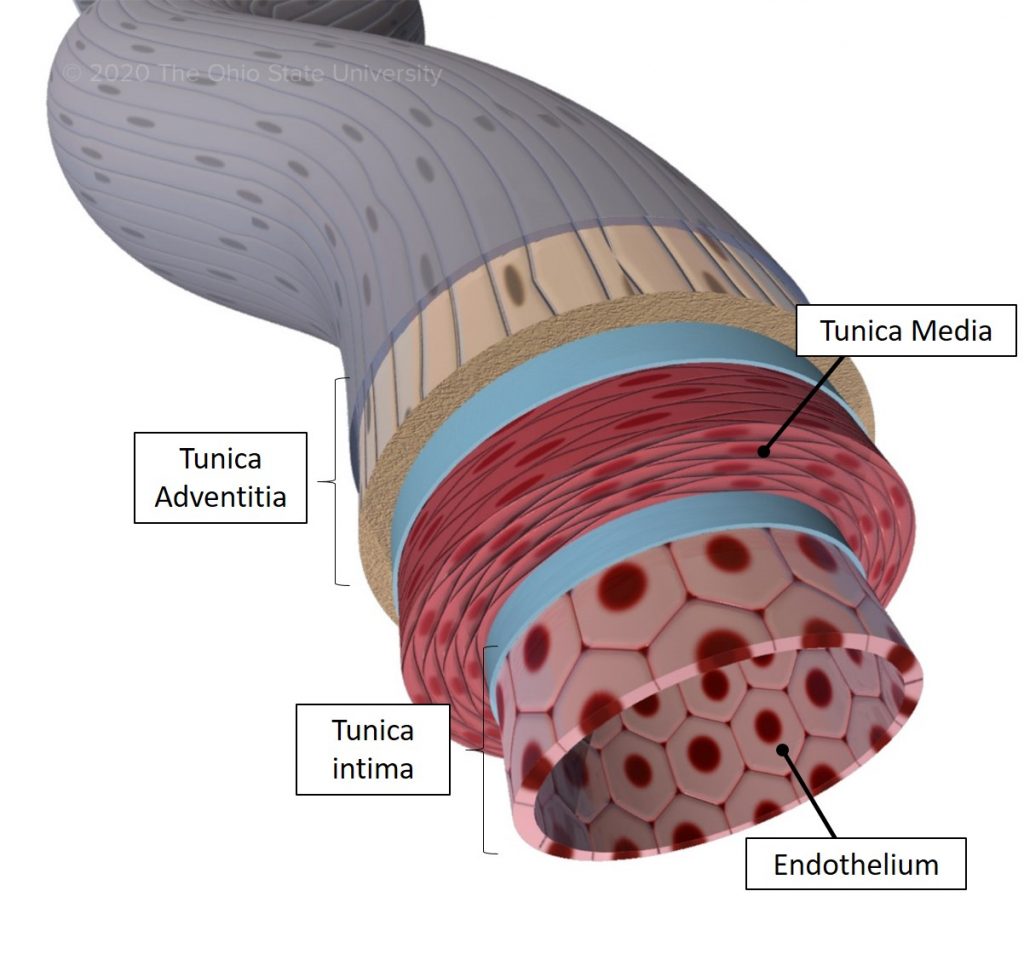
Our blood vessels, particularly our arteries and veins, are composed of three structural layers. The middle layer, called the tunica media, contains muscles that control the flow of blood. However, with age, the tunica media becomes thicker and more fibrous, leading to blood vessel stiffness. Blood vessel stiffness is a serious condition that can promote the development of heart disease, which is the leading cause of death.
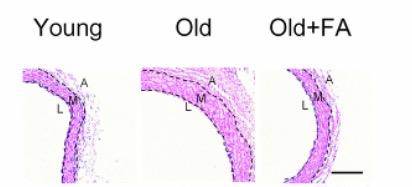
The researchers found that FA supplementation prevented the age-related thickening of the tunica media while also reducing fibrous tissue, suggesting that FA counteracts blood vessel aging. Additionally, FA increased blood vessel relaxation, indicating improved elasticity and reduced stiffness, also suggesting slowed blood vessel aging.
Folic Acid Combats Cell Senescence
Like oxidative stress, cell senescence is a fundamental driver of aging. When our cells experience excessive levels of stress, such as DNA damage or oxidative stress, they enter a state of senescence and become senescent cells. When this occurs, proteins called p16 and p21 are often activated to stop the senescent cells from dividing. As such, senescent cells are thought to protect against cancer, which is characterized by uncontrollable cell division.
Scientists theorize that, when the immune system declines with age, so too does the elimination of senescent cells. This leads to the accumulation of senescent cells, which emit molecules that promote aging in various ways. One such molecule is VCAM-1, a marker of inflammation that can indicate blood vessel dysfunction. VCAM-1 plays a key role in stimulating the development of age-related conditions like heart disease and cancer.
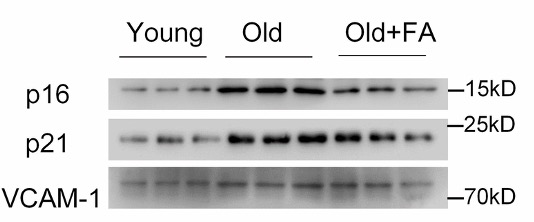
Strikingly, FA treatment was shown to reduce cell senescence, as indicated by reduced p21, p16, and VCAM-1 protein levels in the blood vessels of old mice. Moreover, FA-treated old mice exhibited a significant reduction in mRNA levels for molecules secreted by senescent cells. These findings suggest that FA combats cell senescence by preventing the accumulation of senescent cells, thereby reducing the age-promoting molecules they secrete.
It’s All About NADPH
NAD+ (nicotinamide adenine dinucleotide) has previously been shown to play a beneficial role in vascular aging. Before conducting the folic acid experiments, the researchers conducted a series of experiments involving the cousin of NAD+: NADPH (nicotinamide adenine dinucleotide phosphate). Like NAD+, NADPH is an electron carrier that plays an essential role in converting the food we eat into cellular energy. Importantly, NADPH maintains the activation of the “master antioxidant” glutathione.
The researchers discovered that NADPH levels were elevated in the cytosol of senescent cells. Not just any senescent cells, but senescent endothelial cells. Endothelial cells line the inner wall of blood vessels and play a critical role in cardiovascular health and disease. The researchers found that elevating NADPH levels even further prevented endothelial cell senescence, saying,
“Based on these findings, targeting endothelial NADPH metabolism may become a unique approach for vascular aging therapy.”
However, NADPH is prone to degradation and cannot be administered directly as treatment. Therefore, the researchers screened over 1,400 FDA-approved drugs to identify a suitable compound for raising cytosolic NADPH levels, landing on folic acid. Folic acid was originally approved to prevent neurological disorders, but it also generates NADPH when metabolized. Moreover, the authors point out that,
“Numerous reports have suggested that FA supports healthy life and lowers the risk of cardiovascular disease in the elderly.”
Folic Acid Supplementation for Cardiovascular Health and Longevity
Through the course of their study, the researchers found that genetically potentiating glucose metabolism raises NADPH levels. Similar to folic acid, when glucose is metabolized, it generates NADPH. Interestingly, genetically potentiating glucose metabolism by the same method has been shown to extend the lifespan of mice by raising NADPH levels and reducing oxidative stress.
Together, these studies suggest that folic acid may potentially prolong the lifespan of mice by increasing NADPH and reducing oxidative stress. It’s thought that, by reducing blood vessel oxidative stress, folic acid prevents cell senescence and improves vascular health. There is clinical evidence to support this, including a 2025 meta-analysis of 45 randomized controlled trials that concluded that folic acid supplementation is capable of reducing the risk of stroke and cardiovascular disease.
 Comments