


Key Points:
- Although the exact cellular mechanisms by which astaxanthin may protect against aging have yet to be fully determined, evidence suggests it modulates genes linked to longevity.
- Astaxanthin has also been found to shield the membranes of cell powerhouses (mitochondria) from harmful, reactive molecules and improve their energy-generating capacity.
- In a human study, astaxanthin supplementation improved cognitive function in older adults.
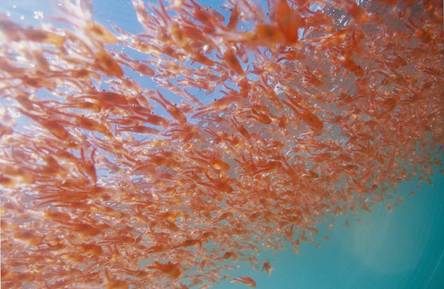
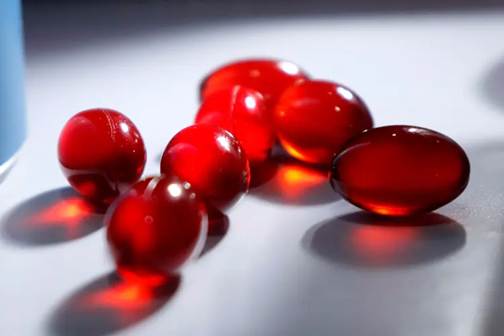
Astaxanthin is a naturally occurring red-orange pigment found in algae and marine foods like salmon, shrimp, krill, and trout. Humans cannot readily synthesize astaxanthin in the body, so they get it from their diets, most notably from seafood. Another way to get astaxanthin comes through supplements, in capsule and soft gel form, which are available for purchase online or in retail stores.
Humans do not actually need to consume astaxanthin. It is best thought of as an optional dietary supplement or food-derived antioxidant, not an essential nutrient with a daily intake requirement. However, some scientific literature describes potential benefits of astaxanthin against aging.
Interestingly, a program known to rigorously test the impact of interventions on mouse lifespan found that astaxanthin supplementation extended the average lifespan of male mice by 12%. While further studies are required to determine whether astaxanthin confers broad effects against aspects of aging in humans, the following will explore its mechanisms of action and data suggesting it counters age-related cognitive decline in older adults.
Astaxanthin and Aging
The accumulation of harmful reactive molecules in cells (a phenomenon known as oxidative stress) is widely viewed as an important contributor to the biology of aging. This is the case, in part, because aging is associated with higher cellular levels of these molecules and weaker antioxidant defenses against them. As a potent antioxidant, astaxanthin is believed to bolster the cells’ abilities to lower oxidative stress for the preservation of cellular function during aging.
Although the exact mechanisms by which astaxanthin may promote effects against aging remain to be fully elucidated, several studies have shown that it can stimulate a wide array of cellular mechanisms. Among these cellular mechanisms, astaxanthin modulates genes and proteins that help control gene activity (transcription factors) directly linked to longevity. For example, astaxanthin influences levels of the transcription factor FOXO3, which is strongly associated with human longevity.
Astaxanthin also works at the cellular level by shielding the membranes of mitochondria from oxidative stress. This is believed to help improve mitochondrial energy-generating capacity.
Human Trial Data Suggesting Astaxanthin Confers Effects Against Aging
As far as human trial evidence goes, one trial showed that it improved cognitive function in healthy, older adults. In this study, participants took a daily dosage of 12 mg of astaxanthin. The results of this human trial provide evidence that astaxanthin supplementation may help preserve cognitive function during aging.
Another human trial that used healthy, older participants between the ages of 60 and 70 showed that astaxanthin supplementation lowered a marker of oxidative stress in the blood. This effect was enhanced by astaxanthin’s combination with dark chocolate for enhanced bioavailability (the extent to which a substance is absorbed and becomes available at its site of action in the body). Notably, the daily dosage of astaxanthin administered in this study was 7 mg, and when the researchers added dark chocolate to astaxanthin, they administered 10 g. This study supports the notion that the antioxidant astaxanthin counters increased oxidative stress with age.
Animal Studies of Astaxanthin’s Effects Against Aging
An animal study found that astaxanthin administration improved cognitive function in old mice. Another study in aged rats found that astaxanthin increased levels of BDNF—a protein that supports neuronal survival and growth and which is important for learning and memory—in the brain. Collectively, these rodent studies suggest that astaxanthin counteracts aspects of age-related cognitive decline.
Deciding Whether to Supplement with Astaxanthin
Astaxanthin’s precise cellular mechanisms of action have yet to be fully elucidated. However, some research suggests it works, in part, by modulating genes and transcription factors linked to longevity. Moreover, as a potent antioxidant, it may help to lower oxidative stress in cells and enhance mitochondrial energy-generating capacity.
For anyone interested in supplementing with astaxanthin for its potential to counter age-related cognitive decline and possibly modulate longevity pathways, supplementing with about 10 mg daily may serve as an optimal dose. This dosage range was identified because the two human trials showing reduced oxidative stress and improved cognitive function used 7 mg and 12 mg daily doses, respectively. A month’s supply of astaxanthin can cost anywhere between $13 and $50, and some of the products contain 10 mg daily doses, within the recommended daily dosage stipulated here.
 Comments