


Key Points:
- ALA declines with age in the small intestine of humans.
- Treatment with ALA restores intestinal stem cell function and regenerative capacity.
- ALA rejuvenates stem cells by improving the cells that guard them.
Our age tells us how long we’ve been here, but how we look and feel can depend largely on the health of our organs. For instance, the health of our skin shapes how we look, and the health of our gut shapes how we feel. While our skin renews itself about every month, our gut rebuilds itself every few days. This ongoing repair, which keeps organs like the skin and gut healthy, is driven mainly by stem cells.
The small intestine, a region of the gut, digests food, absorbs nutrients, and protects against lethal toxins and microorganisms. By replacing damaged cells, stem cells can help repair the small intestine, but this regenerative capacity declines with age. Age-related intestinal wall decline may ultimately lead to reduced nutrient absorption and leaky gut, contributing to malnutrition, inflammation, and tumors.
With this in mind, scientists have searched for interventions capable of rejuvenating the reparative capacity of intestinal stem cells. In a recent study published in Nature Communications, researchers from Sichuan University in China may have found just that. They show for the first time that small intestine ALA declines with age in humans. What’s more, restoring ALA, in both human and mouse models, improves the regenerative capacity of the intestinal wall.
Small Intestine ALA Declines with Age
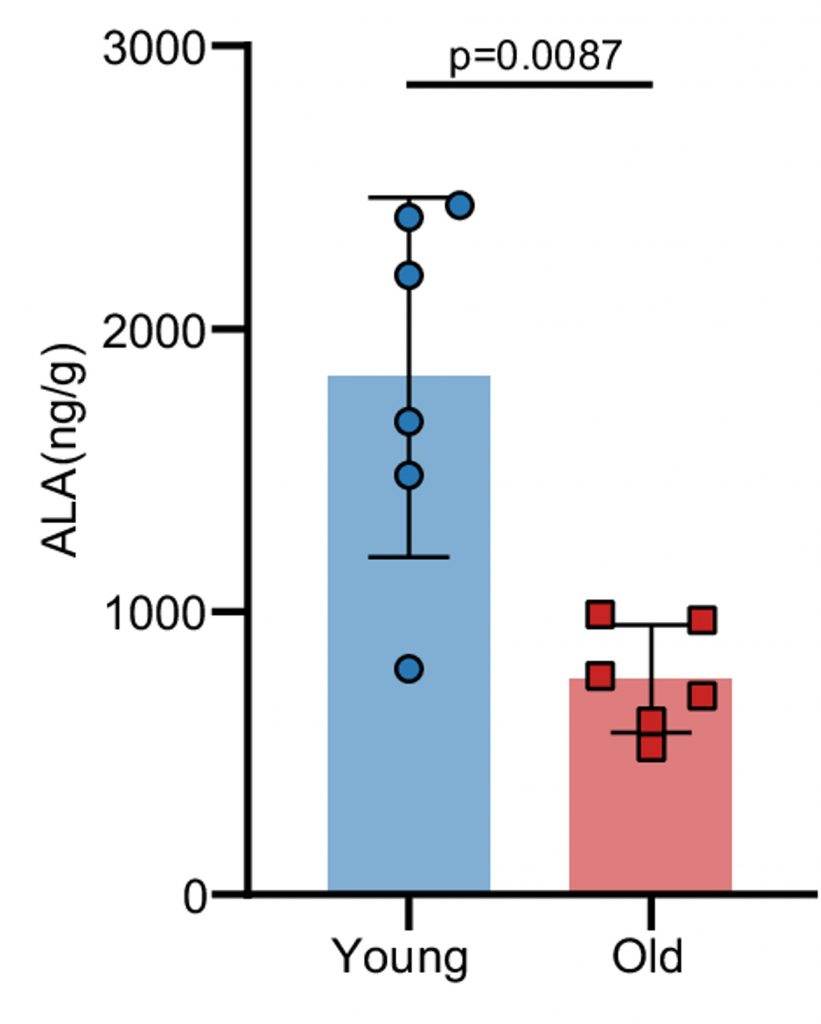
The Sichuan University researchers previously found that aged flies have lower gut ALA levels than young flies. To confirm this in humans, they collected small intestine samples from stomach cancer surgery patients. The samples had no signs of cancer. Similar to flies, the researchers found that the samples from older individuals (>60 years) had lower levels of ALA than samples from young individuals (<60 years). The older individuals also had less of the enzyme that synthesizes ALA. These findings suggest that ALA declines with age in the small intestine of humans due to a reduction in its synthesis.
ALA Rejuvenates Intestinal Stem Cells
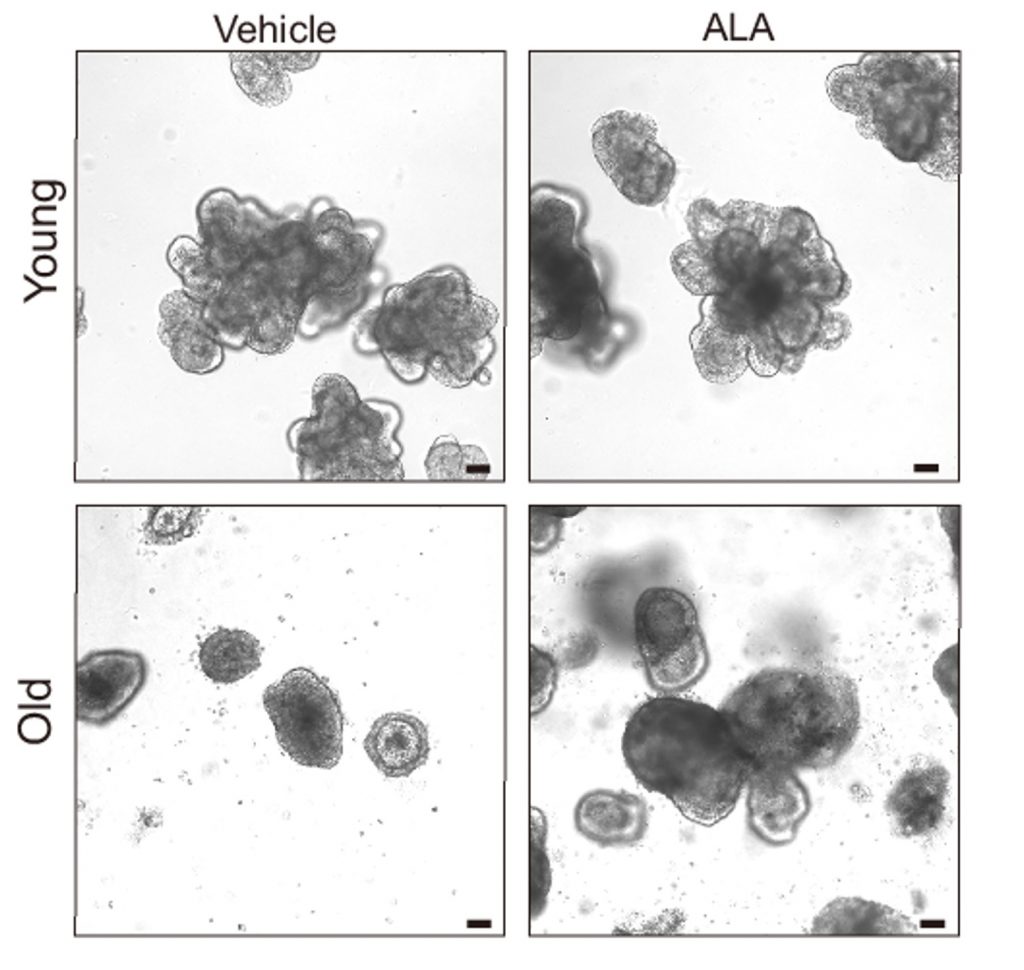
Less than 20 years ago, scientists began experimenting with miniature organs called organoids. Human organoids are considered ideal for lab dish experiments, since they closely imitate human organs. As such, the researchers used intestinal stem cells from the collected intestine samples to generate human small intestine organoids. They found that stem cells from older individuals needed treatment with ALA to develop, suggesting ALA restores the regenerative capacity of intestinal stem cells from older individuals.
The researchers also tested the effect of ALA on the small intestine of mice. They found decreased proliferating stem cells, signs of increased gut wall leakiness, and abnormal mitochondria in the old mice. However, oral ALA treatment rejuvenated the stem cells, increased signs of gut wall integrity, and improved mitochondrial structure. Moreover, like the stem cells from older humans, the intestinal stem cells from older mice needed ALA to develop into organoids. Together, these findings suggest that ALA rejuvenates the capacity of intestinal stem cells to regenerate small intestine tissue.
To assess repair, the researchers induced intestinal ulcers in old mice using a prescription-strength NSAID (nonsteroidal anti-inflammatory drug). Over seven days, the ulcers become worse, indicating reduced stem cell reparative capacity. However, ALA treatment improved the healing of the ulcers, increased stem cell proliferation, and restored mitochondrial structure. These findings suggest that ALA counters age-related decrements in small intestine regeneration.
ALA Inhibits mTOR to Prevent Gut Stem Cell Aging
Paneth cells guard intestinal stem cells and secrete compounds that destroy harmful microbes. The researchers found that with age—in organoids from older humans and in old mice—Paneth cells abnormally accumulate. This accumulation, and other Paneth cell abnormalities, were reversed by ALA treatment. Further investigation revealed that Paneth cells from aged intestinal tissue exhibit signs of increased mTOR (mechanistic target of rapamycin) activity. With age, it is thought that mTOR, a nutrient-sensing molecule, becomes hyperactive, contributing to a shorter lifespan.
To assess mTOR activity, the Sichuan University researchers measured a protein called S6. When mTOR is active, it directly turns on S6, which plays a vital role in cellular growth and proliferation. The researchers found that activated S6 was increased in organoids derived from old mice, which was reversed by ALA treatment. Similar effects were observed in the intestine of old mice. Moreover, ALA was found to inhibit mTOR only in Paneth cells but not in intestinal stem cells.
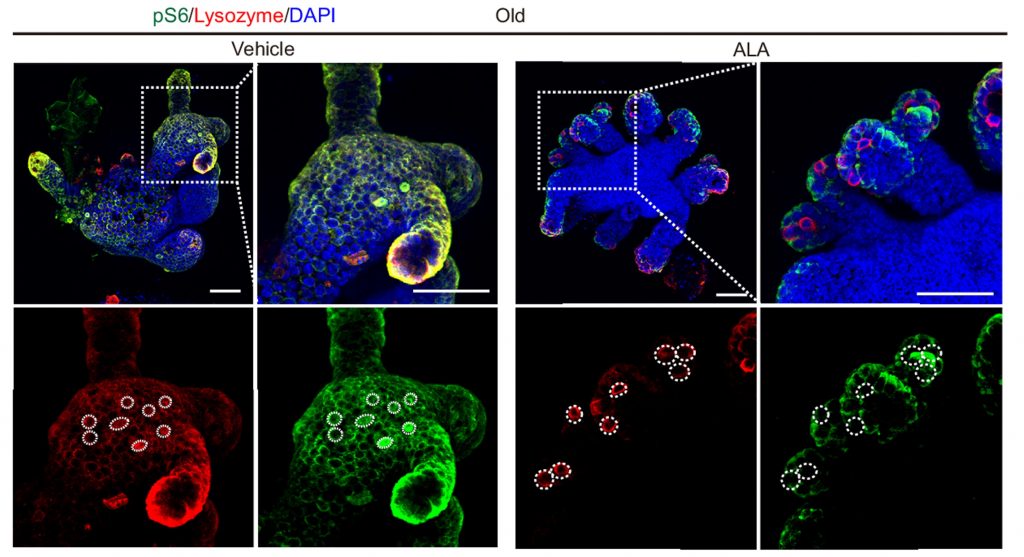
Through further experimentation, the researchers elucidated a model for how ALA could be rejuvenating stem cells. In their model, ALA inhibits mTOR in Paneth cells, which are within the same niche as intestinal stem cells. When mTOR is inhibited, the Paneth cells send signals to intestinal stem cells that rejuvenate them. This model suggests that ALA improves the health of intestinal cells by improving the health of Paneth cells.
Taking ALA for Gut Rejuvenation
Studies suggest that ALA exhibits properties capable of preventing or treating age-related conditions, such as neurodegeneration, metabolic disorders, cancer, infertility, and skin aging. However, there are not many human studies to confirm ALA’s anti-aging effects. An analysis of 11 studies showed that ALA reduces blood pressure, which suggests it could potentially counteract cardiovascular aging. However, when it comes to gut aging, there are far fewer studies.
Still, ALA can be found in supplement form, either alone or as part of a multi-component intervention like SRN-901, which is similar to Restorin. ALA is also abundant in organ meats, like liver, and in green vegetables, like spinach and broccoli. Moreover, it’s possible that individuals with a leaky gut, which can be exacerbated by alcohol and refined sugars, may benefit from the effects of ALA, particularly in old age when intestinal stem cells tend to become dysfunctional.
 Comments