


Key Points:
- SRN-901 extended the remaining lifespan of adult mice by 33% in a late-life intervention study.
- The treatment was associated with a 70% attenuation of frailty progression and a 30.53% reduction in tumor incidence.
- Gene expression and metabolite analyses suggested that SRN-901 affected pathways tied to aging, inflammation, and metabolism.
Aging is a multifactorial process marked by declining physiological function, rising frailty, and increased vulnerability to age-related disease. To address that complexity, Seragon developed SRN-901 as a multi-component intervention designed to act on several aging-related pathways at once. The approach stands out in a field where combination therapies remain less common than single-agent strategies.
According to a study published in Drug Design, Development and Therapy, researchers at Seragon in Irvine, California, found that SRN-901 significantly extended remaining lifespan in adult mice by 33%. The treatment was also associated with slower frailty progression and a lower incidence of tumors. Additional gene expression and metabolite analyses suggested that SRN-901 altered biological pathways linked to aging and age-related decline.
In the paper, the data showed that SRN-901 administration significantly increased lifespan in mice, reduced frailty scores, modulated proteomic and gene expression pathways linked to longevity and aging-related diseases, and inhibited metabolic aging.
Lifespan, Frailty, and Tumor Incidence
To test the effects of SRN-901 on lifespan, Seragon researchers used 18-month-old C57BL/6 mice, an age the article describes as roughly comparable to mid- to later-life adulthood in humans. The animals received SRN-901, rapamycin, nicotinamide mononucleotide (NMN), or nicotinamide riboside (NR), and were followed until a humane endpoint was reached.
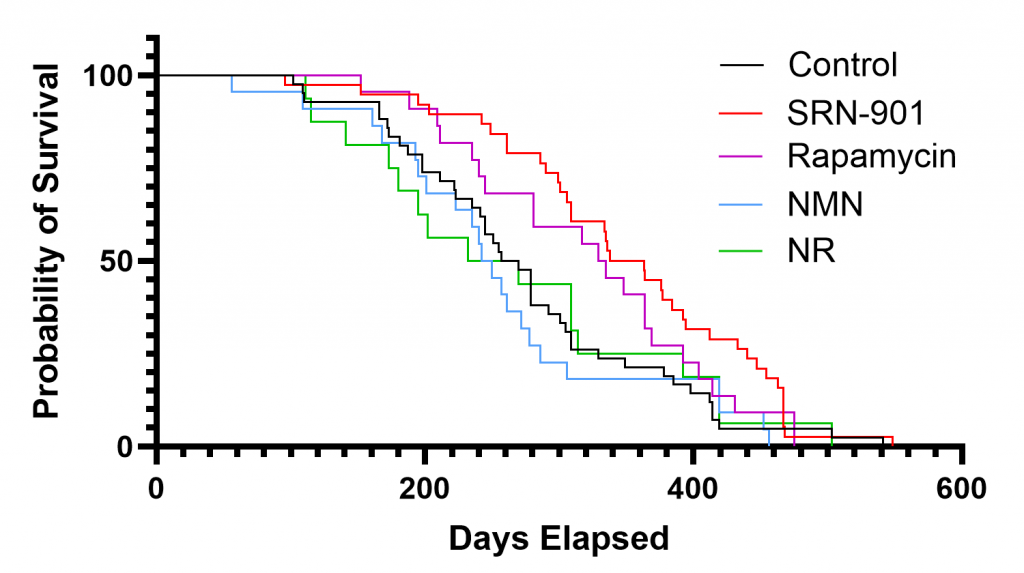
SRN-901-treated mice showed a 33% increase in median remaining lifespan. The treatment was also associated with a 46% reduction in the hazard of death. Rapamycin significantly improved median remaining lifespan as well, but to a lesser extent than SRN-901, while NMN and NR did not significantly extend lifespan in this experiment.
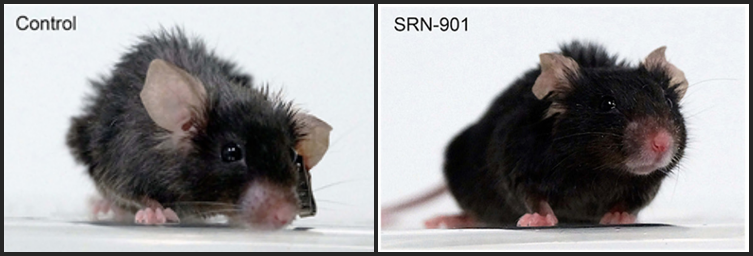
The study also examined whether the added lifespan was accompanied by better health during aging. To do that, the researchers measured frailty, a broad indicator of age-related decline in physical function. Lower frailty generally suggests better healthspan, or the portion of life spent in relatively good health.
Frailty assessments performed before and after treatment indicated a 70% attenuation of frailty progression in the SRN-901 group. The findings suggest that, in addition to extending lifespan, the treatment may help preserve aspects of physical function later in life.
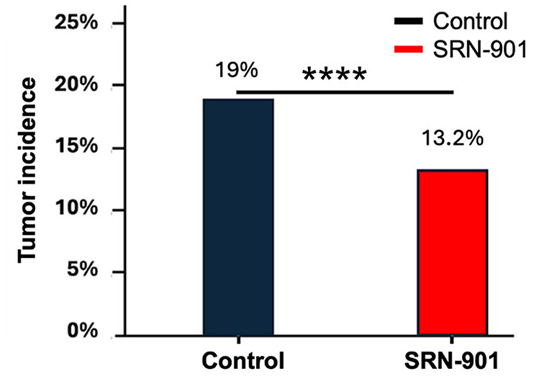
Researchers also looked at tumor incidence at the ends of the animals’ lives. They reported a 30.53% reduction in tumor incidence in mice treated with SRN-901, from 19% in controls to 13.2% in the treatment group. While that finding does not establish an anti-cancer effect, it adds to the evidence that the intervention may influence overall healthspan.
What the Molecular Analyses Found
To investigate how SRN-901 might be influencing lifespan, the researchers analyzed gene expression profiles before treatment and again 56 days after dosing began. Those analyses showed significant modulation of age-associated disease pathways, including the downregulation of pathways related to Alzheimer’s disease. The finding suggests suppression of molecular programs associated with aging and neurodegeneration, although it does not establish a direct effect on cognition or human disease.
The team also examined metabolite profiles in the mice’s blood before treatment and 56 days after the start of dosing. They reported increased activity in metabolic pathways involving glutathione metabolism, insulin signaling, and FoxO signaling, pathways often discussed in aging research because of their roles in antioxidant defenses, metabolism, and cellular repair. Together, the results suggest that SRN-901 may act through a combination of metabolic and stress-response mechanisms rather than through a single pathway alone.
What the Findings Mean for Humans
The study adds to growing interest in combination approaches to aging interventions. By targeting multiple pathways simultaneously, SRN-901 may offer advantages over the single-agent interventions used as comparators in this study, including rapamycin, NMN, and NR.
Still, the findings remain preclinical. Whether SRN-901 produces comparable effects in humans will have to be tested in clinical trials. Because direct lifespan studies in people would take decades, researchers may need to rely on intermediate measures of biological aging to assess whether the intervention affects the pace of aging.
One possibility is to examine whether long-term SRN-901 use influences epigenetic aging, a measure based on chemical modifications to DNA that is often used as a proxy for biological age. Some research suggests that epigenetic age acceleration is linked to a higher risk of mortality. If future trials show that SRN-901 slows epigenetic aging or improves other validated biomarkers, researchers would have a faster way to evaluate whether the therapy has potential relevance for human longevity.
For now, the mouse data suggest that SRN-901 merits further study as a multi-pathway aging intervention. The combination of lifespan, frailty, tumor incidence, and molecular findings makes the study more substantive than a simple single-endpoint longevity claim.
 Comments