


Key Points:
- Scientists developed ClockBase Agent, an artificial intelligence (AI) platform that reanalyzed the genes from millions of human and mouse samples.
- The scientists integrated this data with over 40 aging clock predictions, identifying over 500 interventions that significantly reduce biological age, missed by the original investigators.
- A drug called ouabain stood out as a top-scoring AI-identified intervention, and further experimentation confirmed that it prevented age-related frailty in old mice.
A colossal trove of molecular data, compiled by scientists over decades, has enabled testing millions of samples across an array of interventions. However, the researchers who helped generate these data rarely analyzed them for their effects on aging.
Now, as published in a non-peer-reviewed preprint, Gladyshev and colleagues from prestigious institutions such as Harvard and MIT have developed an AI program called ClockBase Agent to reanalyze these data and predict their effects on aging. In doing so, the researchers integrated the enormous amount of data with over 40 aging clock predictions to identify over 500 aging interventions missed by the original investigators. The researchers also ran a large-scale analysis revealing a few fundamental patterns:
- Significantly more interventions accelerate rather than decelerate aging.
- Disease states, such as viral infections, predominantly accelerate aging.
To verify the utility of ClockBase Agent, the researchers tested the effects of a top-scoring aging intervention molecule, ouabain, on old mice and found that it prevented age-related frailty. With their new AI program, Gladyshev and colleagues have identified a massive number of interventions to test for effects against aging in future research. They have also utilized AI to open the door to advancing large-scale longevity research.
ClockBase AI Agent Uncovers Over 500 Potential Aging Interventions Missed by Researchers
To generate the ClockBase Agent, Gladyshev and colleagues integrated three core components to enable the discovery of age-modifying strategies from over 2 million samples derived from molecular research. For the first component, the ClockBase Agent integrated all publicly available human and mouse data based on DNA molecular tagging patterns (methylation) and gene expression with aging clock predictions of biological age (age assessments based on how well cells and tissues function). For the second component, ClockBase Agent processed datasets through a structured workflow, generating aging-focused hypotheses, selecting appropriate statistical analysis methods, conducting literature reviews, and producing scientific reports that scored and prioritized anti-aging interventions. For the third component, the researchers developed an interactive web platform providing access to all predictions of biological age. With these three core components, ClockBase Agent allows an automated reanalysis of thousands of studies with multiple markers of aging.
For Gladyshev and colleagues’ analysis of the enormous amount of mouse and human data, they implemented more than 40 aging clock models. Their analyses with these clocks provided insight into how certain interventions affect biological age predictions.
Through their deployment of ClockBase Agent on mouse gene activity data, Gladyshev and colleagues identified some 900 pharmacological agents that significantly affect biological age predictions. The most notable biological age-reducing agent identified was ouabain, a molecule derived from African plants that is prescribed in countries like France and Germany to treat heart failure and heart arrhythmias. ClockBase Agent also identified the molecule rapamycin, traditionally prescribed to prevent organ rejection in transplant recipients, as a top anti-aging agent. Moreover, ClockBase Agent identified fenofibrate, a medication used to treat high cholesterol, as a potential anti-aging agent. The extensive list of pharmacological agents that ClockBase Agent identified with potential anti-aging effects warrants a vast amount of future studies to test whether they can slow aging in humans.
Notably, besides pharmacological agents, ClockBase Agent also pinpointed environmental exposures that have an effect against aging. Among these, mechanical overload, which involves progressively increasing the stress on muscles beyond their usual capacity with exercise, forcing muscles to grow back stronger and bigger, coupled with senolytics (agents that selectively eliminate dysfunctional cells), significantly reduced biological age. These findings suggest that using certain environmental exposures, such as high-intensity exercising coupled with senolytics, can lower one’s biological age.
Importantly, along the lines of environmental exposures, ClockBase Agent predicted that disease states, such as viral infections and metabolic disorders, significantly accelerate aging, a phenomenon that some data have provided evidence for previously. These data suggest that many pathological conditions accelerate the pace of biological aging, which highlights the importance of preventing such conditions in the first place.
To examine whether ClockBase Agent’s predictions have clinical relevance for humans, Gladyshev and colleagues noted which agents have received FDA approval. Interestingly, the researchers identified 78 FDA-approved compounds that showed anti-aging effects in ClockBase Agent’s analytical pipeline. Contrastingly, 136 FDA-approved agents that ClockBase Agent analyzed exhibited pro-aging effects, demonstrating that significantly more pharmacological agents accelerate rather than decelerate aging.
Interestingly, some of the top FDA-approved pharmacological agents that Gladyshev and colleagues identified with ClockBase Agent were tretinoin, calcitrol, pexidartinib, linezolid, as well as drugs with known anti-aging properties like rapamycin and metformin.
- Tretinoin is a powerful, prescription-strength molecule derived from vitamin A that is widely considered the gold standard to treat multiple skin conditions.
- Calcitrol is a biologically active, hormonal form of vitamin D prescribed to treat kidney disease.
- Pexidartinib is a medication used to treat rare, non-cancerous joint tumors.
- Linezolid is an antibiotic used to treat serious bacterial infections.
- Additionally, rapamycin is traditionally prescribed to prevent organ rejection in transplant recipients, and metformin is a diabetes medication.
Also of note, ClockBase AI identified five pharmacological agents already listed in the DrugAge database as longevity-promoting therapies. The DrugAge database is a crucial online resource for scientists that catalogs drugs, compounds, and supplements that extend lifespan in various model organisms, like worms, flies, and mice. Accordingly, the five agents that ClockBase Agent identified as having pro-longevity effects, which overlapped with those found in the DrugAge database, were rapamycin, nicotinamide riboside, quercetin, ascorbic acid, and metformin. Compounds from this list not previously described are nicotinamide riboside, quercetin, and ascorbic acid.
- Nicotinamide riboside is a precursor to nicotinamide adenine dinucleotide (NAD+), a molecule essential for cell energy generation and DNA repair.
- Quercetin is a senolytic agent, meaning that it has been shown to selectively eliminate dysfunctional cells that accumulate in tissues with age, called senescent cells, to rejuvenate tissues.
- Ascorbic acid is the chemical name for vitamin C, which serves as a powerful antioxidant.
Ouabain Prevents Age-Related Frailty in Old Mice, Confirming ClockBase Agent’s Ability to Identify Anti-Aging Compounds
To confirm the validity of pharmacological agents identified with ClockBase Agent, Gladyshev and colleagues tested the top-scoring biological-age-reducing compound, ouabain, in old mice. Since frailty, characterized by weakness, exhaustion, and low activity, is associated with aging, the researchers tested whether ouabain prevents this condition. While frailty significantly progressed over the course of three months in non-treated mice, ouabain-treated mice exhibited no such physical deterioration. These data suggest that ouabain preserves physical function and delays certain aspects of aging.
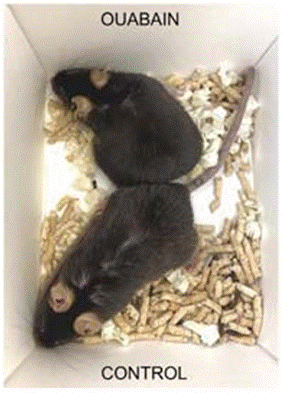
“In conclusion, ClockBase demonstrates that combining comprehensive data integration, standardized aging biomarkers, and specialized AI analysis can accelerate the identification of longevity interventions,” said Gladyshev and colleagues in their publication. “By making biological age measurable across millions of samples through diverse biomarkers, we enable a new era of data-driven longevity research.”
A Collaboration Between Humans and AI to Solve How to Make People Live Longer
Gladyshev and colleagues’ development of ClockBase Agent has broad implications that extend beyond aging research. For example, as an AI platform that has been successfully deployed to extract knowledge from massive public databases, ClockBase Agent could transform how scientists approach biological discovery.
Along these lines, rather than using a traditional hypothesis-driven model, where researchers analyze individual datasets, AI platforms like ClockBase Agent allow the continuous scanning of the entirety of published data and the identification of patterns invisible to human analysis. This scheme of analysis is especially powerful for complex processes like aging, where subtle patterns may emerge only from gargantuan sample sizes. Moreover, as biological databases grow exponentially with future research, AI-mediated discovery will become paramount for extracting actionable insights from the flood of data.
ClockBase Agent may serve as one of the key AI platforms that could evolve into essential infrastructure for research in the burgeoning field of longevity medicine. Through its ability to comprehensively integrate extensive amounts of data with specialized AI analysis, the platform shows promise in accelerating the identification of longevity interventions. In this regard, in Gladyshev and colleagues’ deployment of the ClockBase Agent, the platform demonstrated its ability to identify known pro-longevity agents as well as novel ones, such as ouabain. As such, ClockBase Agent showcases the potential of collaborations between humans and AI to solve problems pertaining to how humans can live longer lives.
 Comments