


Key Points:
- Urolithin A preserves learning and memory when treatment begins before cognitive decline develops.
- The compound restores mitochondrial health, increases brain energy production, and reduces abnormal tau protein accumulation.
- Treating after memory loss develops improves brain health but does not restore cognition.
The human brain represents only about 2% of body weight, yet it consumes roughly one-fifth of the body’s energy. Every new memory, thought, and decision depends on a constant supply of ATP, the cellular fuel produced by cell powerhouses (mitochondria). Unlike many other tissues, neurons rarely replace themselves, leaving the brain dependent on a lifetime of maintaining the same population of cells – and the mitochondria that power them. As those microscopic power plants become damaged with age, the brain gradually loses some of its ability to meet its enormous energy demands.
Healthy cells continually remove worn-out mitochondria through a recycling process known as mitophagy. This quality-control system prevents dysfunctional mitochondria from accumulating and helps sustain normal energy production. Previous studies have shown that mitophagy becomes markedly less efficient in the aging hippocampus, a brain region essential for learning and memory. As damaged mitochondria accumulate, ATP production falls while oxidative stress (the buildup of harmful reactive molecules) rises, changes that closely track age-related declines in cognitive function.
Scientists have proposed that restoring mitochondrial quality could help preserve brain function later in life, but an important question has remained unanswered: Can repairing aging mitochondria reverse memory loss once it has already developed, or must treatment begin before cognitive decline takes hold?
To investigate, researchers tested urolithin A, a natural compound produced by certain gut bacteria after the digestion of organic ellagitannin molecules found in foods such as pomegranates and walnuts. The study, published in npj Aging, compared two different stages of brain aging: naturally aged mice with established memory impairment and younger mice genetically predisposed to accelerated aging before significant cognitive decline had begun.
Once Memory Declines, Healthier Mitochondria Alone May Not Be Enough
The researchers first evaluated naturally aged mice that already displayed mitochondrial dysfunction and impaired memory. After eight weeks of urolithin A treatment, the animals showed numerous signs that their brain cells had become healthier.
ATP production increased, oxidative stress declined, and proteins involved in mitochondrial maintenance became more abundant. The treatment also reduced levels of phosphorylated tau, an abnormal form of the tau protein that accumulates during normal aging and in several neurodegenerative diseases. In addition, proteins that support communication between neurons increased in abundance, suggesting healthier synaptic connections.
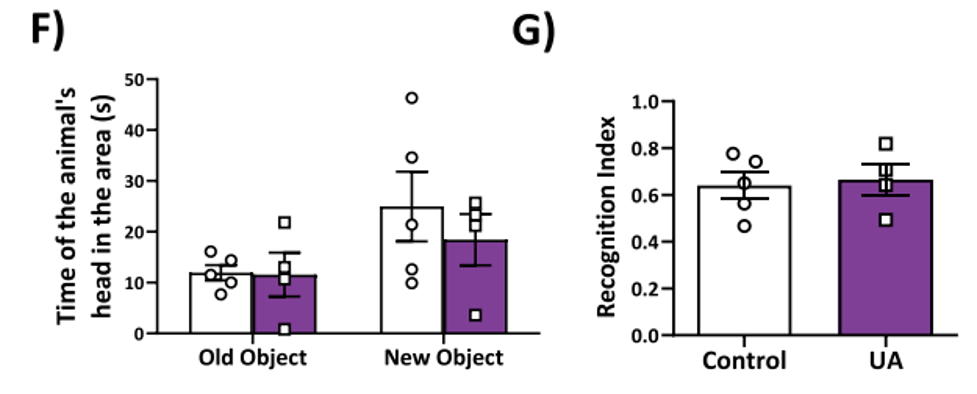
Despite these widespread biological improvements, the animals continued to perform poorly on tests of spatial and recognition memory. Although treated mice moved more easily and showed modest improvements at certain stages of the learning process, they ultimately remembered no better than untreated animals. The findings suggest that restoring mitochondrial health after cognitive decline has become established may improve the condition of brain cells without fully repairing the neural circuits required for memory.
Early Urolithin A Treatment Preserved Learning and Memory
The researchers next turned to SAMP8 mice, a model of accelerated aging that begins developing memory deficits at around six months of age. Instead of waiting until cognitive impairment was well established, treatment began several weeks earlier, when mitochondrial dysfunction was emerging but before substantial memory loss had developed.
The earlier intervention produced much stronger effects. Urolithin A sharply increased ATP production in the hippocampus, with treated animals generating more than four times as much ATP as untreated mice. The treatment also lowered oxidative stress, reduced the accumulation of abnormal proteins, and decreased phosphorylated tau while preserving proteins that support synaptic communication between neurons. Together, these findings suggested that mitochondrial quality and overall cellular health had improved before widespread damage accumulated.
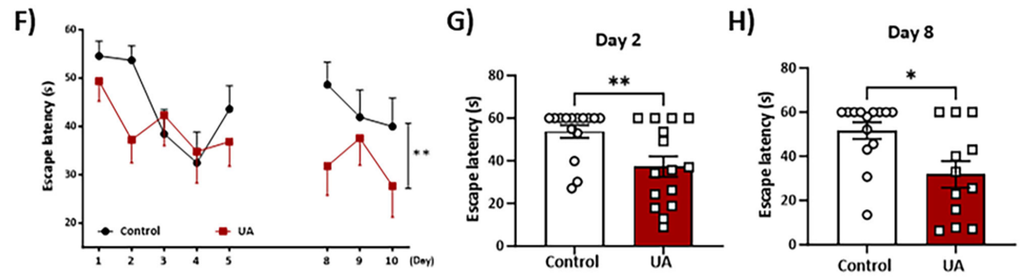
Those molecular changes translated into meaningful improvements in behavior. Mice receiving urolithin A learned the location of the hidden platform in the Morris water maze more quickly than untreated animals, indicating stronger spatial learning. They also maintained better swimming performance as they aged, consistent with previous evidence that urolithin A supports muscle function as well as mitochondrial health. Although recognition memory remained unchanged, the treatment delayed the decline in hippocampal-dependent learning that normally accompanies accelerated aging.
Early Intervention May Preserve Brain Function Before Damage Becomes Irreversible
Many age-related neurological disorders develop silently for years before symptoms become noticeable. Alzheimer’s disease, for example, is thought to begin decades before diagnosis as abnormal proteins accumulate, synapses are lost, and mitochondrial dysfunction gradually impairs neuronal energy production. Once those structural changes are established, restoring normal cellular metabolism may no longer be sufficient to recover cognitive function.
The current study illustrates that principle. Urolithin A increased ATP production, reduced oxidative stress, lowered phosphorylated tau, and improved multiple markers of mitochondrial health in mice with established memory impairment. Those cellular improvements, however, did not restore learning or recognition memory. When treatment began before cognitive decline emerged, the same intervention preserved hippocampal function, improved spatial learning, and slowed age-related cognitive decline.
The findings suggest that therapies targeting mitochondrial quality may be most effective during the earliest stages of brain aging, when neurons remain functionally intact and neural circuits can still be preserved. As researchers continue developing interventions to promote healthy cognitive aging, identifying mitochondrial dysfunction before measurable memory loss may become just as important as the therapies designed to correct it.
 Comments