


Key Points:
- Pentadecanoic acid (PA), a metabolite produced by gut bacteria, reduced arterial plaque buildup by about 50% in mice, yet the study did not demonstrate reversal of existing plaques.
- PA inhibited HMG-CoA reductase, an enzyme involved in cholesterol production, and promoted the liver’s clearance of LDL cholesterol from the bloodstream.
- People with abnormal blood fat (lipid) levels had lower PA levels than healthy controls, but whether PA supplementation can prevent or reduce atherosclerotic plaques in humans remains unclear.
Atherosclerosis, the leading driver of age-related cardiovascular disease, is characterized by the development of plaques within artery walls. Cholesterol plays a central role in the development of atherosclerosis, where low-density lipoprotein (LDL) cholesterol, often called “bad” cholesterol, enters artery walls and becomes trapped, triggering inflammation and the formation of plaques. Research has linked gut microbes to atherosclerosis, but pinpointing how gut microbes may trigger atherosclerosis has remained elusive.
A new study, published in Nature, points to pentadecanoic acid (PA), a metabolite produced by certain gut bacteria, as a molecule that may help explain the link between gut microbes and atherosclerosis. In the study, researchers from Sun Yat-sen University in China found that PA inhibits an enzyme involved in cholesterol production and helps the liver clear harmful low-density lipoprotein (LDL) cholesterol from the bloodstream.
In a mouse model of atherosclerosis, PA supplementation resulted in about 50% less arterial plaque burden than in untreated mice. The findings suggest that this bacterial metabolite could help limit plaque buildup, although they do not establish that it reverses existing plaques or offers the same benefits in humans. Along these lines, the findings suggest that PA serves as a natural molecule with effects similar to a statin (a prescription medication that lowers LDL cholesterol), suggesting a new means with which to treat atherosclerosis.
More Information About Pentadecanoic Acid
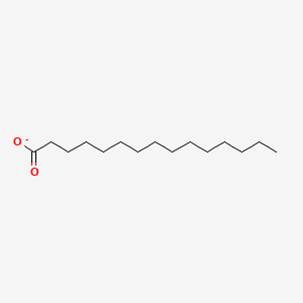
PA, also called C15:0, is a type of molecule that serves as a building block of fats (a fatty acid) found in certain foods and produced by certain gut bacteria. Researchers have studied it as a compound that potentially influences metabolic health.
Where Pentadecanoic Acid Comes From
PA occurs in dairy fat and meats like beef, lamb, goat, and venison, with smaller amounts reported in some fish and plants. Blood PA levels have often been used as a marker of dairy fat intake, an indicator that can help researchers estimate dairy fat consumption amount. However, PA produced from gut bacteria may complicate this interpretation.
This study from China-based researchers demonstrates that gut bacteria provide another source. Along these lines, the researchers showed that the gut bacterial species Bacteroides uniformis (B. uniformis) and several other gut bacterial species produce PA.
Importantly, the researchers acknowledge that the relative contributions of diet, gut microbes, and possible PA production in cells to total PA levels in humans still need clarification. Since gut microbes and, possibly, PA production in cells influence PA levels, using blood PA levels as an indicator of dairy fat consumption remains questionable.
Pinpointing How Pentadecanoic Acid Slows Arterial Plaque Buildup
Research has associated higher circulating levels of PA and related fatty acids with lower cardiometabolic disease risk. These associations prompted interest in whether PA itself contributes to a lower risk, rather than simply being influenced by diet and other aspects of health.
Nevertheless, there is some human intervention evidence pertaining to PA. In a 12-week human trial involving 88 women with a liver disease (non-alcoholic fatty liver disease), adding PA supplementation to a Mediterranean-style diet lowered LDL cholesterol more than the diet without PA. However, the study did not establish a reduction in arterial plaques or cardiovascular events.
In this study from China-based researchers, the research team sought to move beyond identifying an association between PA and lowered cholesterol by identifying a specific mechanism. Their data show that PA directly inhibits the enzyme HMG-CoA reductase, reducing liver cholesterol synthesis and triggering increased receptors on the surface of cells (LDL receptors) that help remove LDL cholesterol from the bloodstream. Through its cholesterol-lowering effects, the researchers also show bacterial PA production reduces arterial plaque accumulation in mice. These findings provide a mechanistic explanation of how PA reduces cholesterol in the bloodstream and prevents arterial plaque accumulation in mice. It does not, however, prove equivalent benefits in humans.
Treatment With a Gut Bacterial Species Alleviates Atherosclerosis
Gut bacteria have been identified as a potential therapeutic target to influence cholesterol metabolism through certain metabolites they produce. Moreover, research has shown that several species of the genus (a group of related species) of gut bacteria called Bacteroides are less abundant in people with atherosclerotic cardiovascular disease (an umbrella term for diseases, such as certain strokes and arterial conditions, caused by plaque buildup in artery walls).
To examine the role of gut bacteria in atherosclerotic cardiovascular disease, the research team analyzed genetic material harvested from gut microbes from 223 individuals with atherosclerotic cardiovascular disease and 189 healthy individuals. They found that several bacterial species had a higher prevalence in healthy individuals. Namely, among the most abundant health-associated species, Bacteroides species were at the top of the list. Indeed, these species accounted for four of the top eight species, indicating their potential importance in preventing atherosclerotic cardiovascular disease.
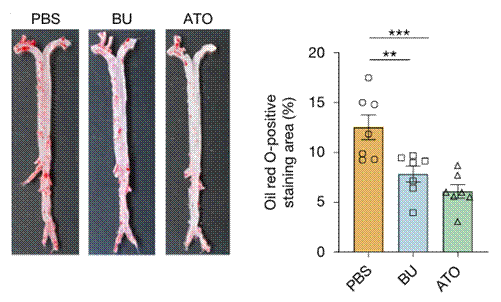
One specific species from the Bacteroides genus, B. uniformis, has been extensively studied for its protective effects against metabolic dysfunction and intestinal inflammation. To evaluate its role in atherosclerosis, the researchers administered B. uniformis to mice that have an increased susceptibility to atherosclerosis and were fed a high-fat diet for 12 weeks to induce atherosclerosis. Additionally, the researchers administered a statin (atorvastatin), which is known to prevent the progression of atherosclerosis, to another group of these mice.
Intriguingly, B. uniformis administration significantly reduced atherosclerotic plaque areas in the aorta, the largest artery. Moreover, the B. uniformis-treated mice exhibited reduced circulating LDL cholesterol. These findings demonstrate that the gut bacterium B. uniformis alleviates atherosclerosis in the mouse model, in part, by lowering LDL cholesterol levels.
The liver is the central organ regulating whole-body cholesterol balance, particularly its removal from the blood. To evaluate how B. uniformis administration affects cholesterol metabolism, the research team analyzed gene activation patterns in the liver, including those related to cholesterol metabolism. They found increased activation of several genes involved in cholesterol biosynthesis.
Namely, they found higher activation of genes that are activated by the protein Srebp2. Srebp2 switches on the gene that increases LDL receptors, helping the liver draw cholesterol out of the bloodstream. Because Srebp2 activation is typically triggered by lower cholesterol levels within cells, the researchers speculated that B. uniformis reduces liver cholesterol biosynthesis to induce Srebp2-mediated gene activation, including activation of the gene encoding LDL receptors.
The researchers experimentally confirmed this speculation by measuring cholesterol biosynthesis in the liver. Along these lines, B. uniformis treatment reduced cholesterol synthesis, which triggered increased activation of genes involved in cholesterol metabolism. Together, these results demonstrate that B. uniformis suppresses liver cholesterol biosynthesis and activates Srebp2- and LDL receptor-mediated LDL cholesterol clearance, which alleviates atherosclerosis.
The researchers then questioned whether this effect from B. uniformis required living bacteria or could occur via something the bacteria release. To test this, they treated one group of the atherosclerosis-prone mice with dead B. uniformis and another group with an extract from the bacteria’s secretions. They found that the dead B. uniformis treatment conferred no effect on atherosclerotic plaques, but the extract alleviated atherosclerosis. Together, these findings implicated a molecule produced by live, metabolically active B. uniformis in alleviating atherosclerosis.
Further molecular analyses of the extract under investigation identified that the molecule in question was PA, a fatty acid with 15 carbon atoms, hence also called C:15. Additional molecular analyses revealed that PA inhibits HMG-CoA reductase (an enzyme that controls a key step in cholesterol production) to suppress cholesterol synthesis. This confirmed the mechanism by which PA alleviates atherosclerosis; it suppresses cholesterol synthesis, which has the effect of activating Srebp2- and LDL receptor-mediated clearance of LDL cholesterol from the bloodstream.
Pentadecanoic Acid Reduces Atherosclerotic Plaques by 50%
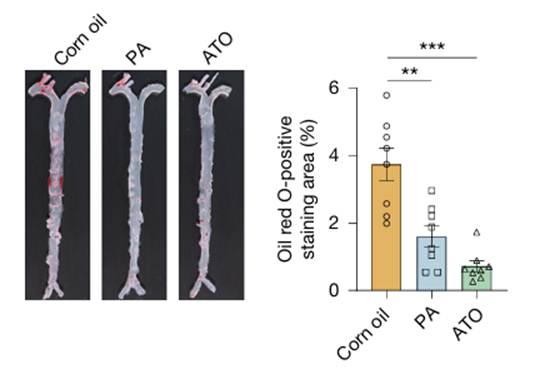
To test whether PA confers similar effects against atherosclerosis as B. uniformis, the researchers gave PA to the atherosclerosis-prone mice for eight weeks and again used atorvastatin as a positive control. They found that PA reduced arterial plaque burden by about 50% and lowered LDL cholesterol levels. There was also no significant difference between the effect of PA and atorvastatin in reducing arterial plaque burden. These findings suggest that PA may slow atherosclerotic plaque buildup and could be used to prevent atherosclerosis and possibly be used in addition to a statin like atorvastatin.
Finally, to gauge whether human evidence aligns with these findings in mice, the researchers measured PA levels in people with elevated blood lipid levels (a condition known as dyslipidemia) as well as healthy controls. Those with dyslipidemia had significantly lower circulating PA concentrations. Since dyslipidemia is a primary and major contributor to atherosclerotic cardiovascular disease, this finding links low PA to atherosclerotic cardiovascular disease. Conversely, healthy controls had higher PA levels, linking higher PA levels to the absence of atherosclerotic cardiovascular disease.
“In summary, our study establishes PA as a microbiota-derived regulator of host cholesterol metabolism and provides a mechanistic link between microbial PA production and atherosclerosis,” say the researchers in their publication
Comparing Pentadecanoic Acid to Statins
The findings underscore a new way in which gut microbes might be used to protect the heart. For example, there are specialized supplemental formulas of gut microbes, including B. uniformis, that can be purchased for use to possibly increase circulating PA. Also, there are a few PA supplements available for purchase online, and a 12-week human trial showed that taking one of these supplements significantly increased circulating PA. However, whether these supplements slow the accumulation of arterial plaques and prevent atherosclerosis still needs to be confirmed in future human studies.
Also, consuming dietary sources of PA like dairy fat can significantly raise circulating PA levels, as demonstrated in human trials. However, significantly raising circulating PA levels does not necessarily mean an increase large enough to slow arterial plaque accumulation. More research will be necessary to disentangle whether consuming dietary sources of PA can help slow arterial plaque buildup.
Finally, the study does not suggest that B. uniformis or PA treatments are superior to statins, as no significant differences were seen in their effects against arterial plaques. Researchers should examine whether using B. uniformis or PA treatments in conjunction with a statin has additive or synergistic effects in slowing arterial plaque buildup in future studies.
 Comments