


Key Points:
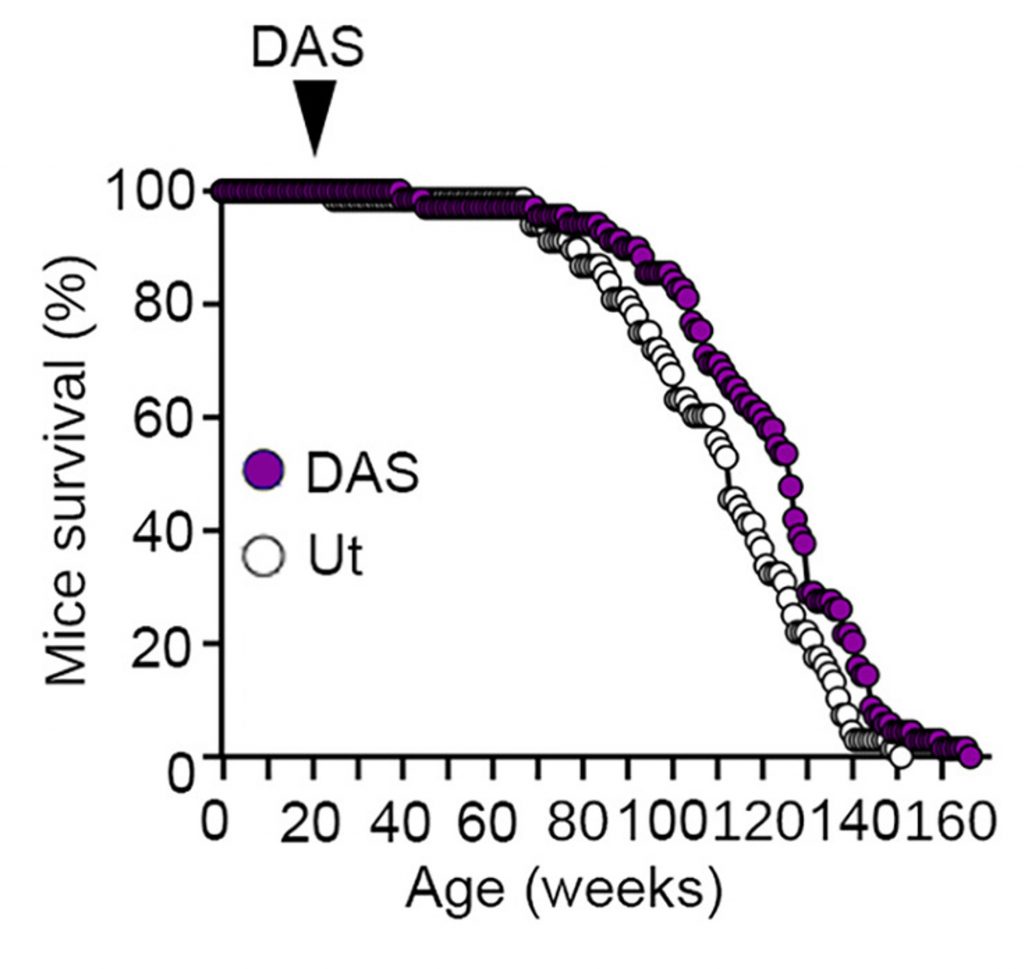
- DAS prolongs the lifespan of mice by 11.4%.
- DAS improves metabolic health, strength, and memory in aged mice.
- DAS may support strength and brain health in older adults.
There are thousands of different proteins in our body, each with its own unique function. These microscopic machines work together to perform everything from building muscle to forming new memories. Proteins can even change form and perform additional tasks associated with health and longevity.
In a new study, Spanish scientists reveal that garlic compounds may induce these pro-health and pro-longevity protein formations. The compounds, called DAS, were shown to improve the health and longevity of mice. These improvements were attributed to a process known as protein persulfidation, which was correlated with improved health in humans.
What Is Protein Persulfidation?
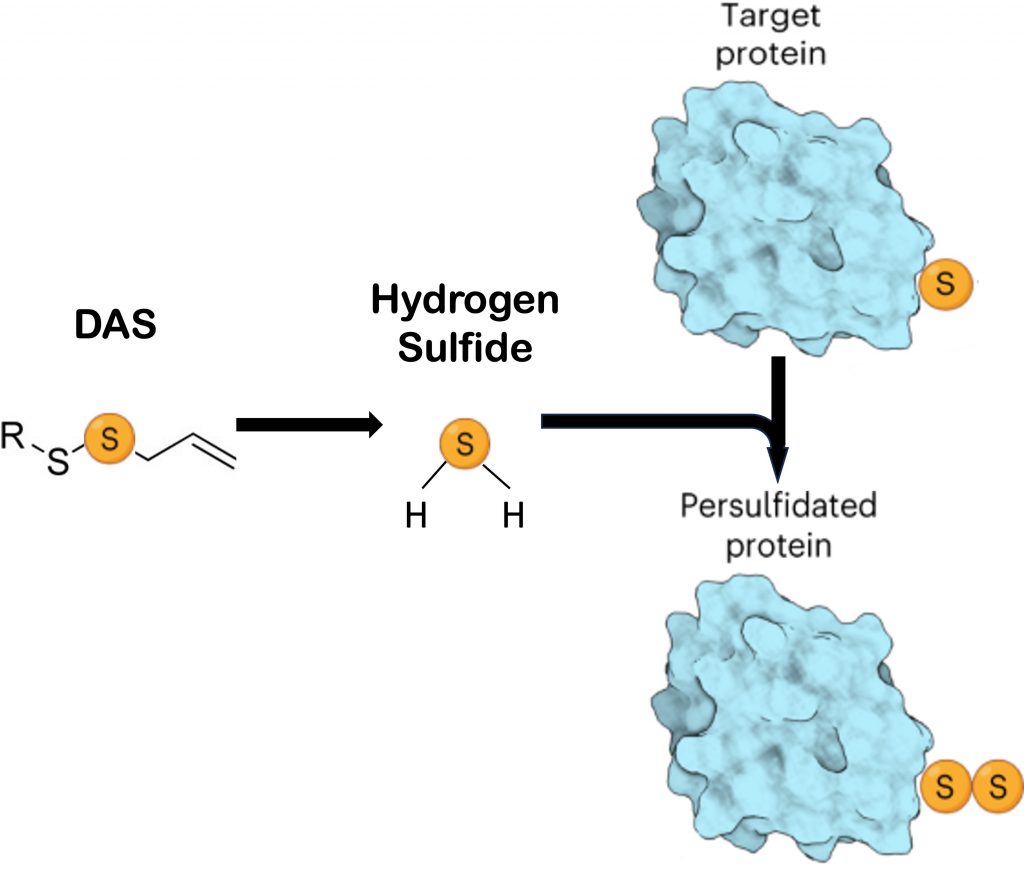
Proteins can change their formation when certain molecules attach to them (post-translational modifications). These attachments are like an on/off switch that alters the activity or function of a protein. For example, when a sulfur atom is attached to a protein—a process called protein persulfidation—the protein changes shape and switches functions. While protein persulfidation occurs naturally, it can be triggered by sulfur-enriched molecules like DAS. DAS has been shown to generate hydrogen sulfide (H2S), which then donates a sulfur to certain proteins.
DAS Extends Life, Builds Strength, and Boosts Memory
The Spanish researchers began feeding DAS to mice when they were 20 weeks of age, which is roughly equivalent to 27 human years (based on the nad.com AGE/DOSE calculator on top right corner of homepage). Remarkably, these mice lived longer than mice not fed DAS, demonstrating that sulfur-rich garlic compounds can extend the lifespan of mice.
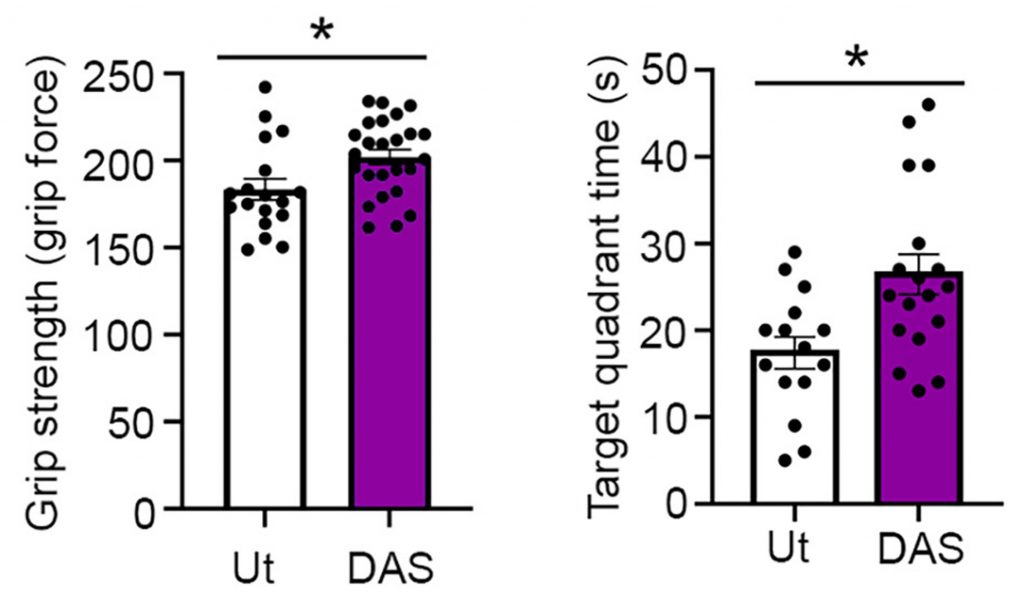
Furthermore, DAS supplementation improved healthspan—the duration of life lived in good health. Among these improvements, DAS was shown to improve glucose and fat metabolism, suggesting it counteracts metabolic aging. DAS-fed mice were also stronger, moved around more, and had better coordination. Moreover, the mice fed DAS were better at remembering the location of a target quadrant in the Morris water maze, suggesting DAS counteracts memory loss.
Protein Persulfidation is Associated with Strength and Brain Health in Older Adults
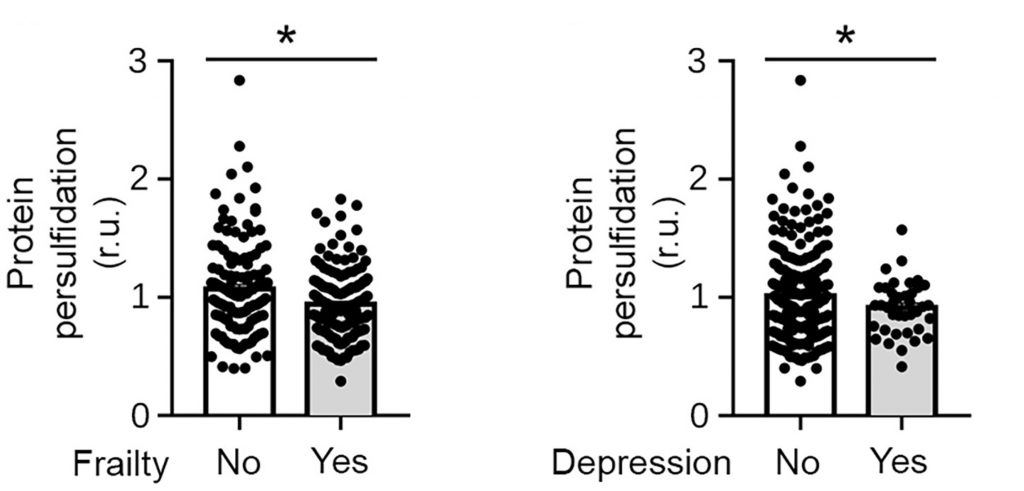
In light of their findings, the Spanish-based researchers examined protein persulfidation in 288 older individuals with various pathological conditions. Strikingly, they found that higher protein persulfidation levels were correlated with higher grip strength, supporting the results found in mice. Moreover, lower levels of protein persulfidation were correlated with depression, delirium, and frailty—vulnerability to diseases. These findings suggest that increasing protein persulfidation by consuming DAS could potentially lead to improved strength and brain health in older individuals.
Multiple Anti-Aging Supplements Increase H2S Production
The study suggests that consuming sulfur-rich compounds like DAS can counteract aging by elevating H2S production and increasing protein persulfidation. Lower H2S levels are associated with heart failure, type 2 diabetes, obesity, and Alzheimer’s disease, suggesting that restoring H2S levels can counteract these conditions. The authors conclude:
“Our findings support that enhanced H2S production may serve as a promising geroprotective intervention and highlight the need for further research to ascertain whether there is an optimal exposure level to natural DAS that promotes healthy aging in humans.”
With that said, consuming any version of garlic and its bioactive compounds may elevate H2S production. Besides consuming whole garlic, garlic extract supplements are available. Allicin, the sulfur-rich compound that gives garlic its pungent smell and taste, is also widely available as a supplement. When consumed, our liver metabolizes allicin into DAS, including diallyl monosulfide, diallyl disulfide, and diallyl trisulfide.
Several other compounds with anti-aging properties are also rich in sulfur and can elevate H2S production, including:
- NAC (N-acetyl-L-cysteine): NAC is a powerful antioxidant that has been shown to prolong the lifespan of several model organisms, including mice.
- Alpha-lipoic acid: Alpha-lipoic acid is a vitamin-like antioxidant with anti-inflammatory and neuroprotective properties.
- Taurine: Taurine is a naturally occurring amino acid that declines with age. It has been shown to increase the lifespan of several model organisms, including mice.
Our body can naturally produce NAC from the amino acid cysteine, which can be found in protein-rich foods like poultry, eggs, legumes, and sunflower seeds. Taurine can be found in mostly animal-based foods, especially shellfish. Thus, it may be possible to maintain adequate H2S levels by consuming a protein-rich diet, along with some garlic. However, it is feasible that supplementation of these compounds may potentially ensure the adequate production of H2S.
 Comments