


Key Points:
- Pterostilbene treatment restores egg viability, as shown by increased birth rates.
- The fertilized eggs from aged mothers developed into healthy mice that were able to have offspring of their own.
- Pterostilbene improves mitochondrial health, which may explain its effects on egg rejuvenation.
Female fertility decreases every year after the age of 30. Meanwhile, many women now have their first child after the age of 35. Thus, as parenthood is delayed, discovering ways to counter age-related infertility may benefit a growing segment of the population.
Previous studies have shown that pterostilbene, a plant-based molecule called a polyphenol, counteracts the underlying biological dysfunction associated with aging. With this in mind, researchers from Juntendo University in Japan tested the effects of pterostilbene on female reproductive aging. As published in Aging, their findings suggest that pterostilbene may contribute to delaying age-related infertility if taken early enough.
Pterostilbene Treatment Restores Egg Viability
The researchers started giving pterostilbene to mice at different ages, but evaluated the mice at the same age. As a result, some mice took pterostilbene for 1 week, some for 6 weeks, and some for 22 weeks. These durations roughly correspond to human females beginning pterostilbene supplementation at the ages of 45, 40, or 30, respectively.
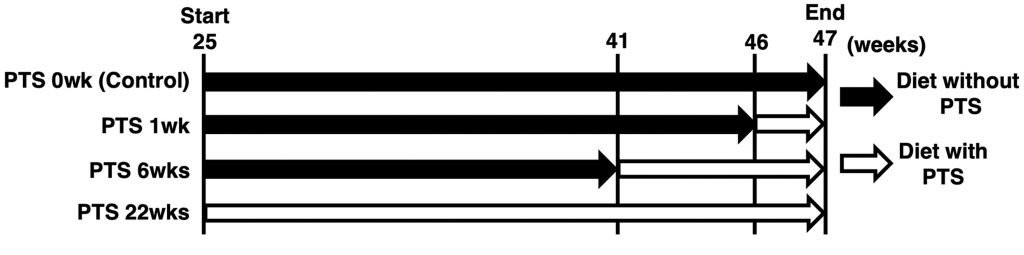
Following pterostilbene treatment, the researchers injected the mice with a hormone (chorionic gonadotropin) that induces ovulation. They found that 22 weeks of pterostilbene treatment, but not the other durations, increased the number of ovulated oocytes (eggs). The researchers then exposed the oocytes to sperm from young male mice for in vitro fertilization. However, pterostilbene did not restore fertilization rates, which had decreased with age.
To examine the viability of the fertilized oocytes, the researchers transferred them into young female mice. Fertilized oocytes only develop if they attach to the lining of the uterus, a process called implantation. Remarkably, the results showed that pterostilbene restored implantation rates in oocytes from treated mice. Importantly, 22 weeks of pterostilbene treatment completely restored live birth rates, which were similar to those of young mice.
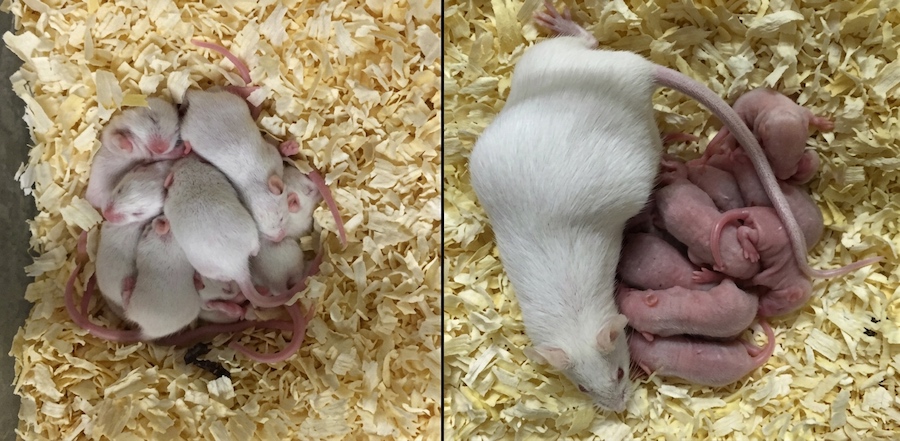
Subsequently, foster mothers nursed the newborn mice, and the mice were found to develop normally. What’s more, after maturing into adults, the mice were able to mate and produce offspring of their own. These findings suggest that pterostilbene promotes fertility if started at the human equivalent age of 30.
Pterostilbene Treatment Restores Mitochondrial Health
Mitochondria produce ATP (adenosine triphosphate), which is the molecule our cells utilize for energy. Egg development depends on ATP, but with age, mitochondrial health deteriorates, leading to metabolic abnormalities that cause female fertility decline.
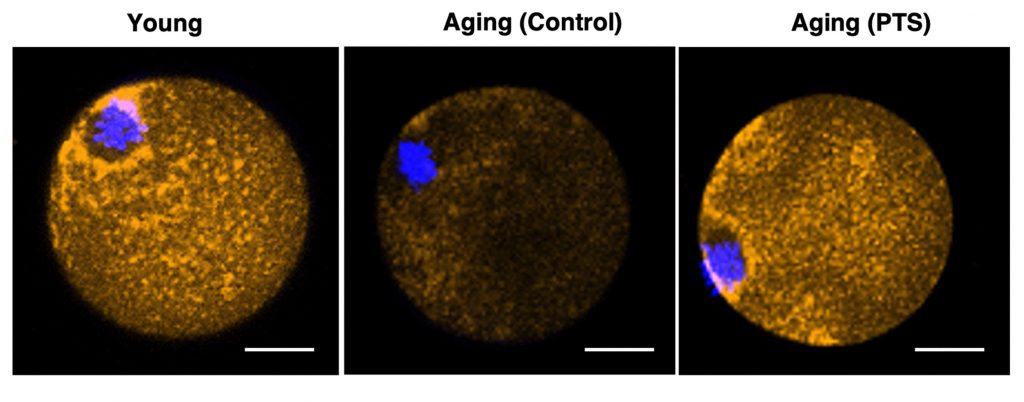
Mitochondria are like batteries, and their voltage is a key indicator of mitochondrial health. The researchers used an orange dye to assess mitochondrial voltage in eggs from aged mice treated with pterostilbene. They found that the voltages were diminished with age, but could be largely restored with pterostilbene treatment. Pterostilbene treatment also restored the ATP levels of the eggs. These findings suggest that pterostilbene may improve fertility by restoring mitochondrial health.
Can Pterostilbene Restore Fertility in Older Women?
The findings of the Juntendo University researchers suggest that pterostilbene can potentially restore fertility in old age. They point out that one week of pterostilbene treatment increased birth rates 2.7-fold, but this was not statistically significant. Since one week of pterostilbene also significantly increased implantation rates, the researchers said,
“These findings suggest that even short-term pterostilbene ingestion may have the potential to restore oocyte quality. Extrapolating these results to humans, it is expected that oocyte quality in women over 40 years of age could be restored with one or more cycles of pterostilbene ingestion.”
On the other hand, 22 weeks of pterostilbene treatment restored life birth rates.
“Therefore, these results suggest that commencing pterostilbene ingestion before the age of 36, when ovarian function is known to start declining, could prevent a decrease in oocyte quality and enhance future fertility,” said the researchers.
The Juntendo University researchers are now in the process of conducting a randomized clinical trial (jRCTs031220638) to test the effects of pterostilbene on elderly infertile women. The women will be given 200 mg/day of pterostilbene for 6 to 8 weeks before their egg quality is assessed. “The results will provide clear evidence of the efficacy of pterostilbene treatment for age-related infertility,” concluded the researchers.
 Comments