


Key Points:
- Study participants who received the therapies exhibited tolerability issues, such as gastrointestinal symptoms with NAD+ IV (intravenous infusions of NAD+) and cramping with NR IV (intravenous infusions of NR).
- In participants who received either NAD+ IV or NR IV infusions, assessments gauging liver, cardiovascular, kidney, and thyroid function did not change significantly following infusions, suggesting the safety of these therapies.
- Participants who received NR IV infusions showed a significant reduction in HbA1c—a blood test that reflects someone’s average blood sugar over two to three months.
Nicotinamide adenine dinucleotide (NAD+) is a molecule, found in every cell, that is necessary for cellular energy production, metabolism, and DNA repair. As people get older, a dysregulation of NAD+ levels has been associated with conditions such as metabolic and neurodegenerative disorders.
To increase circulating NAD+ in an attempt to counter an age-related dysregulation of NAD+ across various tissues, people have turned to taking NAD+ precursors like nicotinamide mononucleotide (NMN) or nicotinamide riboside (NR). As an alternative, some individuals have turned to NAD+ IV and NR IV, administered at clinics, to increase circulating NAD+. However, human data evaluating the safety and effects on health parameters of NAD+ IV and NR IV infusions has remained scarce.
Now, as published in Frontiers in Aging, scientists from Stanford University have unveiled data from a pilot study comparing NAD+ IV and NR IV therapies. Their data provide evidence for the short-term safety of both therapies.
Moreover, study participants who received NAD+ IV reported tolerability issues, such as gastrointestinal issues and chest pressure, during infusions. Also, five out of eight participants who received NR IV reported tolerability issues, like minor tongue, arm, and jaw tingling, during infusions. Moreover, participants who received NR IV infusions showed a significant reduction in HbA1c (a blood test that reflects average blood sugar over two to three months), while those who received NAD IV did not. Furthermore, participants who received NAD+ IV showed a significant reduction in HDL-C (a beneficial type of cholesterol that moves cholesterol from tissues to the liver for disposal). This study provides some of the first human data comparing NAD+ IV and NR IV therapies, providing evidence for their short-term safety and underscoring the potential of NR IV to confer metabolic benefits.
Background on NAD+ IV and NR IV
NAD+ IV therapy delivers NAD+ directly into the bloodstream via intravenous drip. It bypasses digestive processes and is meant for rapid, high-concentration delivery of NAD+ to cells.
NR IV therapy, on the other hand, delivers the NAD+ precursor, NR, into the bloodstream via intravenous drip. NR is believed to be converted to NAD+ inside cells, allowing NAD+ to circulate into blood, enter cells directly, and possibly be more readily utilized in comparison to NAD+ infusions. Thus, NR IV is meant to boost NAD+ in cells without administering high-concentration NAD+ itself.
The Data Support That NAD+ IV and NR IV Are Safe
Due to the differences between these two therapies in increasing cellular NAD+ and given their ongoing widespread application in clinics, the Stanford scientists tested their safety and tolerability profiles. Additionally, they tested their effects on parameters of metabolism.
To do this, six study participants received 500 mg of NAD+ via drip, and eight participants received 500 mg of NR via drip on four consecutive days. During the infusions, the scientists evaluated aspects of tolerability. Then, at 30 days after the infusions, the participants had their blood analyzed to assess the therapies’ safety as well as effects on metabolism.
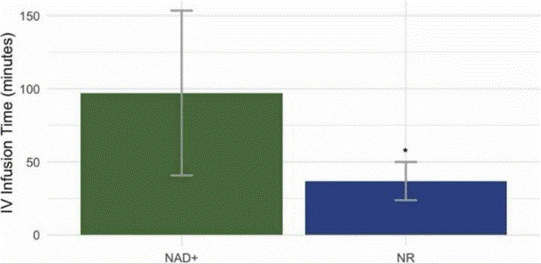
When the Stanford researchers evaluated the tolerability of these therapies, they found that participants who received NAD+ IV reported abdominal cramping, diarrhea, nausea, vomiting, increased heart rate, pain in the throat, and chest pressure during the infusions. Furthermore, participants who received the NR IV infusions reported minor tingling sensations in the tongue, jaw, and arm as well as mild cramping. Due to the harsher severity of these issues associated with NAD+ IV therapy, the time it took to administer the full infusion took more than twice as long compared to the NR IV infusion (an average of 97 minutes for NAD+ IV compared to 37 minutes for NR IV). These results suggest that the NR IV infusions are more tolerable than the NAD+ IV infusions.
As for the evaluations at 30 days after the infusions, the Stanford scientists first sought to assess the safety profiles of the therapies. To do this, they performed blood analyses, measuring markers of liver, kidney, cardiovascular, and thyroid function. Compared to the initial levels of the blood markers evaluated, the researchers found no significant changes, other than that one marker of liver function (ALP) was significantly lower in the group that received NAD+ IV infusions. The Stanford scientists still noted that all of the blood markers, including ALP, were within normal ranges at the pre-infusion evaluation as well as at 30 days after the infusions. Collectively, these results support that the two therapies are generally safe, having negligible effects on aspects of liver, kidney, cardiovascular, or thyroid function.
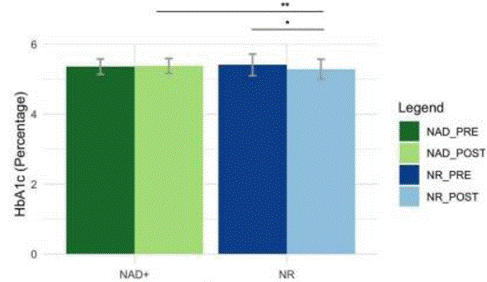
Also, at 30 days after the infusions, the Stanford scientists found that HbA1c levels were significantly lowered in the participants who received NR IV infusions. While this data is preliminary, it suggests that NR IV helps lower blood sugar levels. Since lowered blood sugar levels reflect an enhanced ability of cells to turn sugar into usable energy, this finding also suggests enhanced metabolism.
Moreover, at 30 days after the infusions, the participants who received NAD+ IV therapy showed significantly lower HDL-C levels. However, the lower HDL-C readings were very close to normal values, and it remains unclear what the lower HDL-C levels with NAD+ IV infusions mean.
Longer Future Human Trials With More Participants to Confirm the Therapies’ Safety
This study has some notable strengths and limitations. As far as strengths go, it is the first human study to directly compare NAD IV and NR IV therapies. Additionally, this study examined safety parameters, tolerability, and blood markers of metabolic function.
A limitation of this study is that it did not have a comparison group that did not receive infusions. Having this kind of non-treated comparison group is essential for providing evidence of causation. Thus, the data reporting that NR IV infusions lowered HbA1c levels would have been more meaningful with a non-treated comparison group.
Another limitation of the study was that the number of participants receiving either therapy was low. This constrains the statistical power of the study, limiting the meaningfulness of the safety findings and the reported effect of NR IV therapy on HbA1c.
Altogether, the study’s data support the safety of NAD+ and NR IV infusion therapies as well as lowered HbA1c with NR IV infusions. However, future trials should include more study participants to bolster statistical power and confirm the effects reported in this study. Future trials should also administer these therapies over longer durations to confirm long-term safety and uncover any other potential effects on metabolism that longer-term administration has.
 Comments