


Key Points:
- Two grams per day of DHA for 6 months increased brain DHA levels in older adults.
- After 2 years of DHA supplementation, neither brain volume nor cognitive performance improved.
- Whether the combination of DHA and eicosapentaenoic acid (EPA) is necessary for protecting against brain aging is discussed.
DHA helps build brain cell membranes and supports communication between neurons. Thus, consuming adequate levels of DHA could help maintain brain function (e.g., thinking) and improve health and longevity. However, DHA may not be the only omega-3 needed, according to a new study from the University of Southern California (USC).
As published in eBioMedicine, USC researchers found that DHA supplementation provided no measurable advantage over placebo in cognitive performance or brain size. This was despite supplementation increasing DHA availability in the fluid surrounding the brain. The findings challenge the idea that simply delivering more DHA is enough to improve brain health in older adults.
Fish Oil Omega-3s Are Essentially Essential
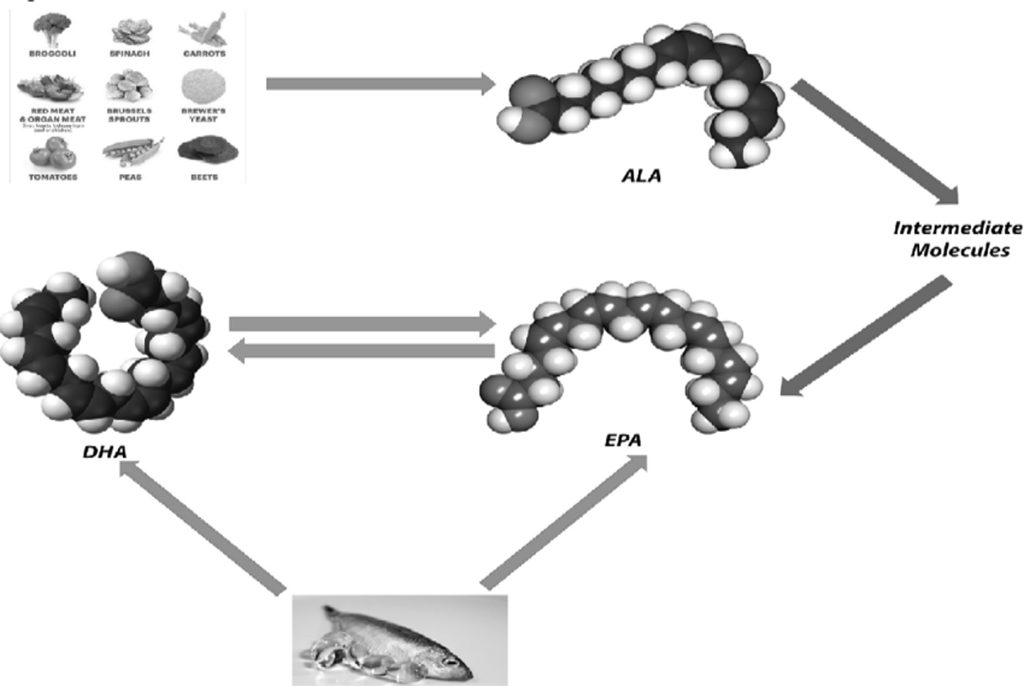
Many people don’t know that, like certain vitamins and minerals, the omega-3 fatty acid alpha-linolenic acid (ALA) is an essential nutrient we must obtain from food. The body can convert ALA into EPA and DHA—the omega-3s found in fish oil—but only inefficiently. Consuming EPA and DHA directly is therefore the most practical way to increase their levels in the body. Some studies also associate lower EPA and DHA omega-3 intake with a greater risk of cognitive decline, highlighting their potential importance for brain health.
High-Dose DHA Reaches the Central Nervous System
To test whether DHA supplementation benefits older adults, the USC researchers enrolled 365 people aged 55–80 without dementia. All participants consumed little DHA in their usual diets and had at least one cardiovascular or dementia risk factor, such as high blood pressure or physical inactivity. Nearly half carried APOE4, a genetic variant that increases Alzheimer’s disease risk. Participants were randomly assigned to take 2 grams of DHA or a placebo daily for two years.
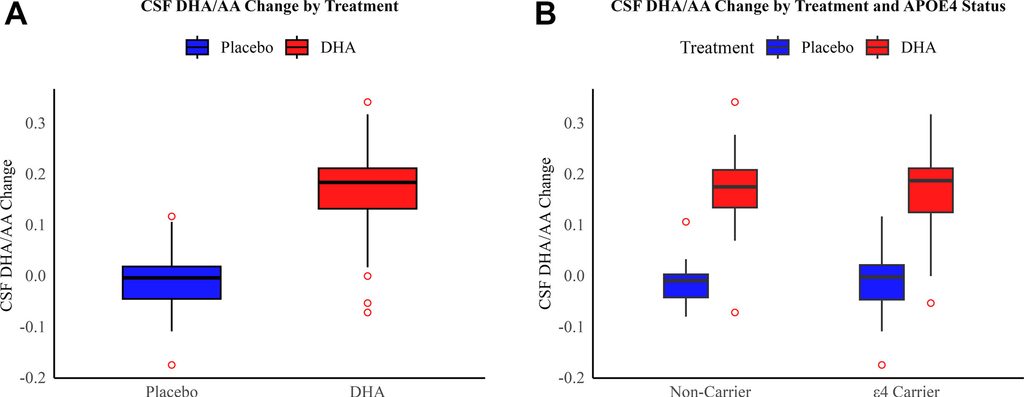
The researchers found that supplementation increased the ratio of DHA to arachidonic acid—another fatty acid—in the cerebrospinal fluid (CSF) after six months. This increase was similar in APOE4 carriers and noncarriers, indicating that the risk variant did not prevent the supplement from increasing this marker of DHA availability in the central nervous system.
DHA Provides No Measurable Brain or Cognitive Benefits
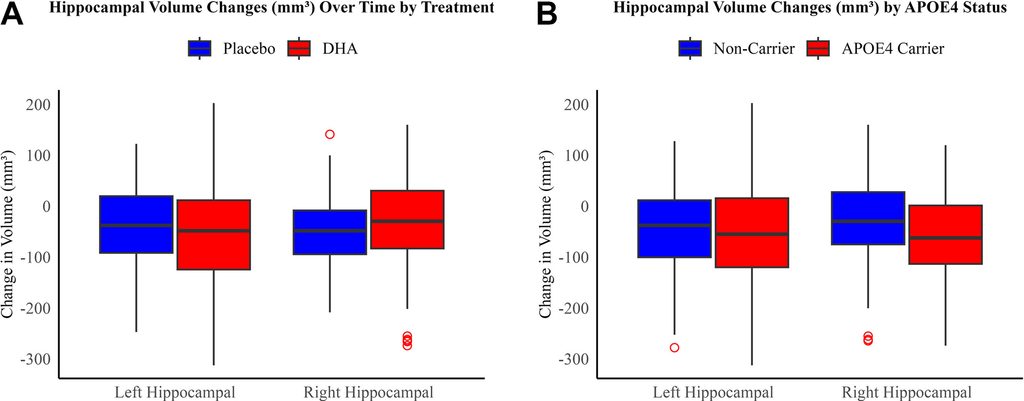
Despite increasing DHA availability, the researchers found that supplementation did not measurably preserve the size of the hippocampus, a brain region important for learning and memory. This region shrank modestly over two years, with greater average losses in APOE4 carriers than noncarriers. However, DHA provided no significant protection against shrinkage compared with placebo, regardless of APOE4 status.
DHA also provided no advantage in cognitive performance. Researchers assessed abilities including memory, attention, and language, finding that overall scores improved slightly—and almost identically—in both groups. APOE4 carriers showed no greater benefit from supplementation than noncarriers. Together, these findings suggest that increasing DHA availability alone was insufficient to improve the measured brain and cognitive outcomes over two years.
Are Both EPA and DHA Needed?
The lack of benefit from DHA alone raises the question of whether combining it with EPA produces different results. Some randomized trials suggest that the combination can improve certain cognitive abilities. In a study of 65 healthy adults aged 50–75, six months of EPA–DHA supplementation improved executive function—the mental skills used to plan, stay focused, and manage tasks—compared with placebo. Brain scans also showed favorable changes in measures of brain structure.
Another randomized trial, involving 86 older adults with mild cognitive impairment, found that six months of supplementation with 720 milligrams of EPA and 480 milligrams of DHA daily improved overall cognitive test scores, processing speed, spatial abilities, and working memory. However, not every ability improved: the researchers found no significant benefit for recognition memory or mental arithmetic.
These results are encouraging, but the combination has not worked consistently. The much larger VITAL cognitive study, involving 4,218 older adults, found no cognitive benefit from 460 milligrams of EPA and 380 milligrams of DHA daily over approximately two to three years. Differences in dose, participants’ cognitive health, and the tests used could contribute to the contrasting findings, but they do not establish why some trials succeeded and others did not.
Whether both omega-3s are needed therefore remains unresolved. The positive trials tested EPA and DHA together against placebo, not against each fatty acid separately. They show that a combination can benefit certain cognitive outcomes under some conditions—not that both ingredients are necessary or that adding EPA would have changed the USC study’s results. Establishing that would require a trial directly comparing DHA alone, EPA alone, their combination, and placebo. Improved cognitive test scores also should not be equated with proven prevention of dementia.
 Comments