


Key Points:
- Researchers screened molecules with purported anti-aging properties and identified glucosamine as a candidate with the potential to alleviate liver damage from alcohol consumption and liver aging.
- In a mouse model of alcohol-induced liver damage, glucosamine reduced inflammatory molecules and reduced cellular senescence in the liver.
- Alcohol intake raised liver cholesterol and fat levels, yet administering glucosamine normalized them, suggesting that glucosamine alleviates aspects of alcohol-induced liver injury.
Excessive intake of alcohol over prolonged durations is the principal driver of alcoholic liver disease (ALD)—liver damage caused by heavy, prolonged alcohol use—which accelerates liver aging. Accelerated liver aging can plausibly worsen a person’s overall aging trajectory because the liver is a central regulator of whole-body metabolism, nutrient handling, detoxification, immune signaling, and protein synthesis. When the liver becomes dysfunctional from accelerated aging, it can create systemic conditions, such as impaired insulin signaling, elevated levels of circulating fats, and inflammation, promoting age-related diseases in other organs.
Although some progress has been made in treating ALD, significant challenges remain. Notably, abstinence from consuming alcohol, the cornerstone strategy of ALD therapy, is difficult to maintain in the long term, with poor patient adherence, resulting in poor overall efficacy. Moreover, there is currently a lack of pharmacological agents that can target the core pathways underlying ALD.
Now, as published in the European Journal of Pharmacology, researchers from East China University of Science and Technology report repurposing the sugar-like molecule glucosamine against aspects of liver injury associated with ALD. They systematically screened 219 small-molecule compounds with documented effects on cellular senescence (a dysfunctional state in which cells can emit inflammatory molecules). They evaluated these effects in human liver cells and a mouse model of ALD.
Among these compounds, glucosamine exhibited the most favorable efficacy profile. In the ALD mouse model, it restored alcohol consumption-induced high cholesterol and fat levels, thus alleviating certain physiological characteristics associated with alcohol-induced liver injury. These findings support the repurposing of glucosamine for ALD and alcohol intake-associated liver aging.
“In this study, we implemented a drug repurposing strategy integrated with senescence intervention to identify marketed drugs for ALD and associated liver aging,” say the researchers in their publication. “Through systematic screening, [glucosamine] emerged as a promising candidate.”
More Information on Glucosamine
Glucosamine is an amino sugar (a sugar with an added amino group [-NH2]) found in cartilage (the connective tissue that cushions joints). The body uses it as a building block for molecules that help form and maintain cartilage and related joint structures.
Glucosamine is sold over-the-counter, often for joint pain and stiffness, either alone or combined with chondroitin (another sugar molecule that occurs naturally in cartilage and other tissues). Supplementing with glucosamine is meant to support cartilage and modestly reduce symptoms of osteoarthritis (a chronic age-related joint disease).
Glucosamine Alleviates Aspects of Liver Injury Associated with Alcoholic Liver Disease and Aging
To screen for candidate repurposable drugs that help against ALD, the researchers retrieved 219 small-molecule compounds, which have been reported to confer effects against aging, from a database. They narrowed their selection to 42 drugs among the 219, all of which had been FDA-approved. For repurposing, they further narrowed their screening, pinpointing 17 drugs with no known effects against ALD.
To gauge how well these 17 drugs may help against ALD, the China-based scientists tested their effects on human liver cells treated with alcohol in laboratory dishes. Treating the cells with alcohol was meant to induce cellular damage, similar to that seen in ALD. They found that seven of the compounds alleviated alcohol-induced cellular toxicity.
The researchers went on to analyze the levels of proteins in the cells associated with senescence, since liver cell senescence is believed to be a key contributing factor in ALD. They found that these proteins had increased levels with alcohol exposure, and that treating the cells with glucosamine or aspirin significantly reduced their levels. This suggested that these two compounds alleviate alcohol-induced cellular senescence. Based on these findings, the team selected glucosamine and aspirin for evaluation in a mouse model of alcohol-induced liver injury.
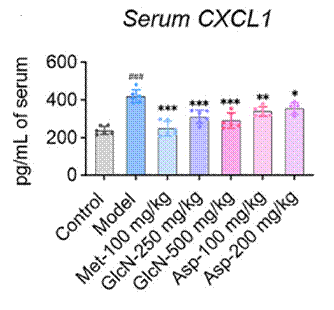
To simulate alcohol-induced liver injury, the researchers administered alcohol to mice for eight consecutive days. They also treated the mice with glucosamine, aspirin, or metformin (a drug known to counter alcohol-induced liver injury, used as a comparison). The mice administered alcohol exhibited significantly higher circulating levels of markers indicative of liver damage, as well as higher levels of pro-inflammatory molecules in the liver and circulation. Notably, glucosamine and aspirin attenuated the alcohol-induced increases in the markers of liver damage and the pro-inflammatory molecules. This suggests that glucosamine and aspirin alleviate alcohol-induced liver injury and inflammation.
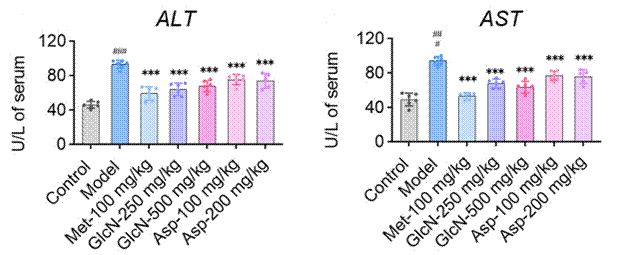
To further investigate how glucosamine and aspirin change a key facet of liver aging, senescent cell buildup, the researchers examined senescence-associated markers. They found that alcohol induced higher levels of these markers but that glucosamine and aspirin markedly lowered them. Collectively, these results provide preliminary evidence that glucosamine and aspirin confer dual anti-inflammatory and anti-senescence actions, highlighting their potential as therapeutic strategies to counter ALD.
Because senescent cells often release pro-inflammatory molecules (known as the SASP), the research team sought to compare how glucosamine and aspirin affect SASP molecule levels. They found that both compounds significantly reduced alcohol-induced elevations in circulating SASP levels; however, for a few of these SASP molecules, glucosamine’s effects were more significant than aspirin’s. Accordingly, the team concluded that glucosamine has greater comparative efficacy against the SASP. This led to their selection of glucosamine for application in a mouse model of ALD.
To this end, the researchers administered alcohol to mice daily for 40 days to establish a model of ALD. The 40-day administration of alcohol was meant to simulate pathological conditions associated with long-term alcohol abuse in the liver.
ALD is strongly associated with impairments in physical function. For this reason, the researchers evaluated alcohol’s effects on physical performance as well as whether glucosamine countered any adverse effects. They found that the long-term administration of alcohol reduced a measure of strength, but that glucosamine significantly restored it. This result suggests that glucosamine can help against chronic alcohol use-induced physical decline.
To find whether glucosamine counteracts alcohol-induced liver damage, the researchers measured circulating enzymes associated with liver damage. They found that long-term alcohol administration increased their levels, but that glucosamine significantly countered this effect. This finding suggests that glucosamine counters liver damage associated with long-term alcohol use.
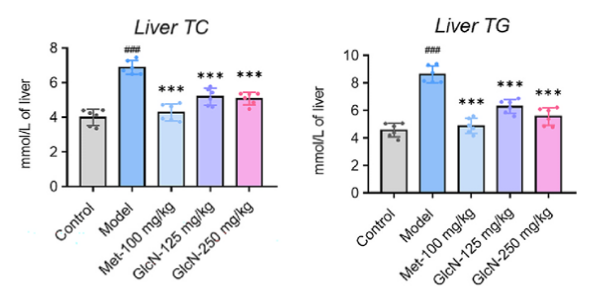
ALD has been associated with elevated cholesterol and fats, so the researchers evaluated whether glucosamine counters these effects as well. They found that the 40-day administration of alcohol indeed increased liver cholesterol and fats. Glucosamine, however, significantly lowered liver cholesterol and fats. These data suggest that glucosamine can help normalize high levels of cholesterol and fats, which can lead to liver damage from chronic alcohol consumption.
To investigate the relationship between ALD and liver cell senescence, the research team measured markers of cell senescence in the liver. They found that the 40 days of alcohol administration significantly increased their levels, but that glucosamine prevented this effect. This finding supports that glucosamine has the effects of a senolytic (an agent that selectively eliminates senescent cells).
Whether These Findings Translate to Humans
As a key contributing factor driving ALD, liver cell senescence serves as a target to help counter alcohol-induced liver injury and possibly liver aging more generally. Preclinical research has demonstrated that senolytic agents confer efficacy against ALD in mice by eliminating senescent liver cells. However, most reported senolytic compounds with potential efficacy remain investigational and have not received clinical approval for use. This underscores the urgency of identifying compounds with senolytic properties that can counteract the underlying liver cell senescence in ALD.
In their preclinical study, the researchers from China found that glucosamine reduced the abundance of senescent liver cells. Moreover, it reduced markers of liver damage and restored factors related to ALD that can increase the risk of age-related diseases and functional decline, such as elevated liver cholesterol and fat levels. Collectively, these findings suggest that glucosamine reduces senescent cells to alleviate aspects of ALD.
Along these lines, only 5% or so of compounds that show efficacy in preclinical studies receive clinical approval for use in humans. This is because for a compound to receive approval, it must show favorable human efficacy and acceptable safety with use, as well as receive financial support for human trial testing. As such, whether glucosamine receives clinical approval to counter ALD in the near future may not be all that likely.
Nonetheless, for individuals wanting to hedge their bet on the preclinical data presented here, a month’s supply of glucosamine supplements can be purchased for between $8 and $25. If the results from mice are any indication, glucosamine supplementation may help counter alcohol-induced liver injury and aging.
 Comments