


Key Points:
- Morten Scheibye-Knudsen takes the NAD+ (nicotinamide adenine dinucleotide) precursor NR and the diabetes drug metformin.
- He also adheres to a 16:8 intermittent fasting schedule, in which he goes 16 hours without eating and allows an 8-hour eating window each day.
- Other practices Scheibye-Knudsen practices for optimal aging include prioritizing his social life, drinking four to five cups of coffee a day (with cream), and eating dark chocolate.
Professor Morten Scheibye-Knudsen, a physician-scientist and aging researcher at the University of Copenhagen in Denmark, has, in large part, devoted his career to figuring out how to live longer. In that respect, he focuses a lot of his attention on biological age (an estimate of how old the body is based on cell, tissue, and organ function), as opposed to chronological age (the number of years someone has lived).
People often tell Scheibye-Knudsen that he looks younger than his chronological age of 46. While these remarks flatter him, he says that his appearance is not all that important to him. With his focus on biological age, Scheibye-Knudsen thinks that what is more important than his appearance is the functional status of his cells and tissues.
Along these lines, with its representation of how well the body works, biological age may give a more accurate picture of overall health and potential for living a long life. As such, biological age reflects factors like genetics, lifestyle, and environmental impacts on overall physiological function.
“Fundamentally, your biological age represents how long you can live a healthier, happier life,” wrote Scheibye-Knudsen in a BBC Science Focus article. “You can measure it in a lab (by looking at how much your DNA has been altered by a chemical reaction called methylation) or at home (for example, by testing your hearing range or how long you can stand on one leg).”
Crucially, according to Scheibye-Knudsen, people can modulate their biological age. Ever since he lost his grandparents to Alzheimer’s and Parkinson’s, the notion that Scheibye-Knudsen could slow his biological age has driven him to engage in aging research. Sadly, he also recently lost his parents to these devastating diseases, and he wishes his parents could have been around longer to spend time with his young children.
“My children are still young, and it’s a huge regret for me that they didn’t get to know my parents,” wrote Scheibye-Knudsen.
Morten thinks everyone should be able to experience their parents as part of their children’s lives. He also believes that slowing biological aging could serve as the key to helping older people stay healthy into old age.
According to Morten, this is the point of measuring biological age: helping people live healthy for as long as possible. However, simply knowing one’s biological age will not accomplish much—knowing what someone can do about it, though, could help slow aging.
For this reason, Morten conducts clinical trials testing aging interventions in his laboratory. It is also why he started testing aging interventions on himself. In essence, he aims to slow his biological aging so that when his children have kids, he will still be around to interact with them.
If that sounds crazy, he is not the first scientist to engage in self-experimentation. For example, in 1982, a bacterium that causes ulcers was discovered by the Australian researcher Barry Marshall, who took extracts from patients’ stomach ulcers and drank the fluid. In doing so, Marshall gave himself an ulcer, which he then cured with penicillin (Marshall won a Nobel Prize in 2005 for these efforts). Fortunately, testing aging interventions is less gross.
Along these lines, Scheibye-Knudsen believes that aging researchers need to trust their research. In other words, if they believe that what they are studying is real, it does not make sense not to try some of the interventions that they are researching.
“While neither I nor (thankfully) Marshall would tell anyone else to copy us, I think it’s fair that I experiment on my own body,” wrote Morten Scheibye-Knudsen.
In line with trying interventions he does research on, some results are beginning to show what works and what does not. The ones with evidence suggesting that they work could be used to improve health as people get older, so Morten has incorporated some of the successful interventions into his routine. Accordingly, here are seven experimental interventions Scheibye-Knudsen uses with the hope that they will keep his body young for a long life:
NR Supplement
Every day, the ravages of aging take a toll on the body. For example, molecules that damage or modify our DNA inundate our genomes, and enzymes in our cells rush in for repairs.
One of the molecules some of these enzymes need to repair DNA is called NAD+. Moreover, according to Scheibye-Knudsen, the more we use NAD+ for DNA repair, the more we lose it.
Interestingly, there is an NAD+ precursor supplement called NR, and research shows that supplementing with it increases NAD+ in multiple tissues. Due to its potential to increase NAD+ and counteract age-related DNA damage, Morten Scheibye-Knudsen takes NR daily.
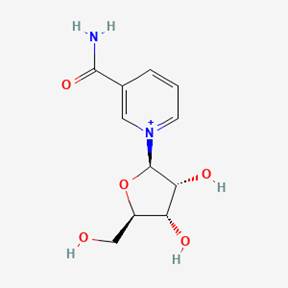
Scheibye-Knudsen also believes that NAD+ precursor supplements, like NR, are good if someone is suffering from a condition like Alzheimer’s or Parkinson’s. This is because these conditions cause high levels of inflammation, and NR may help alleviate inflammation.
“In longevity medicine, we still need studies to tell us what the long-term effects of these supplements will be – so, as a doctor, I can’t yet recommend them,” wrote Morten Scheibye-Knudsen.
Furthermore, a human trial from Scheibye-Knudsen’s laboratory showed that NR can reduce inflammation in patients with chronic obstructive pulmonary disease (COPD)—a condition where airway damage and inflammation make it hard to breathe. Inflammation is a strong driver of aging, so minimizing it with NR, as done in patients with COPD, could help people live longer.
Intermittent Fasting
Taking NR is easy—all you need to do is pop a pill. However, an aging intervention that is possibly more difficult to engage in, called intermittent fasting, is the current frontrunner amongst Scheibye-Knudsen’s prioritized interventions. Intermittent fasting is also known as the 16:8 diet, where someone eats within an eight-hour window and then avoids eating for 16 hours daily (Morten’s eight-hour window is between noon and 8 PM).
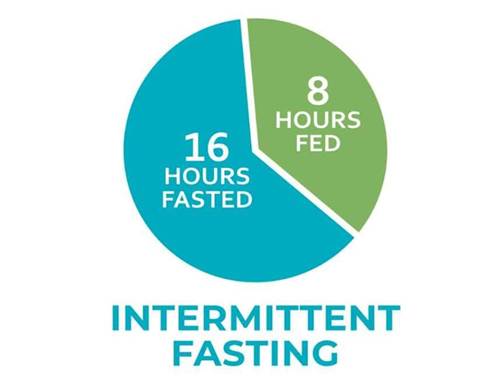
Interestingly, Morten’s laboratory has run a 12-week human trial comparing taking NR, intermittent fasting, and an exercise regimen in 80 individuals aged 65 and older (not yet published per an online search). To Morten’s surprise, the people who engaged in intermittent fasting saw the biggest health benefits, in terms of body fat composition and fat loss.
Moreover, when measuring biological age, the researchers found that exercise reduced the participants’ biological ages by an average of four years. However, in the group that underwent intermittent fasting, biological ages were reduced by 10 to 15 years, on average. According to Morten, this finding with intermittent fasting constitutes a big impact after just 12 weeks.
Prioritizing Socialization
“It may sound wishy-washy, but putting my friends and family first is one of the best things I’m doing for my health,” wrote Morten Scheibye-Knudsen.
He made that statement because staying socially connected serves as one of the most powerful ways to protect against the effects of aging. This likely relates to the incidence of depression.
“We know that the risk of most chronic diseases increases as we get older,” wrote Morten Scheibye-Knudsen. “But one condition that doesn’t follow this trend is depression, which affects people at a steady rate throughout life.”
While the biological mechanisms underpinning depression have yet to be fully elucidated, Morten says that researchers know that depression raises the risk of chronic age-related conditions. Furthermore, one of the biggest risk factors for depression is isolation. With depression raising the risk of chronic age-related diseases, avoiding isolation with strong social ties may serve to mitigate the risk of age-related diseases. Thus, by nurturing strong social connections, not only do people boost their mood, but they can also be warding off a major contributor to long-term illness.

Drinking Coffee
Drinking coffee is linked to a reduction in mortality risk from many age-related diseases, such as cardiovascular disease and diabetes. However, Morten says that many people do not know that the benefits of coffee increase the more you drink.
Along these lines, Morten drinks four to five cups of coffee a day. He says that drinking more may interfere with sleep.
Currently, we can identify the effects of coffee, but not the cause of these effects. In that regard, Morten says that it is difficult to pinpoint the precise molecules underlying coffee’s benefits.
Relatedly, for cigarettes, it is difficult to pinpoint the exact molecules that make them harmful, but they definitely are. As such, it could be a combination of several molecules that has such a strong impact on physiological function. A similar scenario exists with coffee: researchers do not know why it is beneficial. They do, however, have a good idea: a group of molecules known as polyphenols in coffee likely confer their benefits.

Cream in Coffee
Having fat alongside coffee, in the form of milk or cream, may actually increase its benefits. Research shows that when someone adds milk or cream to coffee, cellular uptake of polyphenols increases. This may be due to these molecules dissolving better in fat than in coffee alone. By that logic, it would be better to have cream in coffee than low-fat milk.
Dark Chocolate
Chocolate contains many of the same molecules as coffee, including polyphenols. For this reason, Scheibye-Knudsen believes that regularly eating dark chocolate may serve as a way to lower biological age.
All the same, the effects of chocolate consumption on biological age are not as well studied as coffee’s. This is the case because fewer people eat chocolate every day compared to the huge global population of coffee drinkers.
A potential downside to eating chocolate is that it has to be dark chocolate to get the benefits without the risks. Other types of chocolates, like white and milk chocolates, contain significant quantities of sugar, which is bad for your health, according to Morten.
As far as sugar goes, Morten says that it stimulates cellular growth, and while that may sound good, too much growth means losing stem cells and inhibiting pathways that are beneficial for aging. Sugar can also stimulate the growth of cancerous cells.
Blood Sugar Control
Morten Scheibye-Knudsen also takes metformin, a diabetes drug that reduces blood sugar. Accordingly, when someone reduces their blood sugar, a cascade of events occurs in the body. Notably, one of these events is the induction of a cellular process called autophagy—the cell’s recycling and cleanup process.
Autophagy appears to improve the function of the cell’s powerhouses (mitochondria) to enhance energy production in cells. As such, high blood sugar can counter mitochondrial energy generation.
As for evidence suggesting metformin may slow aging, in one of Scheibye-Knudsen’s studies from 2013, mice taking the drug lived longer. Then, in 2024, another study showed that monkeys given metformin exhibited reversed brain aging by as much as six years on average. This reversal in brain aging was also associated with enhanced cognitive abilities and better-preserved brain structure.
What is missing in metformin research is a human trial that gives metformin to healthy elderly participants. According to Morten Scheibye-Knudsen, such a study is potentially on the way.
Finding Out Whether Morten Scheibye-Knudsen’s Self-Experiment Works
By the time researchers figure out whether the listed aging interventions help to live longer in better health, Morten Scheibye-Knudsen’s own health may serve as one of the indicators of significant efficacy. In that regard, it may take about 30 more years to find out if they actually have significant efficacy.
In the meantime, almost anyone can adopt these practices, aside from taking metformin (which requires a prescription), with relative ease in an attempt to slow biological aging. Engaging in these practices could mean that your future health will serve as one of the indicators of their efficacy, similar to Morten Scheibye-Knudsen’s.
 Comments