


Key Points:
- Engineered neuronal connections force worms to prefer warmth.
- The engineered connections improve social interaction and stress resilience in mice.
- Engineered neuronal connections could one day be used to treat cognitive decline and other neurodegenerative conditions.
As reported in Nature, Duke University researchers have successfully engineered brain connections in mice, leading to signs of improved social and resilient behavior. While not studied directly, the engineered neuronal connections could become a powerful tool for probing neuronal connection loss and dysfunction in models of aging.
Synapses
Synapses, the junction point between two neurons, whether they be electrical or chemical, allow our neurons to communicate. These synapses often become dysregulated during normal aging and contribute to cognitive impairments, such as worsened memory. Moreover, lost synapses are associated with neurodegenerative conditions such as depression, schizophrenia, Alzheimer’s disease, and aging.
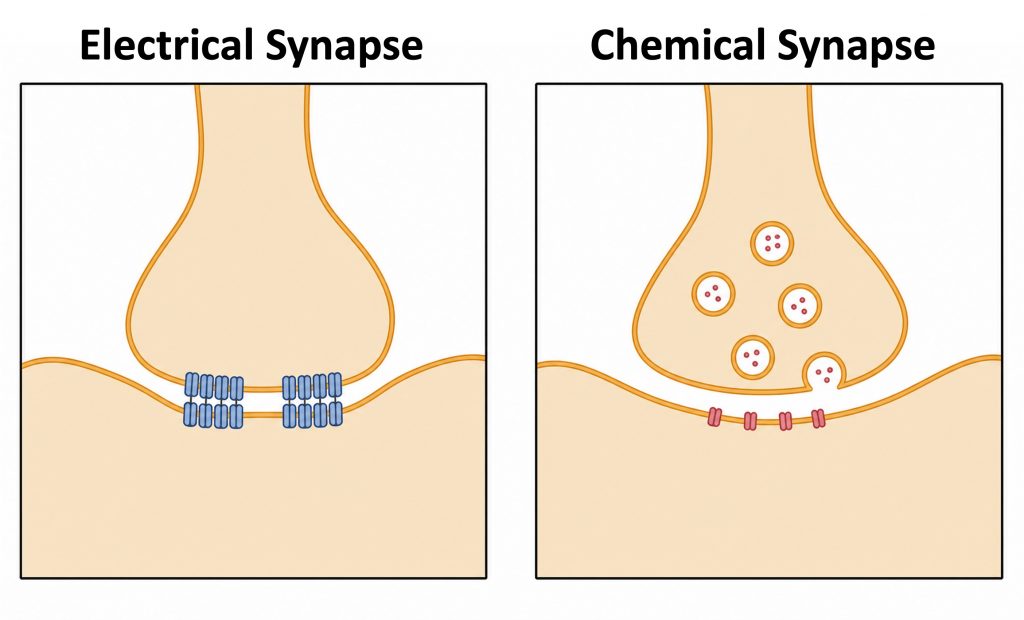
Scientists have successfully engineered electrical synapses in microscopic worms called C. elegans. However, these worms are simple animals that have fewer than 400 neurons. Mammals, like humans, are much more complex and have billions of neurons. What’s more, each of our neurons has thousands of synaptic connections, and our brain contains trillions of synapses. Due to this complexity, scientists have had trouble engineering synapses in mammals until now.
Engineering Synapses
The Duke University researchers focused on electrical synapses, rather than the more familiar chemical synapses. Electrical synapses do not rely on neurotransmitters to transmit information. Instead, they contain channels that allow electrical currents to flow directly from neuron to neuron. These channels are composed of proteins called connexins.
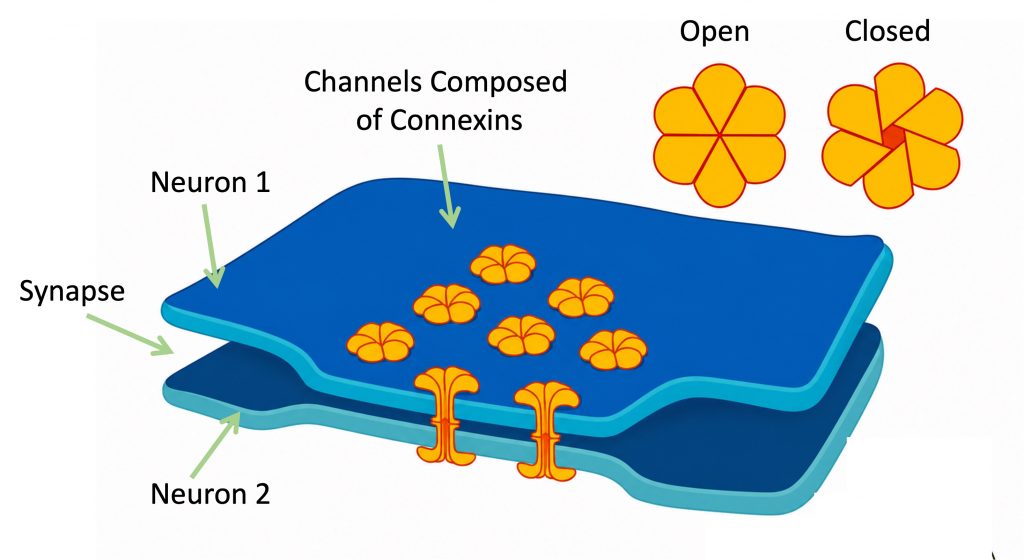
Because C. elegans do not have connexins, they are especially useful for engineering synapses. Researchers have previously added mouse connexins to C. elegans to build new synaptic connections without disrupting the worm’s natural wiring. In humans and mice, though, native connexins can interact with connexins from other species, which makes this approach less straightforward.
To address this challenge, the researchers isolated two connexins, Cx34.7 and Cx35, from white perch fish (Morone americana). They then engineered both proteins so they would not form channels with mammal connexins. The modified versions are called Cx34.7(M1) and Cx35(M1), or designer connexins version 1.0 from M. americana. Importantly, Cx34.7(M1) and Cx35(M1) could still pair with each other to form new synapses.
Engineered Synapse Forces Worms to Prefer Warmth
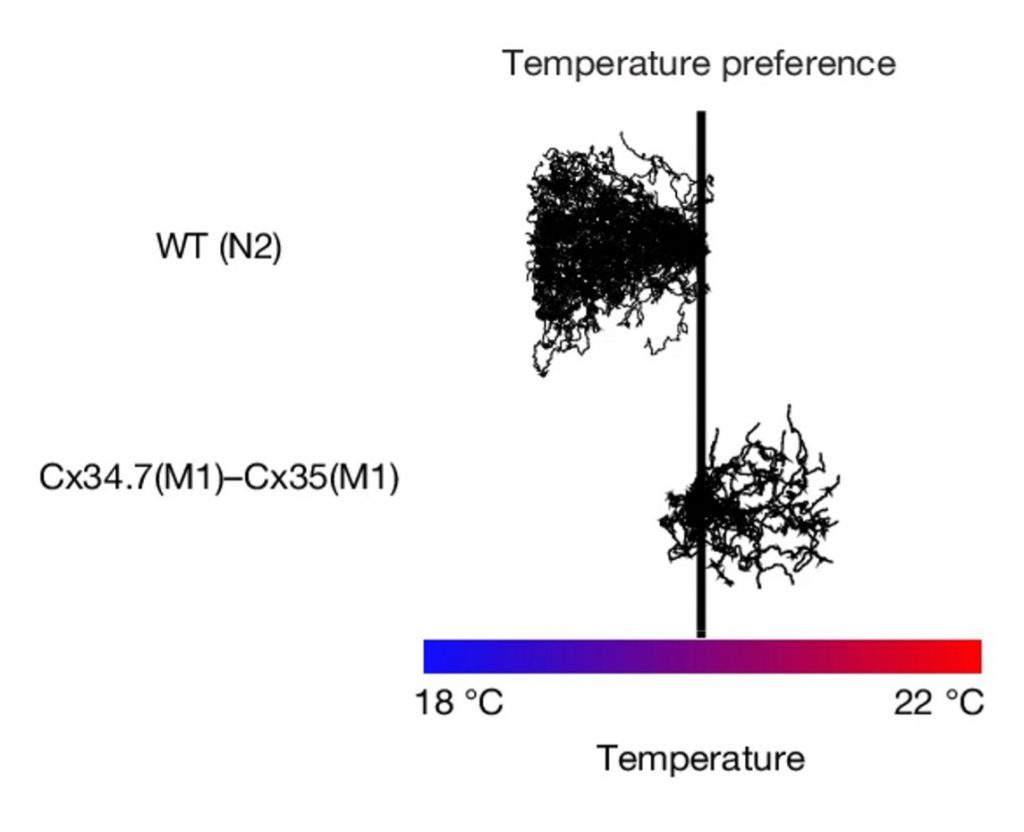
In a previous study, mouse connexins were used to engineer the synapses in C. elegans to make them prefer warmer temperatures. The Duke University scientists sought to replicate this previous study, except with their newly engineered connexin pair. They used genetic tools to turn on Cx34.7(M1) in the neurons that sense temperature and Cx35(M1) in the neurons that receive signals from those temperature-sensing cells.
This led to the generation of new synapses that connected the temperature-sensing neurons to the receiving neurons. To test whether these new connections caused the worms to prefer warmer temperatures, the C. elegans were placed on a plate with a temperature gradient. The left side of the plate was colder than the right side. Remarkably, the modified worms moved towards the warmer temperature, a behavior that would normally have to be learned.
Thus, the researchers validated the efficacy of their engineered synapse, Cx34.7(M1)–Cx35(M1). This approach will hereafter be referred to as LinCx (Long-term Integration of Circuits using connexins) editing.
Engineered Synapses Improve Social Interaction in Mice
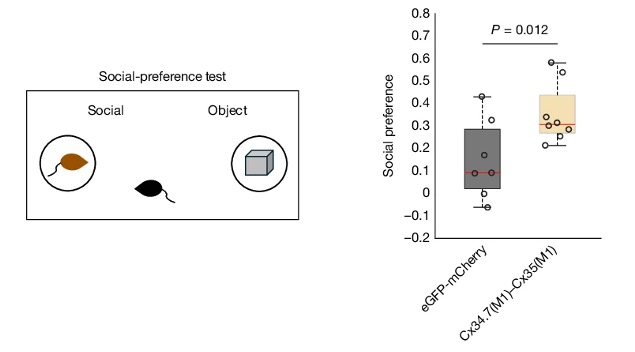
Having established LinCx editing in worms, the Duke University researchers moved on to mice. This time, they targeted microcircuits, which are small local networks of neurons. They did so in the prefrontal cortex (PFC), a brain region that serves as the brain’s command center and personality hub.
Microcircuit dysfunction in the PFC is associated with mediating social deficits in autism. With this in mind, the researchers tested whether LinCx editing could improve the social behavior of mice. To test this, the researchers measured whether the mice preferred interacting with another mouse or an object. Strikingly, they found that LinCx editing led to an increased preference for interacting with another mouse, suggesting improved social behavior.
Engineered Synapses Improve Stress Resilience in Mice
The researchers next asked whether LinCx editing could link two different brain regions. In a previous study, researchers demonstrated that stress adaptation in mice can induce a new connection between the prefrontal cortex (PFC) and the thalamus, which helps regulate a range of functions, including emotional state and fear memory. In the current study, the researchers aimed to recreate that connection.
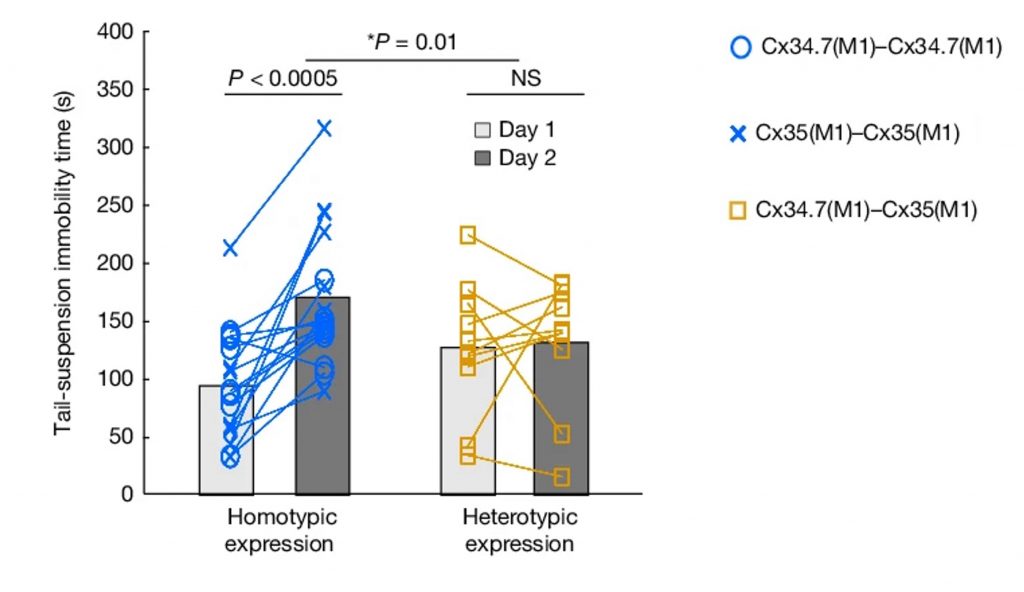
To measure stress adaptation, scientists typically use the tail-suspension test. Mice are hung by the tail, struggle at first, and then eventually stop moving. When the test is repeated, mice often become immobile more quickly, which is interpreted as a form of learned helplessness. In the earlier study, overstimulating the PFC-thalamus connection made mice less likely to give up, suggesting that this circuit may help the brain cope with stress.
In this study, the Duke University team found that linking specific PFC neurons to specific thalamus neurons reduced this stress-adaptive response. In other words, the LinCx system created new synapses that kept mice from becoming immobile as quickly during tail suspension.
Implications for Aging
The loss of synapses, specifically the ones that activate neurons (excitatory synapses), is the strongest correlate for cognitive impairments in Alzheimer’s disease. This means that restoring synapses using LinCx editing could potentially mitigate the symptoms of cognitive impairment, Alzheimer’s, and other neurodegenerative conditions. Of course, this will first need to be studied in animal models before it can be considered for testing in humans.
Additionally, studies have shown that chronic stress is associated with accelerated aging. Research further indicates that chronic stress impairs certain brain circuits, specifically within the PFC. This raises the possibility that restoring PFC connectivity in chronically stressed individuals could help slow aspects of brain aging. Although still speculative, such restoration might one day be achieved through gene therapy. However, interventions targeting the PFC—central to higher cognition, self-control, and moral reasoning— introduce significant ethical concerns surrounding human enhancement.
 Comments