


Key Points:
- Anthocyanins reduce markers of cardiovascular and metabolic disease, including LDL cholesterol and blood sugar levels.
- Anthocyanins reduce multiple inflammatory markers, demonstrating their anti-inflammatory effect.
- Individuals with higher inflammation levels may benefit the most from anthocyanins.
Inflammation influences the deadliest of age-related diseases, including cancer, cardiovascular disease, and neurodegenerative disorders. This isn’t the temporary inflammation caused by infections, but the chronic inflammation that eats away at our tissues and organs. Considering the consequences of age-related inflammation, effective anti-inflammatory interventions may prove beneficial for health and longevity.
In one recent trial, researchers from the NJ-FINGERS project (Nordic-Japan Finnish Geriatric Intervention Study to Prevent Cognitive Impairment and Disability) tested the effects of anthocyanins in older adults. As published in Geroscience, they found that anthocyanins reduce markers of inflammation and heart disease risk. These findings suggest that anthocyanins are capable of counteracting age-related inflammation.
The Fight for Dementia Prevention
The original FINGERS project was the first to show that lifestyle factors can profoundly influence the progression of cognitive decline. They found that lifestyle factors like diet, exercise, and social connections play a preventative role in cognitive decline. Still, certain dietary supplements may also play a preventative role, which is what the NJ-FINGERS researchers explored.
With dementia prevention in mind, the researchers included only individuals at risk for dementia in their study. These participants were diagnosed with mild cognitive impairment (MCI), a condition marked by noticeable decrements in thinking and memory. For 24 weeks, the participants were given 320 mg/day of anthocyanins.
Anthocyanins Improve Cardiovascular and Metabolic Health Markers
To assess cardiovascular and metabolic health, the researchers developed a cardiometabolic score based on blood concentrations of:
- Triglycerides: The most common type of fat in the body.
- LDL (low-density lipoprotein) cholesterol: The cholesterol associated with heart disease.
- HDL (high-density lipoprotein) cholesterol: The cholesterol associated with heart health. Increases in HDL count towards lowering the cardiometabolic score.
- Total cholesterol: Includes LDL, HDL, and other cholesterol particles.
- Fasting glucose: The concentration of sugar in the blood is not related to recent food intake.
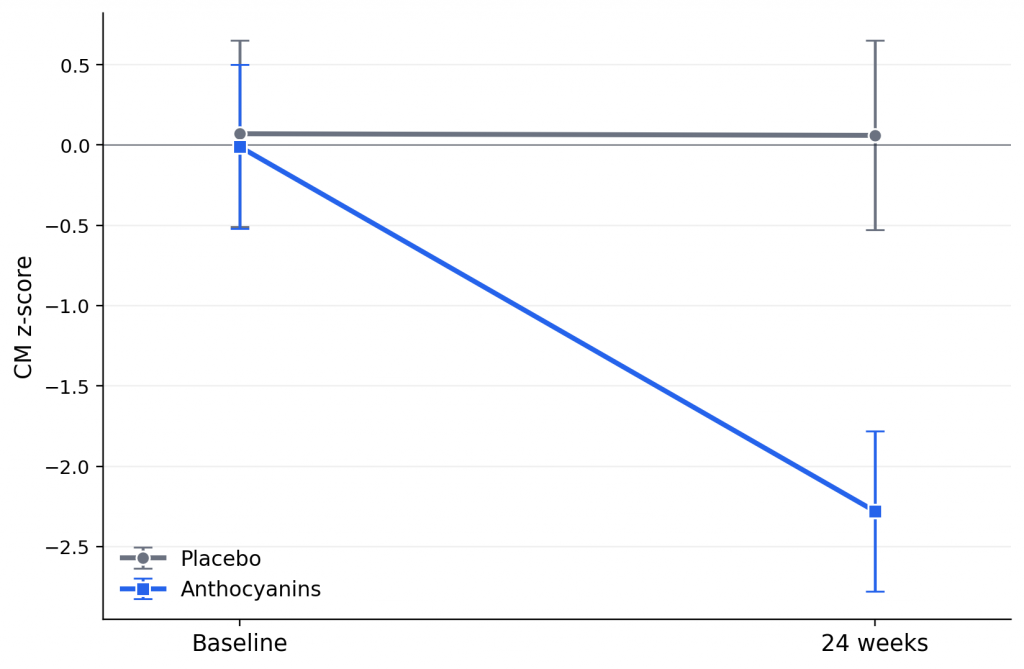
Initially, both the anthocyanin and placebo groups began with similar cardiometabolic scores, suggesting similar cardiovascular disease risks. However, after 24 weeks, the anthocyanins group saw a significant reduction in the cardiometabolic score, suggesting that anthocyanins improve cardiovascular and metabolic health. The researchers highlight the reduction in LDL cholesterol, which went down to ~100 mg/dL (near optimal) from ~115 mg/dL.
Anthocyanins Reduce Markers of Inflammation
To assess inflammation, the researchers developed an inflammatory score based on the blood concentrations of five molecules:
- Interleukin-6 (IL-6) and IL-1β: Promote inflammation in both the brain and body, particularly in the context of cognitive decline.
- TNF-α: Contributes to vascular damage and neurotoxicity.
- IL-8: High serum levels are associated with poor cognition and motor function.
- IFN-γ: Excess levels drive cognitive dysfunction and neuroinflammation.
- C-reactive protein (CRP): Produced by the liver in response to inflammation.
They found that the inflammatory score decreased in response to anthocyanins, pointing to a reduction in inflammation. CRP, which is often measured in the clinic, went from ~0.22 mg/dL to ~0.06 mg/dL, which are both within the optimal range.
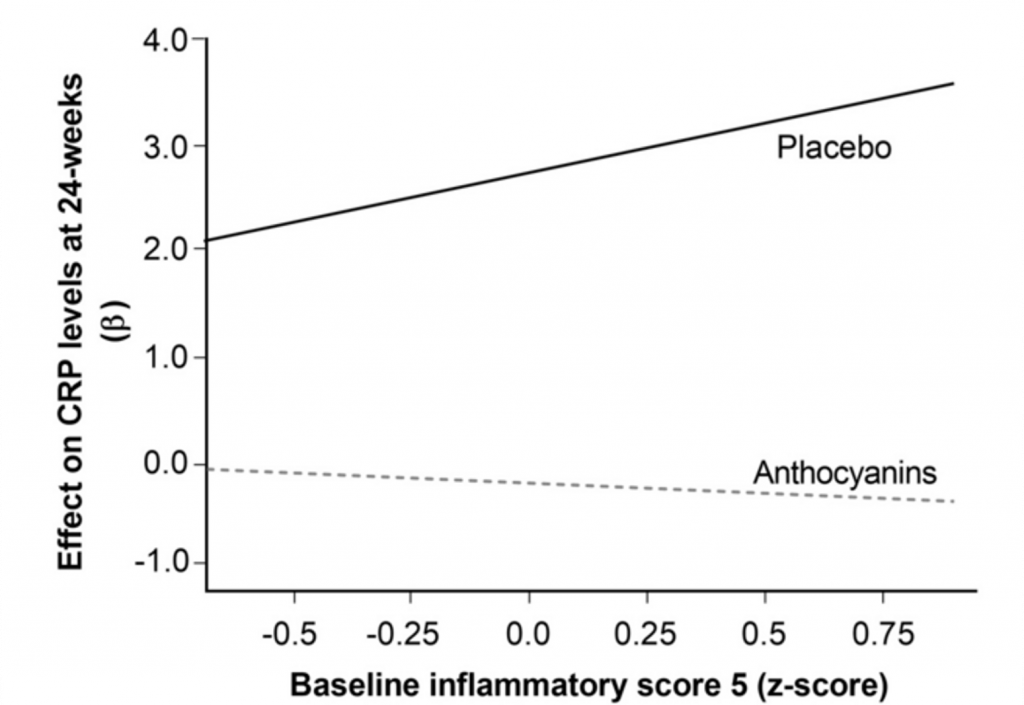
The researchers further analyzed the data to see who might benefit the most from anthocyanins. Their analysis revealed that, in the anthocyanins group, the participants with the highest baseline inflammatory scores saw the greatest reduction in CRP. On the other hand, in the placebo group, the participants with the highest baseline inflammatory scores saw the greatest elevation in CRP. The findings demonstrate that individuals with higher levels of chronic inflammation may potentially benefit the most from anthocyanin supplementation.
Can Anthocyanins Prevent Dementia?
Anthocyanins Improve the Cognitive Function of Older Adults
Each year, about 10% to 15% of individuals with MCI develop dementia. However, by targeting chronic inflammation, it may be possible to delay the progression of cognitive decline. Previous studies have shown that 320 mg of anthocyanins can combat the cognitive decline associated with MCI and dementia. For example, one study of older adults showed that anthocyanins prevented decrements in cognition. In another study, anthocyanins improved cognitive scores, such as learning, recall, and recognition, in older adults. Moreover, an analysis of 20 studies showed that anthocyanins improve memory and increase blood flow to the brain.
Lowering Inflammation for a Longer Life and Sharper Mind
To achieve a reduction in inflammation, a dose of anthocyanins exceeding 300 mg/day may be necessary. An analysis of 7 studies showed that anthocyanins have no significant effect on CRP levels. Nevertheless, an analysis of 32 studies showed that anthocyanins reduce markers of inflammation (including CRP), and doses above 300 mg had stronger effects. Notably, elevated CRP levels are strongly associated with a higher risk of cardiovascular disease, type 2 diabetes, neurodegeneration, and all-cause mortality. This means that lowering inflammation with anthocyanins may contribute to the prevention of dementia and other diseases.
The dose of anthocyanins necessary to reduce inflammation likely depends on other factors. Alcohol, refined carbohydrates, saturated fat, and ultra-processed foods are known to elevate inflammation. Obesity, chronic stress, smoking, and a sedentary lifestyle also promote inflammation. In contrast, diets like the Mediterranean and DASH (Dietary Approaches to Stop Hypertension) diets have been shown to lower inflammation. Exercising consistently and sleeping well also lowers inflammation.
 Comments