


Key Points:
- Sinclair notes that “nothing’s gone wrong” with the human trial testing reprogramming on eye diseases.
- Using AI, Sinclair’s lab has been searching for a single compound, which could possibly be put into a drink, that can rejuvenate mice.
- Sinclair hints at his lab being able to restore lost mouse memories.
David Sinclair, PhD, has long argued that aging is not merely a slow accumulation of molecular damage. Instead, he believes that cells gradually lose access to the information needed to maintain their youthful identity and function.
In a recent appearance on The Joe Rogan Experience, the Harvard Medical School geneticist offered an update on this vision. During the conversation, Rogan laughed at Sinclair calling himself a “prophet of longevity.” Sinclair also described an early human gene-therapy trial, a three-component treatment that allegedly rejuvenates mice, and an AI-guided effort to identify small molecules capable of mimicking cellular reprogramming.
“Nothing’s Gone Wrong So Far” with Human Reprogramming Trial
Dr. Sinclair’s most established work involves partial cellular reprogramming. This approach uses three reprogramming genes—Oct4, Sox2, and Klf4, collectively called OSK—to push old cells toward a more youthful state without erasing their cellular identity.
In a 2020 Nature study, Sinclair and his team treated mice with OSK gene therapy, which promoted optic-nerve regeneration, restored aspects of visual function, and shifted biological age in a younger direction. Life Biosciences, a company co-founded by Sinclair, is now testing a similar gene therapy, ER-100, in adults with optic nerve diseases.
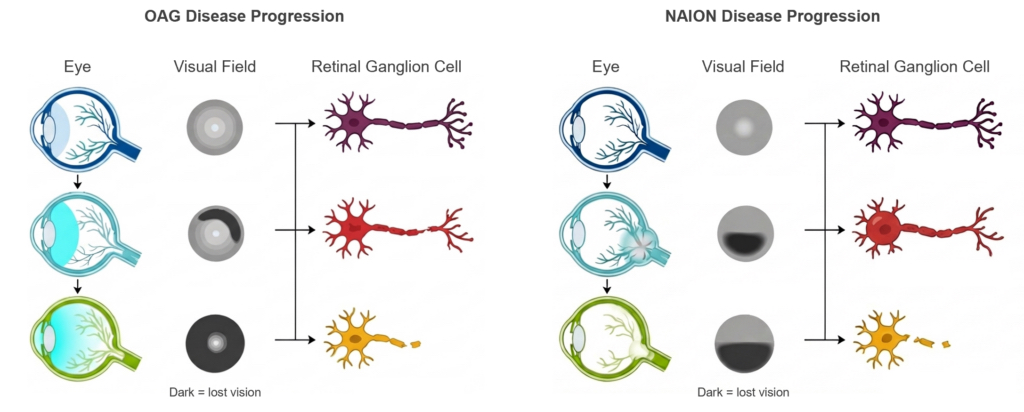
Sinclair told Rogan that the first participant had been treated and that “nothing’s gone wrong so far, everything’s proceeding according to plan.” That is a welcome but highly limited update. One early participant and an informal safety comment are not a clinical safety dataset, and no efficacy results have yet been released. Life Biosciences publicly announced the first dosing in June 2026.
A Secret Mouse Cocktail
The most provocative part of the interview came when Sinclair described unpublished experiments, saying his group has developed a drink that rejuvenates mice. According to Sinclair, mice received the treatment three times per week for a month and showed improvements in physical and mental performance.
He goes on to say that the cocktail, containing three top-secret components, can be rubbed on the skin to heal the skin and make it younger. Using human stem cells, Sinclair also mentions that his lab can grow human hair on mice, but it’s unclear whether this hair treatment involves the secret cocktail.
Nevertheless, no experimental details were provided. Still, the idea is important. A drug-like treatment that captures some benefits of partial reprogramming could be easier to manufacture, dose, stop, and distribute than a gene therapy.
Letting AI Find Candidates
Sinclair also described a collaboration involving AI-assisted chemical screening. He said his group and researchers at St. Jude Children’s Research Hospital had computationally searched a vast collection of roughly 10 billion possible molecules, then narrowed the field to about 200 candidates for testing in human cells. He said that evaluating such an enormous library by conventional laboratory methods would have taken an estimated 160 years.
The goal, he said, is to find a single molecule that can replace a broader reprogramming cocktail. In his telling, that single compound would need to produce three or four desired cellular activities at once—much harder than finding a drug for one target or activity. The roughly 200 molecules still need to be tested in cells and, if promising, considered for human studies.
Younger Cells are Not Younger People
Sinclair also said that his group can take cells from a 92-year-old person and make them resemble cells from someone in their twenties. Such findings fit with the broader reprogramming literature. Reprogramming factors can reset some molecular characteristics of cellular aging. But a younger epigenetic age is not the same as restoring the physiology of a young person.
Sinclair further said his lab has “hints” that rejuvenating the mouse brain may allow lost memories to return. That is explicitly preliminary and unpublished. Better performance in a memory test can reflect improved learning, movement, vision, motivation, or anxiety rather than recovery of an existing memory. Showing genuine memory restoration will require especially careful experiments.
A Promising Future
Sinclair’s team’s mouse work suggests that partial reprogramming can restore some functions in specific tissues, and the ER-100 trial is an important early test of whether a tightly controlled version can be given safely to people. Nevertheless, the secret three-component cocktail, rejuvenated mice, the search for a one-molecule treatment, and possible memory restoration—should be viewed as descriptions of ongoing research rather than established findings.
The next meaningful test will be disclosure. A paper or preprint should identify the compounds, describe the animal experiments, report blinded and controlled outcomes, and include long-term safety data. Until then, Sinclair’s comments are best read as a glimpse into an ambitious research program that may be pushing rejuvenation biology forward—but has not yet provided the public evidence needed to confirm its boldest claims.
 Comments