


Key Points:
- Older adults with mild cognitive impairment showed significant improvements in cognitive test scores after six months of supplementation, improving by nearly 4 points on the Montreal Cognitive Assessment, while placebo recipients showed little change.
- Supplementation also improved mental well-being scores, with no adverse events reported during the study.
Mild cognitive impairment (MCI) affects an estimated 15–20% of adults over age 65 and is often considered an intermediate stage between normal aging and dementia. While not everyone with MCI develops dementia, individuals with the condition are at substantially higher risk of future cognitive decline. Because there are currently no widely accepted treatments capable of reversing MCI, researchers have increasingly focused on nutritional interventions that may help preserve brain function before more severe impairment develops.
One area of interest involves nucleotides, naturally occurring molecules that serve as the building blocks of DNA and RNA. Beyond their role in genetics, nucleotides are involved in cellular energy production, communication between nerve cells, and the maintenance of cell membranes. Some researchers have proposed that increasing dietary nucleotide intake could support brain health by helping neurons maintain the structures needed for learning, memory, and communication.
In a recent study published in Nutrients, researchers investigated whether nucleotide-rich yeast extracts could improve cognitive function in older adults with MCI. Over six months, participants received daily supplements derived from either Kluyveromyces fragilis or Saccharomyces cerevisiae, two yeast species naturally rich in nucleotides. The researchers found significant improvements in multiple measures of cognitive function, along with gains in mental well-being and no reported safety concerns.
Nucleotide Supplementation Improved Cognitive Test Scores
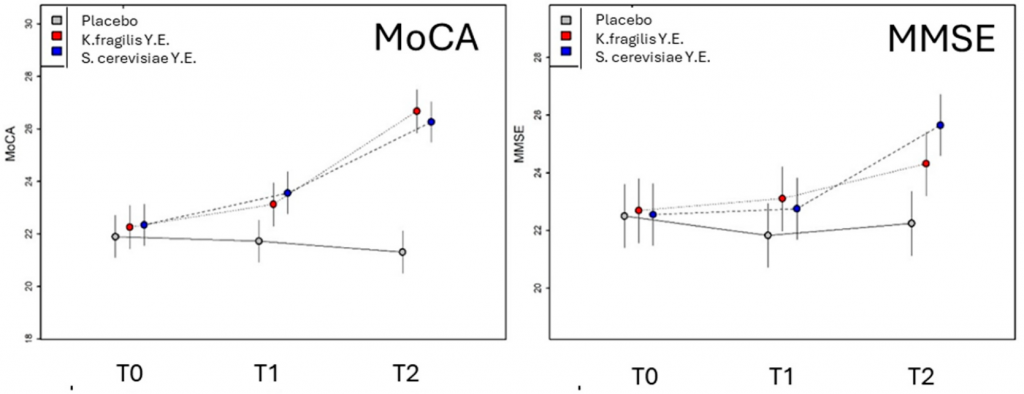
To determine whether nucleotide-rich yeast extracts could influence cognitive function, the researchers enrolled 72 adults between the ages of 60 and 85 who met clinical criteria for mild cognitive impairment. Participants were randomly assigned to receive either a K. fragilis yeast extract, an S. cerevisiae yeast extract, or a placebo daily for 180 days. Cognitive performance was assessed at the beginning of the study, after three months, and after six months using two widely used tests: the Montreal Cognitive Assessment (MoCA) and the Mini-Mental State Examination (MMSE).
The most striking improvements were observed in MoCA scores, a test commonly used to detect mild cognitive impairment. Participants in the K. fragilis group improved by an average of 4.4 points over six months, while those receiving the S. cerevisiae supplement improved by 3.9 points. In contrast, the placebo group improved by only 0.6 points and did not experience statistically significant changes.
These gains were large enough to move many participants from scores typically associated with mild cognitive impairment toward the range considered cognitively normal. Average MoCA scores increased from approximately 22 at baseline to more than 26 after supplementation, whereas scores in the placebo group remained essentially unchanged.
The second cognitive assessment, the MMSE, showed a similar pattern. Participants receiving the yeast extracts improved by approximately 1.6 to 3.1 points, while those receiving a placebo experienced little change. Improvements became most apparent during the second half of the study, suggesting that the benefits accumulated gradually over time rather than appearing immediately after supplementation began.
Notably, all participants began the study with similar cognitive scores, making it less likely that the results were explained by differences between groups before treatment started.
Participants Also Reported Better Mental Well-Being
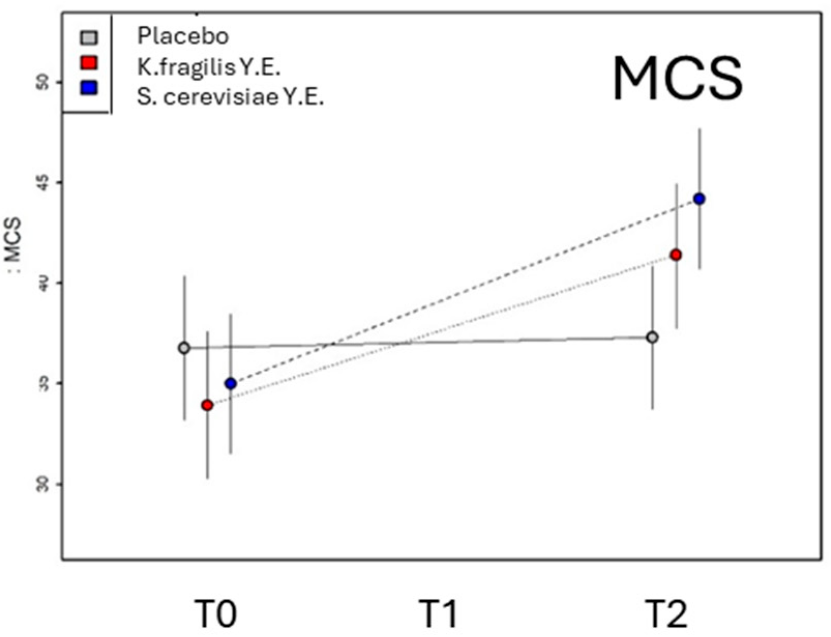
To determine whether the cognitive improvements translated into broader benefits, the researchers also evaluated quality of life using the SF-12 questionnaire, a standardized assessment that measures both physical and mental well-being.
While physical quality-of-life scores remained largely unchanged, mental well-being improved substantially among participants receiving the nucleotide-rich supplements. The mental health component score increased by 7.5 points in the K. fragilis group and 9.2 points in the S. cerevisiae group over six months. Participants receiving placebo showed virtually no change.
These findings are noteworthy because cognitive decline often affects more than memory alone. Individuals with MCI frequently report reduced confidence, increased frustration, difficulty concentrating, and concerns about maintaining independence. Improvements in mental well-being suggest that the observed cognitive benefits may have translated into meaningful changes in participants’ daily lives.
Importantly, the supplements were well-tolerated throughout the study. No adverse events were reported, and adherence rates remained high across all groups. More than 85% of participants in both treatment groups demonstrated high compliance with the supplementation regimen, indicating that the intervention was both practical and acceptable for older adults.
How Nucleotides May Support Brain Health During Aging
Although the study was not designed to directly measure biological mechanisms, previous research offers several possible explanations for the observed effects. Nucleotides help produce phospholipids, key structural components of cell membranes. Brain cells rely on these membranes to form synapses, the specialized connections through which neurons communicate. Some animal studies have shown that nucleotide supplementation can increase synapse formation and improve learning and memory. Other research suggests that nucleotide-related compounds may support mitochondrial function, helping cells generate energy more efficiently while reducing oxidative stress, a form of cellular damage associated with aging and neurodegenerative disease.
Researchers have also proposed that dietary nucleotides may influence the gut microbiome. Certain gut bacteria produce metabolites capable of affecting inflammation, neurotransmitter signaling, and communication between the gut and brain, providing another potential pathway through which nucleotide supplementation could influence cognitive health.
More than 55 million people worldwide are living with dementia, yet effective treatments for early cognitive decline remain limited. What makes the current findings noteworthy is that the benefits were observed in a randomized, placebo-controlled study involving older adults already experiencing measurable cognitive impairment.
Participants receiving nucleotide-rich yeast extracts showed meaningful improvements in multiple standardized cognitive assessments, while placebo recipients showed little change. Although larger studies will be needed to confirm these findings and determine whether the benefits persist long-term, the results suggest that supporting the brain’s supply of key cellular building blocks may help preserve cognitive function during aging.
 Comments