


Key Points:
- Peptides are small chains of protein building blocks (amino acids) that bind to receptors on cells to trigger a wide array of biological effects, from promoting tissue regeneration to hormone production.
- Some longevity influencers have touted their purported effects for tissue regeneration, bone healing, gut health, and sexual function, among other benefits.
- Scientists say that most peptide therapies currently lack optimal delivery techniques to tissues and cells, making it unlikely they will reach their intended cell receptor targets.
Peptides are short chains of protein building blocks (amino acids), which have gained attention for potential effects against aging, through supporting tissue regeneration and hormone production, among other benefits. Some in the longevity field consider their potential to foil the ravages of aging promising, while others remain skeptical and uncertain.
Proponents of peptides say they offer significant benefits against age-related ailments, while some scientists warn that these claims outpace the evidence. These skeptical scientists say peptides need vast improvements to their delivery mechanisms—the ways peptides are formulated and administered so they can reach intended cells and tissues and stay active long enough to work. According to these scientists, many improvements to delivery mechanisms need to be made to harness their full potential.
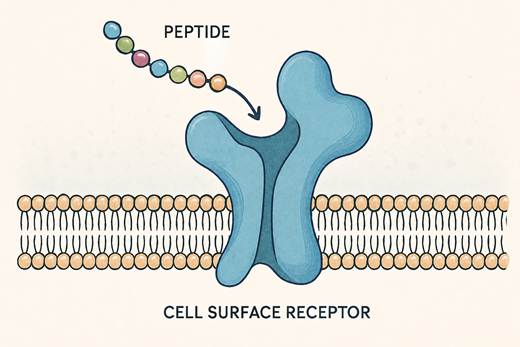
Peptides can bind to receptors on cells to trigger a range of biological effects, from the regeneration of tissues to the production of hormones. The potential of these effects to enhance physiological function has made peptides an up-and-coming class of drugs.
Well-Known Peptides in Use
Many peptides are readily present and actively produced in the human body, according to Mansoor Amiji, a professor of pharmaceutical sciences and chemical engineering at Northeastern University. Moreover, they can be synthesized and used as drugs to treat diseases, modulate metabolism, and manage a variety of chronic age-related conditions. Among the well-known and federally approved peptides are GLP-1 agonist medications (like Ozempic), drugs that mimic a hormone and bind to GLP-1 receptors on cells to regulate blood sugar and appetite. Other well-known and approved peptides include insulin, a hormone used to treat diabetes, and collagen supplements, marketed as promoting healthier joints and skin.
The Enthusiasm Surrounding the Peptides Craze in Longevity Medicine
The enthusiasm around peptides, both those that are naturally occurring and others that are synthesized, comes from researchers engineering them to target certain biological processes, like tissue regeneration, bone healing, and sexual function, among many other processes. Longevity influencers, like Gary Brecka, have also promoted the purported benefits of peptides, claiming they accelerate healing after injuries, improve physical performance, and ultimately slow the process of aging.

All of this enthusiasm comes as the US Food and Drug Administration (FDA) engages in debates about whether to loosen restrictions on peptide drugs, which some agency scientists say have not been sufficiently studied. Along these lines, an FDA advisory committee met recently to recommend easier access to at least four previously banned peptides. Their potential loosening of restrictions for these peptides will allow specialized pharmacies to manufacture customized combinations of peptide medications and make them available to patients who have a doctor’s prescription.
The four peptides with recommended loosened restrictions are as follows:
- BPC-157 for ulcerative colitis (an inflammatory bowel disease)
- KPV for wound healing and inflammatory conditions
- TB-500 for wound healing
- Mots-C for obesity
The loosened restrictions on these four previously banned peptides may, at some point, pave the way for their off-label uses against other aspects of aging. Nonetheless, the advisory committee’s recommendation for eased restrictions on these peptides does not mean they have received FDA approval.
The Process for Getting Peptides Approved by the FDA
One of the chief concerns regarding some peptides is that they have not yet undergone rigorous testing in human trials, which is typically required for FDA approval. When factoring in research and development, human trials, and safety reviews, it takes an average of 10 years or more to receive FDA approval.

“The bar for getting a drug approved is incredibly high,” said Steve Kates, pharmaceutical executive and peptide design and manufacturing expert, in a press release.
Kates relayed that the three pillars that need to be achieved before FDA approval include demonstrating clinical effectiveness, validating manufacturing processes, and completing studies testing toxicity. In that regard, Kates says these peptides have not undergone any such research.
Progress in Manufacturing Peptides
Peptides have existed as drug candidates for decades; however, the process of linking amino acids in the correct sequence, which requires repeated chemical reactions followed by purification, has made their manufacturing difficult. Not only that, but manufacturing has been labor-intensive.
That all changed when chemist Bruce Merrifield developed a manufacturing breakthrough for peptide synthesis that earned him a Nobel Prize in 1984. His new technique drastically simplified the production and purification of these fragile amino acid chains. Subsequent advancements in chemistry and automation during the 1980s and 1990s have since made peptide synthesis routine, according to Kates, allowing researchers to produce them much more efficiently.
Delivery Challenges for Peptide Therapies
Even with these landmark advancements in manufacturing, peptide drugs have been hampered by delivery challenges. Because they break down and are cleared from circulation so quickly, most have had to be injected rather than taken orally. Moreover, it was not until the recent past, when GLP-1 medications showed success for diabetes in 2005 and more recently, obesity in 2021, that peptides became major drugs for development in the pharmaceutical industry.
The peptide revolution is both exciting and jarring for some scientists keeping tabs on these drugs. However, Health Secretary Robert F. Kennedy Jr. has long touted the health benefits of peptides and their potential to help Americans live longer in a healthier state.
For scientists, though, the challenge lies not only in generating a peptide that can target the right biological system, but rather in getting the amino acid chains to the correct site in the body to perform their intended action. Accordingly, for efficacy once injected, peptides need to withstand the body’s defenses, circulate to appropriate tissues, and reach the intended cells. Moreover, many of them must reach specific structures deep inside cells.
Without advanced cell delivery systems to protect the chains of molecules, many peptides marketed online are unlikely to reach their intended targets. However, Kates said that improvements to drug delivery are likely coming, with researchers developing new ways to transport peptides throughout the body. One approach, according to Kates, involves packaging peptides into very minuscule particles, called nanoparticles, designed to protect drugs and help deliver them more effectively to intended tissues and cells.

“If we can solve the delivery problem, peptides could become some of the best drugs we have,” Kates said.
 Comments