


Key Points:
- At the World Economic Forum in Davos-Klosters, Switzerland, Elon Musk said aging is a “very solvable problem.”
- Musk also told the renowned American entrepreneur and futurist, Peter Diamandis, that humans are pre-programmed to die and that changing that programming will help humans live longer.
- Elon Musk’s new confidence in the human effort to tackle longevity runs in contention with his longtime discomfort with the social ramifications of lifespan extension.
Elon Musk, the well-known and renowned CEO of SpaceX and Tesla, has made many bold predictions, but perhaps none as pertinent to the human condition as his latest. In an episode of the Moonshot podcast with American entrepreneur Peter Diamandis, 54-year-old Musk relayed his conclusion that scientists can help engineer longer human lifespans. Doubling down on this assertion, Musk later said aging is a “very solvable problem” at the World Economic Forum 2026 held in Davos-Klosters, Switzerland.
With his conclusion that scientists who study aging can engineer dramatic lifespan extension, Musk sees longevity as a mere problem that researchers must figure out how to overcome. Moreover, he believes this problem has a solution that is not “particularly hard” to figure out, according to what he told Diamandis.
“You’re pre-programmed to die. And so if you change the program, you will live longer,” he said.
Elon Musk went on to argue that every part of the body seems to age in sync. Thus, he contended that something biological must be at the root of such synchronized aging. That something, he predicted, can be identified and potentially altered for lifespan extension.
“When you consider the fact that your body is extremely synchronized in its age, the clock must be incredibly obvious,” said Musk. “Nobody has an old left arm and a young right arm. Why is that? What’s keeping them all in sync?”
Could the Information Theory of Aging From Harvard’s David Sinclair Describe the Aging Program Musk Is Referring To?
Harvard’s David Sinclair came up with an aging theory called the Information Theory of Aging, where he contends that aging does not just arise from DNA damage and other dysfunctional cellular processes. Rather, he proposes that it primarily comes from the loss or corruption of epigenetic information—the instructions telling cells which genes to turn on or off—leading to cell and tissue malfunction. Epigenetic information exists as molecular tagging patterns on DNA, and Sinclair has said its loss or corruption can be likened to a scratched CD or DVD, where the data is still there but unreadable.
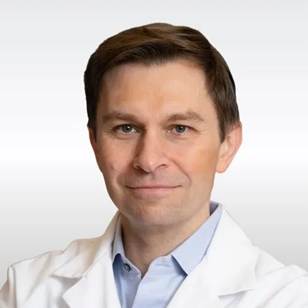
Sinclair’s theory also holds that this lost information can be restored to rejuvenate cells and tissues through partial epigenetic reprogramming. Partial epigenetic reprogramming uses proteins called Yamanaka factors, which research has shown can reset cells to give them more youthful epigenetic profiles and also rejuvenate them. Thus, in David Sinclair’s Information Theory of Aging, partial epigenetic reprogramming resets cells and tissues to youthful states, potentially reversing aging and treating age-related diseases.
Hence, what Elon Musk has said about humans being pre-programmed to die and finding a way to change the program to extend lifespan raises the question of whether he has read about David Sinclair’s Information Theory of Aging. If so, perhaps Sinclair’s aging theory inspired Musk to make his latest assertion.
There is no definitive way to find whether this may be the case, aside from asking Elon Musk directly; however, Musk’s newfound enthusiasm for addressing human longevity could have an origin in recent aging research. Along these lines, Sinclair’s Information Theory of Aging seems to align to some degree with Musk’s broad statement about humans being pre-programmed to die and that altering the program could extend human lifespan.
In that regard, in David Sinclair’s theory, the program leading to cell and tissue decline would be the loss and corruption of epigenetic information on DNA. Altering this program, as Musk mentioned, would entail using Yamanaka factors to generate a more youthful epigenetic profile, restore cell and tissue function, and reverse aging.
Elon Musk’s Newfound Confidence In Longevity Research Runs In Contention with His Past Beliefs
Regardless of what possible insight has inspired Musk to argue that longevity is solvable, his latest assertion runs in contention with what he has thought about longevity research in the past. Accordingly, along with refusing to invest in longevity research, he has stated that world leadership roles would not turn over often enough to replace the old ideas of leaders if they lived significantly longer.
“If we live for too long, I think it ossifies society—there’s no changing of the leadership because leadership never dies,” he said.
Who Gets Access to Possible Future Age-Reversing Technologies?
When someone as highly renowned and powerful as Elon Musk declares his belief that death is a design flaw that can be altered with engineering, this not only reflects scientific ambition but also brings up political and ethical questions. As such, if aging becomes a problem related to technical issues at the cellular level, then access to its solutions will likely depend on who has access to affiliated aging research laboratories, patents, data, as well as wealth to afford it. In that regard, perhaps Elon Musk and his high-profile peers will be the engineers, of sorts, who may decide how, and to whom, the engineered fixes are deployed. In essence, if a significant aging intervention technology is on its way, figuring out costs, who gets access, and who controls it still needs to be worked out.
 Comments